

A Complete Guide to Non-Surgical Aesthetic Treatments for Face, Skin and Body Concerns
Non-surgical rhinoplasty cannot make every structural change possible with surgery. Understanding these differences helps create more realistic expectations.

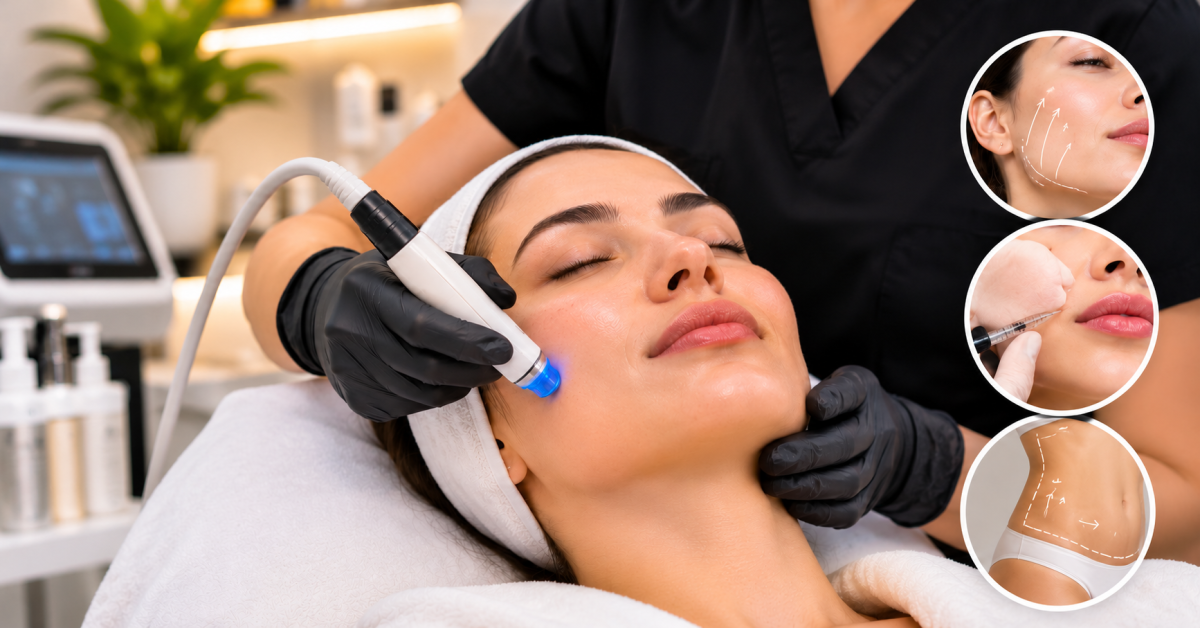
Non-surgical aesthetic treatments have developed far beyond simple wrinkle reduction.
Modern treatment plans can address concerns involving skin quality, facial volume, laxity, contour, nose shape, jawline definition, and selected body areas without traditional surgery.
However, different treatments work in very different ways.
A procedure designed to improve skin texture is not the same as one intended to restore facial volume. Likewise, a treatment for laxity does not necessarily solve concerns related to facial proportion or nose shape.
The most useful starting point is therefore not choosing a procedure by name. It is understanding the concern first and then matching it with an appropriate treatment approach.
Start With the Concern, Not the Treatment
Many people arrive at an aesthetic consultation already interested in a particular procedure. That is understandable, especially when treatments are widely discussed online.
However, the same visible concern can have different underlying causes. A less defined jawline may involve skin laxity, localised fullness, structural changes, or a combination of these factors.
Tired-looking skin may be related to dehydration, texture, congestion, or changes in facial volume.
A consultation at an aesthetic clinic in London should therefore begin with assessment of facial structure, skin condition, proportions, goals, and treatment suitability.
The aim should be to identify what actually needs attention before deciding how to treat it.
Understand the Difference Between Skin Quality and Facial Structure
Skin-focused concerns usually involve hydration, texture, dullness, congestion, or overall surface appearance.
Structural concerns involve deeper changes such as volume loss, facial contour, proportion, or support.
These categories can overlap, but they are not the same. For example, improving skin hydration may make the face look fresher, but it will not replace lost cheek volume.
Likewise, adding filler may change contour but does not automatically improve skin texture. Recognising this difference helps avoid using one treatment to solve several unrelated concerns.
When Skin Quality Is the Main Priority
For people mainly concerned about skin condition, a treatment such as a Hydrafacial in London may be considered.
Hydrafacial is positioned as a skin-focused treatment rather than a structural facial procedure. It is generally used to support cleansing, hydration, exfoliation, and overall skin appearance.
This makes it very different from filler or laser-based contouring treatments.
Someone whose main goal is fresher-looking, more hydrated skin may not need treatment aimed at facial volume or tightening.
The best option depends on what the skin actually requires.
When Skin Laxity Becomes the Main Concern
Skin laxity can affect areas such as the lower face, jawline, neck, and other parts of the face or body.
For selected patients, Endolaser Treatment in London may be considered when the aim involves tightening, contour improvement, or selected areas of localised fat.
The treatment uses laser energy beneath the skin rather than adding volume. This distinction matters.
A person with good facial volume but increasing laxity may need a very different approach from someone whose main concern is facial deflation or loss of support.
Treatment choice should therefore reflect the actual tissue change.
What Endolaser Treatment Is Designed to Address
An Endolaser treatment can be considered for selected facial or body concerns involving laxity and contour.
It is not a universal solution for every aesthetic issue. Suitability can depend on skin thickness, degree of laxity, treatment area, localised fat distribution, previous treatments, and individual expectations.
The same procedure may produce different levels of improvement in different people. That is why consultation and realistic treatment planning are important.
The goal should be improvement that suits the individual rather than trying to reproduce someone else’s result.
Facial Volume Loss Needs a Different Approach
Facial ageing often involves changes in deeper support as well as the skin.
The cheeks may appear flatter, the mid-face may lose volume, and facial transitions can become less defined.
Dermal filler may be considered when the main goal involves restoring or modifying selected areas of facial volume.
The most effective approach is usually not to fill every visible line. Instead, treatment planning can focus on proportion and how different areas influence one another.
This creates a more balanced approach to facial rejuvenation.
How an 8-Point Approach Fits Into Facial Rejuvenation
An 8-Point Face Lift is a filler-based approach that considers several facial areas rather than treating one isolated feature.
Hyaluronic acid filler is placed strategically according to facial anatomy and individual needs. The aim is generally to improve support, volume balance, and facial contour.
It is important to understand that this remains a non-surgical treatment. It does not produce the same type or degree of change as a surgical facelift.
The value of the approach lies in assessing the face more broadly rather than treating each line independently.
When the Nose Is the Main Concern
Some aesthetic goals are highly specific. A person may be satisfied with overall facial balance but want to refine the appearance of the nose.
A Non-surgical rhinoplasty uses dermal filler to alter selected aspects of nasal contour without surgery.
Depending on anatomy, treatment may be used to smooth certain irregularities or improve the appearance of the profile.
Because filler adds volume, it cannot achieve every result possible with surgical rhinoplasty. The nose is also an anatomically complex area.
Careful assessment, realistic expectations, and understanding the risks are especially important before treatment.
Facial Proportion Matters More Than One Feature
Aesthetic treatment works best when the face is considered as a whole. The nose can appear different depending on the chin and forehead.
The jawline can appear different depending on lower-face volume and skin laxity. The cheeks can influence how the under-eye and lower face are perceived.
This does not mean every area needs treatment. It means that one feature should not be assessed in isolation.
A balanced plan should identify which changes would meaningfully improve proportion and which areas should simply be left alone.
Non-Surgical Treatments Can Also Address Body Concerns
Non-surgical aesthetic care is not limited to the face.
Depending on the treatment, concerns involving skin laxity, contour, and selected areas of localised fat may also be assessed on the body.
The treatment choice should still follow the same principle. First identify the concern.
Then determine whether the available non-surgical procedure is suitable for that specific area.
The fact that a treatment can be used on both face and body does not mean the same settings, expectations, or approach apply everywhere.
Treatment Plans Should Be Personalised
Two people of the same age can need completely different treatment plans. One may mainly have skin-quality concerns.
Another may have facial volume loss. A third may have laxity around the lower face but otherwise good skin and volume.
This is why a standard package is not always the best approach.
People considering non surgical beauty treatments in Birmingham should expect the same principle: assessment should come before treatment selection.
The number of procedures available matters less than choosing the one that suits the actual concern.
Consider Downtime and Recovery
Non-surgical does not mean there are no temporary effects. Dermal filler may involve swelling, tenderness, or bruising.
Laser-based treatments can also involve temporary swelling, sensitivity, or other post-treatment changes depending on the area and intensity.
Skin treatments may have a different recovery profile again. Anyone planning treatment before a wedding, holiday, photography session, or important event should discuss timing in advance.
Allowing appropriate recovery time can make the experience more predictable.
Ask What the Treatment Cannot Do
A useful consultation should explain limitations as clearly as benefits. Hydrafacial will not replace lost facial volume.
Filler will not correct every form of skin laxity. Endolaser will not produce the same result as surgical lifting.
Non-surgical rhinoplasty cannot make every structural change possible with surgery. Understanding these differences helps create more realistic expectations.
It also reduces the risk of choosing a treatment simply because it is popular.
More Treatment Is Not Always Better
A good aesthetic plan does not need to include several procedures. Sometimes one treatment is enough.
Sometimes treatment should be staged. In other cases, the most appropriate decision may be not to treat a particular area.
This is especially important when several concerns overlap. Adding more procedures does not automatically create a more natural or balanced result.
The aim should be appropriate treatment, not maximum treatment.
Choose Treatment According to the Goal
Non-surgical aesthetics covers several different categories. Skin-focused treatments can support hydration and surface appearance.
Dermal fillers can be used for selected concerns involving volume and contour. Multi-point filler approaches can address broader facial support. Non-surgical rhinoplasty targets selected aspects of nose shape. Laser-based procedures may be considered for laxity and contour in suitable patients.
Understanding these categories makes it easier to compare options. The best treatment is not necessarily the newest or most widely discussed one.
It is the one that matches the concern, anatomy, goals, and realistic expectations of the individual.
Final Thoughts
Non-surgical aesthetic treatment is most effective when it begins with assessment rather than assumption.
Skin quality, facial volume, nose shape, laxity, contour, and body concerns all require different approaches.
No single procedure is designed to solve every problem. A thoughtful treatment plan should identify the main concern, consider the available options, explain limitations, and decide whether treatment is appropriate.
When facial and body aesthetics are approached this way, the focus stays on proportion, suitability, and realistic improvement rather than simply following treatment trends.








Comments (0)