

Why Do Drywall Cracks Keep Coming Back After Repairs?

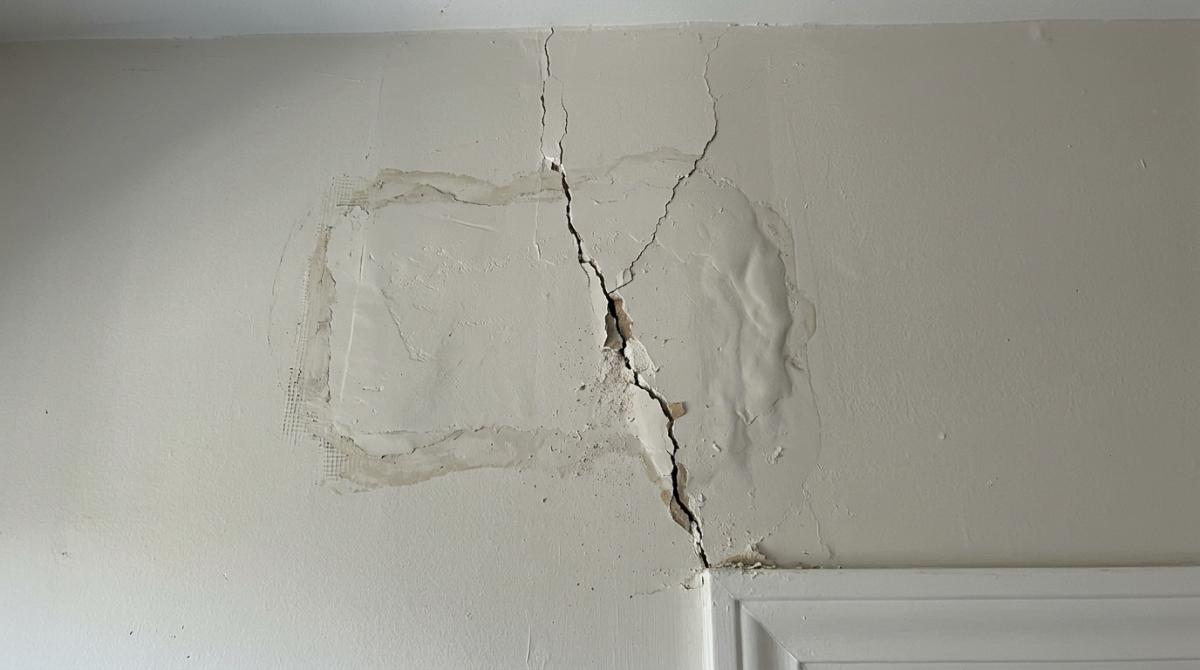
A crack in your drywall may seem like a minor problem until it returns a few months after being repaired. You fill the opening, sand the surface, apply fresh paint, and everything looks normal. Then the same line begins showing again, sometimes extending beyond the original repair.
Recurring drywall cracks are usually a sign that something beneath the finished surface is still moving or that the original repair did not properly reinforce the damaged area. Temperature changes, framing movement, foundation conditions, and installation problems can all contribute.
The key to a lasting repair is understanding why the crack developed rather than simply covering it with another layer of joint compound.
Why Does Drywall Crack in the First Place?
Drywall is a rigid finishing material attached to a building's framing. Although it can tolerate small amounts of movement, repeated stress may cause the joints or gypsum panels to crack.
Wood framing expands and contracts as moisture conditions change. Buildings also experience minor movement from temperature variations, normal loading, and changes in the supporting structure.
These movements can concentrate stress around drywall joints, doorways, windows, and ceiling corners.
For example, a crack above a doorway may develop because the surrounding framing moves slightly or because a drywall joint was placed in a vulnerable location. A straight crack along a wall seam may indicate that the joint tape has separated.
The crack's location and pattern can help narrow the possible causes, but appearance alone does not establish the exact problem.
What Causes a Repaired Drywall Crack to Return?
A recurring crack often means the repair addressed the visible opening without correcting the underlying condition.
If the drywall panels remain loose, applying additional compound will not stabilize them. Similarly, filling a moving joint without proper reinforcement may create a smooth finish temporarily, but the stress can eventually reopen the crack.
Another common issue involves damaged or poorly embedded joint tape. When the tape separates from the compound beneath it, a new layer of filler may not provide enough reinforcement.
For homeowners considering sheetrock repair dallas, identifying loose panels, unstable joints, and underlying movement before refinishing is an important part of preventing repeated repairs.
A dependable repair may require removing failed material, securing the drywall, reinforcing the joint, and rebuilding the finished surface.
Could Foundation Movement Be Responsible?
Foundation movement is one possible explanation for recurring wall cracks, but it should not be assumed whenever drywall develops a crack.
North Texas homes can experience soil moisture changes that affect certain foundation systems. Expansive clay soils may swell when moisture increases and shrink during dry periods. Depending on the building's construction and site conditions, these changes can contribute to foundation movement.
However, a small drywall crack does not automatically mean the foundation is damaged.
Other observations may help determine whether further investigation is appropriate. These include doors becoming difficult to close, changes in floor level, widening cracks, or separation around windows.
When several symptoms appear together or continue progressing, a qualified foundation or structural professional should evaluate the property before cosmetic repairs are repeated.
How Can You Tell Whether a Crack Is Structural?
There is no single crack width or pattern that reliably distinguishes cosmetic damage from structural movement in every home.
A narrow crack may deserve attention if it is actively widening or accompanied by other changes. Meanwhile, some larger cracks may result from localized finishing defects rather than serious structural problems.
Homeowners can document the crack's length, location, and appearance over time. Photographs with a ruler provide a useful record.
If movement continues or the surrounding building shows signs of distortion, professional evaluation is more appropriate than repeatedly applying joint compound.
Why Do Drywall Cracks Appear Above Doors and Windows?
Door and window openings interrupt the continuity of a wall. These corners can become locations where stresses concentrate as the framing moves.
Drywall installation practices also influence cracking. When panel joints terminate directly at opening corners, movement may place additional stress on the finished seam.
Cracks near openings may also result from loose fasteners, framing movement, or changes to the surrounding structure.
A diagonal crack extending from a doorway does not identify its cause by itself. The repair should consider the framing, panel layout, and whether the damage is changing.
If the opening is distorted or the door no longer operates properly, the surrounding structure may require further evaluation.
Can Humidity Make Drywall Cracks Worse?
Humidity affects materials surrounding drywall, particularly wood framing. As wood absorbs and releases moisture, its dimensions change.
These changes may create small movements at joints and corners. Indoor heating and air conditioning can also influence relative humidity throughout the year.
In some homes, seasonal cracks appear during drier periods and become less noticeable when humidity increases.
However, maintaining indoor humidity does not repair loose drywall or correct structural movement. It simply helps reduce excessive environmental changes that can contribute to recurring stress.
Homeowners should also investigate water stains, damp surfaces, or musty odors. Those symptoms may indicate a moisture problem that requires attention before drywall repairs begin.
Why Does Joint Tape Sometimes Separate?
Joint tape reinforces the connection between adjacent drywall panels. When installed correctly, it becomes embedded in joint compound and helps create a continuous finished surface.
Tape can separate when it was not properly embedded, when the underlying compound loses adhesion, or when repeated movement stresses the joint.
The damage may appear as a straight crack, raised seam, or loose strip beneath the paint.
Applying more compound over detached tape usually does not restore a dependable bond.
The failed material may need to be removed, the drywall secured, and the joint rebuilt with suitable tape and compound.
Is Mesh Tape Better Than Paper Tape?
Both paper and fiberglass mesh tapes have appropriate applications, but they are not interchangeable in every situation.
Paper tape is commonly used for drywall joints and inside corners. Fiberglass mesh tape may be suitable for certain repairs when paired with compatible setting-type compound and installed according to the system requirements.
The best choice depends on the joint, compound, and manufacturer's instructions.
Tape selection alone cannot compensate for unstable framing or improperly secured panels.
What Is the Correct Way to Repair a Recurring Crack?
A lasting drywall repair begins with evaluating the damaged area and identifying any ongoing movement.
The surrounding paint and compound should be inspected for loose material. If the drywall panel moves when pressed, additional fastening or other corrective work may be necessary.
Once the surface is stable, failed tape and loose compound can be removed. The joint should then be reinforced using appropriate materials.
Joint compound is typically applied in controlled layers, with sufficient drying or setting time between steps. The repair is feathered into the surrounding wall to reduce visible edges.
After sanding and surface preparation, primer helps create a consistent base for the finish paint.
The exact process depends on whether the damage involves a simple joint failure, damaged gypsum board, or a more extensive problem.
When Should Damaged Drywall Be Replaced Instead of Patched?
Not every crack requires drywall replacement. Small, stable cracks and localized joint failures can often be repaired without removing an entire panel.
Replacement becomes more appropriate when the gypsum core is severely damaged, the panel has lost its structural integrity, or repeated repairs cannot provide a stable surface.
Water damage deserves particular attention. Drywall that has become soft, swollen, or extensively deteriorated may not be suitable for patching.
Homeowners seeking drywall repair mckinney tx should distinguish between cosmetic surface defects and damaged materials that require removal.
Replacing an affected section can provide a sound foundation for finishing, but the original source of damage must still be corrected.
Why Do Some Drywall Repairs Remain Visible After Painting?
A technically sound repair can still be noticeable when the finished surface differs from the surrounding wall.
Uneven joint compound, sanding marks, inconsistent primer coverage, and mismatched wall texture can all create visible patches.
Lighting also affects appearance. Strong light entering from a window may highlight slight changes in surface level that are less noticeable under ordinary overhead lighting.
For textured walls, the repaired area should be blended carefully with the existing pattern. Matching texture requires attention to application technique, material consistency, and the original finish.
Paint sheen and aging can also make localized repairs stand out. In some situations, repainting the entire wall provides a more uniform appearance than touching up only the patched section.
How Can Homeowners Prevent Future Drywall Cracks?
Not every crack can be prevented, but good maintenance and proper repairs can reduce recurring problems.
Maintain consistent indoor conditions where practical, address water leaks promptly, and avoid ignoring cracks that continue widening.
When remodeling, make sure framing is stable before new drywall is installed. Proper panel fastening, joint placement, and finishing materials are important.
If cracks repeatedly appear in the same location, investigate the cause before authorizing another cosmetic repair.
Documenting when cracks develop can also be helpful. A pattern associated with seasonal changes may suggest different causes from damage that begins immediately after structural alterations.
When Is Professional Drywall Repair Worth Considering?
Professional assistance is useful when cracks return after multiple repairs, wall texture is difficult to match, or the surrounding drywall has become loose or damaged.
A drywall repair specialist can evaluate panel stability, joint conditions, and finishing requirements. However, suspected foundation or structural problems may require a different qualified professional.
The repair scope should reflect the actual condition of the wall.
A small finishing defect may need only localized reinforcement and refinishing, while recurring cracks accompanied by building movement require a more detailed assessment.
Final Thoughts
Recurring drywall cracks are often symptoms of an unresolved condition rather than a failure of paint or joint compound alone. Loose panels, inadequate reinforcement, moisture changes, and structural movement can all contribute.
One relevant concept is thermal expansion, which describes how materials change dimensions as their temperature changes. Although moisture-related movement is also important in buildings, understanding dimensional changes helps explain why rigid finishes can develop cracks.
A durable repair starts with identifying the cause, stabilizing the affected materials, and finishing the surface correctly. Addressing these steps in the right order reduces the likelihood of seeing the same crack return.











Comments (0)