

Why Are Gate Drivers Critical for Reliable Power Switching?
Explore how Gate Drivers control MOSFETs, IGBTs, SiC, and GaN power devices to improve switching speed, efficiency, protection, and reliability in modern power electronic systems.

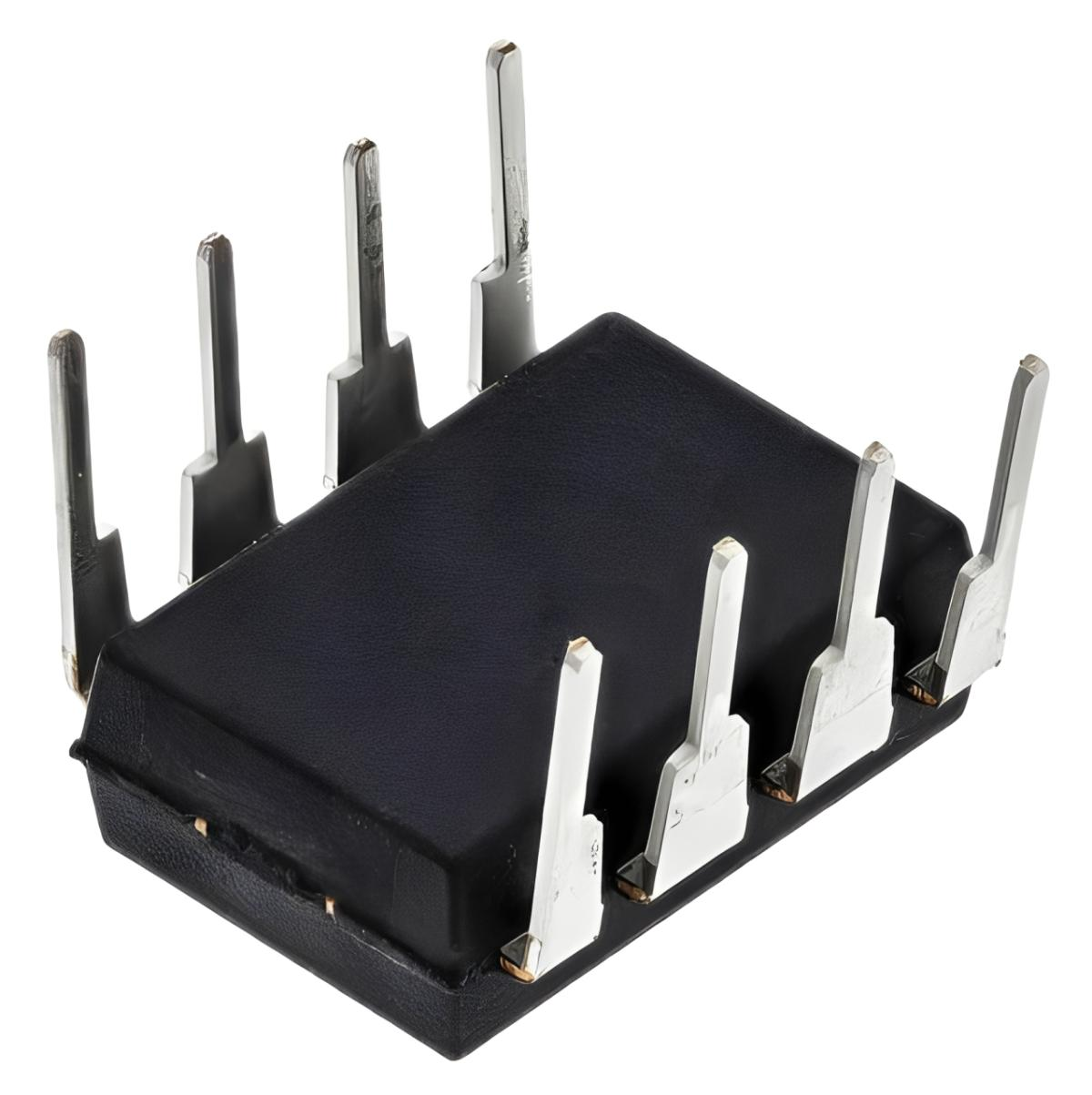
Modern electronic systems are expected to deliver more power while becoming smaller, faster, and more efficient. Achieving that balance depends heavily on how accurately power semiconductors are switched. Devices such as MOSFETs, IGBTs, silicon carbide transistors, and gallium nitride switches can handle demanding electrical loads, but they still need precise control signals to operate correctly.
A dedicated gate-driving stage provides the current, voltage, and timing required to switch these devices efficiently. This control helps reduce wasted energy, improve thermal behaviour, and protect sensitive components from damaging switching conditions. For this reason, gate-driving circuits are now a key part of power supplies, motor drives, renewable energy systems, electric vehicles, and industrial electronics.
How Do Gate Drivers Manage High-Power Switching?
Gate Drivers act as the connection between a low-power control circuit and a high-power semiconductor switch. A microcontroller or processor may determine when a transistor should change state, but its output signal is often too weak to drive the power device directly.
The gate driver strengthens that signal and delivers enough current to charge or discharge the transistor gate quickly. When the gate reaches the required voltage, the power device turns on. When the stored charge is removed, it turns off.
This process may appear simple, but it has a major impact on overall circuit performance. Poor gate control can cause excessive heat, slow switching, unwanted noise, and reduced efficiency.
Why Does Gate Voltage Need to Be Controlled Carefully?
Different semiconductor technologies require different gate voltage levels. Applying too little voltage may prevent the device from turning on fully, while excessive voltage can damage the gate structure.
The driver must therefore provide a stable voltage that matches the requirements of the selected transistor.
Important considerations include:
- Recommended turn-on voltage
- Safe turn-off voltage
- Maximum gate voltage
- Transient voltage behaviour
- Driver supply stability
- Gate resistance
Accurate voltage control helps ensure that the semiconductor operates within its intended electrical limits.
How Does Gate Resistance Affect Switching Behaviour?
Gate resistance is often used to control the rate at which a transistor switches. A lower resistance allows more current to flow into or out of the gate, resulting in faster transitions. A higher resistance slows the transition.
Designers use this resistance to balance switching efficiency against electromagnetic noise and voltage overshoot.
If switching is too fast, the circuit may experience ringing or unwanted electromagnetic interference. If switching is too slow, power loss and heat generation may increase.
Why Is the Correct Balance Important?
The ideal switching speed depends on the application. A high-frequency converter may benefit from faster switching, while a sensitive industrial system may require slightly slower transitions to maintain signal integrity.
The best design usually balances:
- Low switching loss
- Controlled voltage overshoot
- Reduced electromagnetic interference
- Stable waveforms
- Safe device operation
What Is a Bootstrap Circuit and Why Is It Used?
High-side gate drivers often require a voltage higher than the main switching node to turn the upper transistor on correctly. A bootstrap circuit is one common method of generating this voltage.
A typical bootstrap arrangement uses a diode and capacitor. The capacitor charges when the switching node is low and then supplies the required gate voltage when the high-side transistor needs to turn on.
Bootstrap circuits are popular because they are relatively simple and cost-effective. However, they may not be suitable for every duty cycle or operating condition.
Applications with long high-side conduction periods may require alternative driver power arrangements.
Why Is PCB Layout Important for Gate Driver Performance?
Even a correctly selected driver may perform poorly if the circuit layout is not designed carefully. High switching currents and fast voltage transitions can interact with parasitic inductance and capacitance on the printed circuit board.
These unwanted effects may cause ringing, overshoot, signal distortion, or electromagnetic interference.
Good layout practices include:
- Keeping gate traces short
- Minimising loop area
- Placing the driver close to the transistor
- Using suitable grounding techniques
- Separating power and logic paths
- Positioning decoupling capacitors near the driver
Careful PCB design helps the driver deliver a clean and predictable switching signal.
How Do Gate Drivers Help Control Electromagnetic Interference?
High-speed switching generates rapid changes in voltage and current. These transitions can create electromagnetic interference that may affect nearby circuits, sensors, communication lines, or control systems.
Gate drivers can help manage this problem by controlling switching speed and providing stable output signals.
Some advanced devices allow adjustable drive strength or separate turn-on and turn-off paths. This gives designers greater control over transition behaviour.
Reducing unnecessary ringing and overshoot can improve electromagnetic compatibility while maintaining good power efficiency.
What Protection Features Are Useful in Demanding Applications?
Power semiconductor failures can be expensive, especially in industrial, automotive, and renewable energy systems. Modern gate driver ICs often include protection functions that monitor operating conditions and respond when a fault occurs.
Useful features may include:
- Undervoltage lockout
- Overcurrent detection
- Desaturation protection
- Thermal shutdown
- Fault reporting
- Soft shutdown
- Miller clamp control
- Short-circuit protection
These functions can reduce the need for separate external protection circuits and help protect both the switching device and surrounding electronics.
How Do Gate Drivers Support Motor Control Systems?
Motor drives rely on multiple power transistors switching in a carefully controlled sequence. The driver must ensure that each device responds at the correct moment.
Precise switching helps regulate motor speed, torque, and direction while limiting unnecessary electrical losses.
Gate-driving circuits are commonly used in:
- Servo drives
- Brushless DC motors
- Industrial pumps
- Fans and compressors
- Robotics
- Electric vehicle motors
- Factory automation equipment
In these applications, timing accuracy and fault protection are particularly important because switching errors can create excessive current.
Why Are Gate Drivers Important in Renewable Energy Systems?
Solar inverters, wind power converters, and battery storage systems must convert electrical energy efficiently between different voltage and current forms.
Power semiconductors perform this conversion by switching rapidly, while gate drivers control each switching event.
Higher efficiency helps reduce energy losses and can improve the overall performance of renewable energy installations. Reliable gate control also becomes important because these systems may operate continuously for long periods.
Isolation, fault detection, and wide operating temperature ranges are often valuable in these environments.
How Do Gate Drivers Support Electric Vehicle Technology?
Electric vehicles contain several high-power electronic systems, including traction inverters, onboard chargers, DC-DC converters, and battery management equipment.
These systems require efficient switching to reduce energy losses and extend driving range.
Advanced drivers support high-voltage semiconductor technologies while providing precise control, isolation, and protection. They are particularly important when using SiC power devices, which are increasingly adopted in high-efficiency automotive power systems.
Reducing switching losses can also reduce cooling requirements, helping make vehicle power electronics lighter and more compact.
What Specifications Should Be Compared Before Buying a Gate Driver?
Choosing a suitable driver requires careful comparison of both the driver and the power transistor.
Key specifications include:
- Peak source current
- Peak sink current
- Supply voltage
- Propagation delay
- Switching frequency
- Isolation rating
- Rise and fall time
- Operating temperature
- Output configuration
- Protection functions
Engineers should also check compatibility with the selected transistor technology and its recommended gate voltage.
How Will Gate Drivers Shape Future Power Electronics?
Future power systems will continue moving toward higher efficiency, greater power density, faster switching, and more intelligent control. These trends will increase the importance of precise gate-driving technology.
Gate drivers help power semiconductors operate safely, efficiently, and predictably by controlling voltage, current, timing, and protection during every switching event. Their role extends beyond simply turning a transistor on and off because they directly influence energy loss, heat generation, electromagnetic performance, and system reliability.
As electric vehicles, renewable energy, industrial automation, robotics, and advanced power conversion continue to expand, gate drivers will remain essential components in the development of efficient and dependable electronic systems.










Comments (0)