

Landscape Drainage Solutions: French Drains, Grading and Dry Creek Beds

Heavy rain exposes every weak spot in a yard. Puddles linger, soil washes away, and water settles near the house where it does the most harm. If that sounds familiar in West Windsor, Plainsboro, Princeton, Cranbury, Robbinsville, Millstone, or Allentown, take heart. Most drainage problems have a clear cause and a practical fix, and knowing your options is the first step.
Spotting the Warning Signs Early
Knowing the signs of poor yard water drainage helps you act before damage spreads. Common clues include standing water that lingers after a storm, muddy patches, and soil washing out of planting beds. A lawn that stays soft long after the rain stops often points to water trapped in the soil itself.
Pay close attention near the house. Water collecting against the foundation, downspouts that empty straight onto a bed, and dampness in a basement or crawl space all call for prompt action. Persistent moisture also stresses plants and attracts pests such as mosquitoes. Walk the yard during and after a rainstorm to see where water collects, where it travels, and where it lingers. Take notes or photos so a contractor can spot the pattern quickly.
Timing matters too. Drainage problems often stay hidden during dry months and surface only in wet seasons, by which point water has already carved its path. Acting early gives you more options and usually keeps repairs smaller.
Yard Grading for Rainwater Drainage
Grading reshapes the ground so gravity carries water away from the structure. A widely cited guideline calls for the soil to drop at least 6 inches within the first 10 feet from the foundation, though local requirements may differ. Check grading first when you tackle foundation drainage, because it stops surface water from collecting beside the house.
Grading supports every other solution. If a lot slopes toward the house, drains have to work harder, so contractors often correct the grade first. This matters even more in clay-heavy soil, which holds water instead of letting it pass through. Filling low spots and reshaping the surface also helps the lawn recover, since grass roots struggle in saturated soil. Many yards need only modest changes to see a real improvement.
French Drain vs Dry Creek Bed: How They Compare
Both options move water, but they work differently and suit different problems. The French drain vs dry creek bed decision starts with how water moves on your property. Some travels across the surface, and some soaks through the soil. Each pattern calls for a different tool.
How a French Drain Works
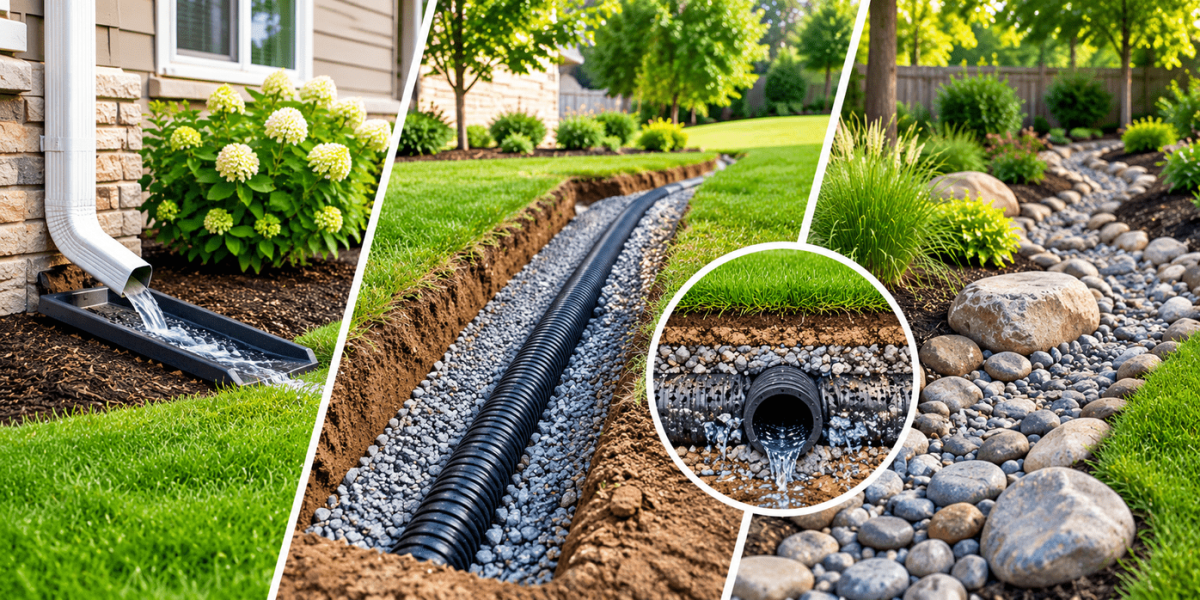
A French drain is a buried trench filled with gravel and a perforated pipe. Water in saturated soil seeps into the gravel, enters the pipe, and travels to a safe outlet. It suits soggy lawns, low spots, and water near foundations or retaining walls.
How a Dry Creek Bed Works
A dry creek bed is a shallow, stone-lined channel that resembles a natural stream. It carries visible runoff along a planned route during rain and stays dry the rest of the time. It works best on gentle to moderate slopes where water already follows a path.
Visibility and Appearance
A French drain disappears once the crew covers the trench, quietly moving water beneath the surface. A dry creek bed stays visible and becomes part of the landscape. With well-chosen rocks and plants that blend into the surroundings, it can turn a drainage problem into a garden feature.
Installation and Cost
French drains typically cost more than dry creek beds because they require excavation, drainage pipe, and gravel. Dry creek beds are generally simpler to install and often less expensive. Site conditions and the overall length of the feature still drive the final cost of either option.
Maintenance
French drains need occasional inspections to confirm the outlet stays clear and fine soil isn't clogging the system. A well-built dry creek bed provides long-term drainage, though it may need periodic clearing of leaves and sediment and repairs to eroded sections.
Combining Both
Many properties benefit from both. Grading directs the flow, dry creek beds carry surface water, and French drains handle stubborn wet spots below ground.
Elite Design & Landscaping delivers landscape drainage and grading solutions that look at the whole property first, so the plan fixes the cause and not just the puddle you can see.
Landscape Drainage Solutions Comparison
This comparison shows where each method fits best.
|
Feature |
Grading |
French drain |
Dry creek bed |
|
Water it handles |
Surface flow |
Subsurface water |
Surface runoff |
|
Visibility |
Subtle |
Hidden underground |
Visible landscape feature |
|
Installation effort |
Depends on the lot |
Often excavation-intensive |
Varies by channel size and site |
|
Maintenance |
Usually minimal |
Inspect outlets and check for clogging |
Remove debris and repair erosion |
|
Best for |
Correcting slopes that direct water toward the house |
Persistent subsurface wet spots |
Directing visible runoff along a planned route |
How to Divert Water Away from House Foundation
Protecting the home comes first, so make diverting water away from the foundation walls a priority. These steps help over the long term.
Start With Gutters and Downspouts
Roof runoff is one of the most concentrated sources of moisture around a home. Keep gutters clear so they collect rainfall effectively, and make sure every section of the roof drains to a working downspout. Add extensions that carry water well beyond the foundation instead of letting it pool beside the house. Together, these steps reduce the volume of water that reaches the surrounding soil.
Add Collection Points Where Needed
Catch basins sit in low spots and under downspouts, gather the water, and carry it through buried pipes to a safe outlet. They work well where hard surfaces leave no room for water to soak in. The basin also traps leaves and sediment at the bottom, which keeps the pipes beyond it clear, so check and empty it now and then.
Dry Wells
A dry well is an underground, stone-filled chamber that receives collected water and releases it slowly into the surrounding soil. It earns its place when no surface outlet exists. All of these measures work best when the grade already slopes away from the home, so each component supports the others.
FAQs
How do I know if I need a French drain instead of regrading?
If water still pools after you correct the slope, or the yard stays saturated beneath the surface, you likely need a French drain, since it intercepts water below ground.
Can a dry creek bed handle real water flow?
Yes, as long as the channel depth, stone size, and grade suit the volume of water. It works as a drainage path while still looking attractive. It handles surface runoff best, so it suits groundwater pressing against a foundation less well.
Do drainage systems need maintenance?
Yes, though the demands are light. Plan on occasional checks of outlets and inlets and seasonal clearing of leaves and sediment. Small habits like these keep a system working for years.
Can regrading affect my neighbors?
It can. Changes that redirect water toward a neighboring property or a public right-of-way may need municipal approval, so confirm local rules before work begins.
Is a combined system better than one solution?
Often, yes. Surface runoff and subsurface water are different problems, and pairing methods covers both. A professional site evaluation confirms which combination suits your slope, soil, and existing hardscape.
Final Thoughts
Good drainage begins with understanding where the water comes from. Grading steers it away from the house, French drains manage water within the soil, and dry creek beds carry surface runoff in an attractive way. Matching the method to the problem protects your foundation, your lawn, and your peace of mind all year.
Once the water is under control, Elite Design & Landscaping can finish the job with low-voltage outdoor lighting design that keeps paths and planting beds safe and welcoming after dark.








Comments (0)