

How Many Amps Does A Modern Home Actually Need In 2026?

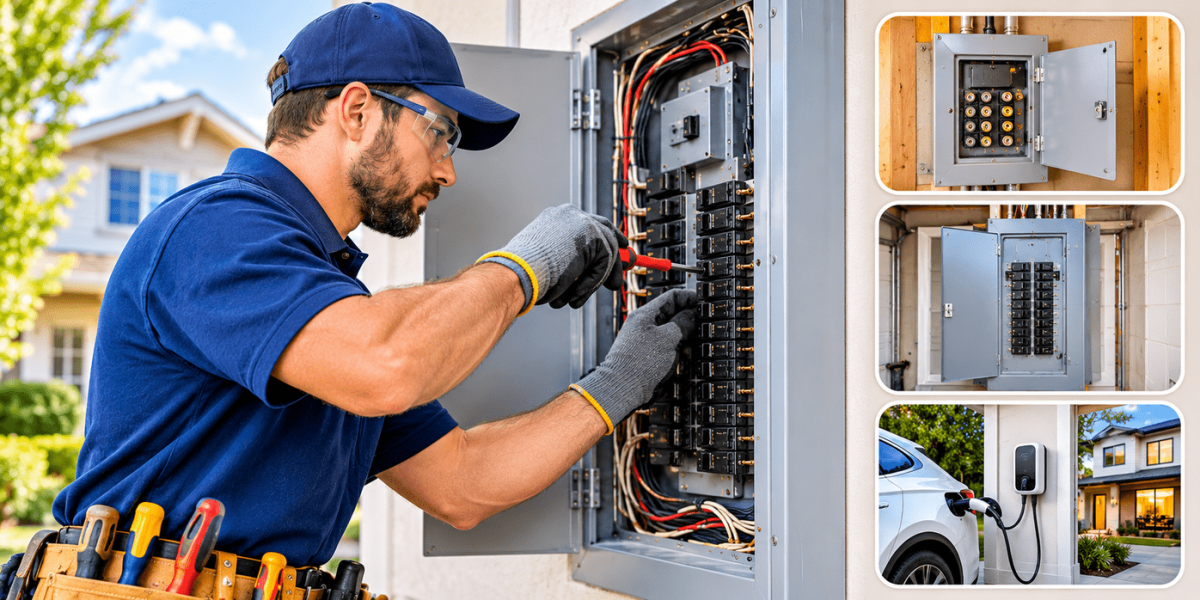
Modern homes can place very different demands on an electrical service. An electric vehicle charger, heat pump, induction range, electric water heater, and other high-demand equipment can significantly increase the amount of power a household may need at one time. A service that worked well years ago may need reassessment once you add major electrical loads.
The right service size depends on the home's calculated electrical load, existing equipment, and planned additions. This guide explains how electricians determine residential service amperage, what 100-amp and 200-amp services can support, and when you might need a larger service.
The basic rules for sizing household service
Square footage alone cannot reliably determine a home's service requirement. A load calculation considers the dwelling's lighting and receptacle loads, appliances, heating and cooling equipment, motors, EV charging equipment, and other applicable loads. The 100 amp floor applies even when the calculated load is smaller. In other words, a very small home still receives at least 100 amps of service, and the calculation only decides how much more you need above that floor.
Many local jurisdictions go further and require 200 amps for new residential construction. Your building department can tell you which rule applies where you live, and a licensed electrician can confirm the number for your specific home.
How Professionals Size A Home's Electrical Service
Understanding electrical panel amperage for modern homes starts with the load calculation. Electricians add up the demand of every major system, apply the code's allowances, and convert the total into amps. Each step below shows how that math works.
General lighting and receptacles
The calculation includes a general lighting load of 3 volt-amperes per square foot for dwelling units. A larger house therefore starts with a larger baseline. This figure is only the first layer of the total.
Large appliances
The calculation then adds cooking equipment, laundry equipment, water heaters, and heating and cooling systems according to the code's rules. These loads are big enough to change the result noticeably. Homes that use electricity for space heating, water heating, cooking, EV charging, and other major loads can have higher calculated electrical demand.
Demand factors
Not every device runs at the same moment, so the code applies demand factors that reduce the total in a realistic way. Under the optional method for dwellings, the first 10 kilovolt-amperes count in full, and the remainder counts at 40 percent. These allowances keep the result practical without ignoring real use.
Newer electric loads
Under the 2023 National Electrical Code, EVSE load is calculated at 7,200 volt-amperes or the equipment's nameplate rating, whichever is greater. Certain permitted load-management methods can affect how the calculation includes EV charging.
Converting the total into amps
Finally, the electrician divides the calculated load by the service voltage, most commonly 240 volts for a single-phase home, and rounds up to the next standard size. For a one-family dwelling, the NEC sets a minimum service-disconnect rating of 100 amps, while the calculated load must also determine the actual service size.
100 Amp Vs 200 Amp Panel: Which Size Fits Your Household?
Both sizes are common, and each fits a different kind of home.
When 100 amps can still work
A 100-amp service may be adequate for a home with relatively modest electrical loads, particularly when major appliances use gas rather than electricity. Confirm the actual requirement through a load calculation rather than square footage alone. Any plan to add major electric equipment should trigger a fresh calculation.
When 200 amps makes sense
A 200-amp service may be appropriate for homes with substantial electric cooking, heating, EV charging, or other high-demand equipment, depending on the completed load calculation. It leaves room for future additions without another service change. Choosing it during a planned upgrade can save you a second project later.
What about 400 amps?
Very large homes, workshops, and properties with several chargers may justify 400 amps. This is a specialized project that usually involves new service equipment and utility coordination. A load calculation and a conversation with your utility will show if it applies to you.
Warning signs your panel is struggling
Your home often tells you when demand has outgrown the panel. Watch for these signs you need an electrical panel upgrade, and take them seriously when several appear together. The Electrical Safety Foundation International (ESFI) lists many of them as signs of an overloaded circuit.
|
Sign |
What it may mean |
|
Breakers trip often or fuses blow repeatedly |
Circuits are carrying more than they can handle |
|
Lights flicker, blink, or dim |
Voltage is dropping under load, or a connection is loose |
|
Wall plates feel warm or look discolored |
Heat is building at a device or connection |
|
Buzzing, crackling, or a burning odor at receptacles or switches |
Possible loose wiring or overheating that needs urgent inspection |
|
You rely heavily on extension cords |
The home may have too few outlets and circuits for its needs |
|
You intend to install an EV charger or heat pump |
A new load calculation is needed before installation |
Any single sign deserves attention, and several together deserve a prompt visit from a licensed electrician. Please avoid resetting a tripping breaker again and again without finding the cause.
Looking for panels, breakers, and control components for your project? Ask EDC, one of the electrical control distributors that can match each component to your load calculation.
What a panel upgrade really involves and costs
The cost to upgrade an electrical panel in 2026 depends on the panel size, installation complexity, labor, and additional electrical work required. This Old House reports typical panel upgrade costs of $800 to $4,000, with most homeowners paying $1,300 to $3,000 for a 200-amp system. Projects requiring service-entrance upgrades, meter work, utility coordination, rewiring, or other additional work can cost substantially more than a straightforward panel replacement.
What drives the price
Permits, a new meter base, service entrance cable, grounding updates, and utility coordination can all add to the bill. If you already plan other electrical work, such as adding a circuit for a charger or a heat pump, bundling it with the panel upgrade can reduce repeat visits. It also lets your electrician size the new service for everything you intend to add. A single well-planned project is often easier to permit and inspect.
Getting accurate quotes
Ask each electrician to list the work included, such as the permit, the meter socket, and the service cable. Comparing itemized quotes shows what you are really paying for. Prices vary by region and by the condition of your existing equipment, so treat published ranges as a starting point.
Frequently Asked Questions
Can I add an electric vehicle charger to a 100 amp panel?
Sometimes. A 100-amp service may support an EV charger if the home's calculated load leaves sufficient capacity. Evaluate the charger's rating, existing electrical loads, service capacity, and any permitted load-management system before installation.
Does a larger panel raise my electric bill?
No. A bigger service increases the capacity available to your home, while your bill depends on how much energy you actually use. Your rates and habits set the cost, and the panel simply allows more equipment to run safely at once.
How many amps does a house need?
The National Electrical Code generally requires at least 100 amps for a one-family dwelling, but many homes require more based on their calculated electrical load. A licensed electrician can determine the appropriate service size based on the home's appliances, heating and cooling systems, EV charging, and other electrical demands.
Do I need a permit for a panel upgrade?
In most places, yes. Permit fees are commonly listed between $100 and $500, and a licensed electrician normally handles the paperwork and schedules the inspection. Ask about the permit upfront so it appears in your quote.
Conclusion
There is no single amperage that fits every house, but the path to the right answer is clear. Start with a load calculation, account for the electric vehicle, heat pump, or induction range you may add, and compare service sizes against real demand. Watch your home for warning signs, and get itemized quotes before you commit. A panel sized for tomorrow's needs protects your family and saves you from repeating the project.
Compare panel and breaker options with the team at EDC and choose components suited to your load. Matching each part to your calculated demand helps protect your circuits against overload. Request your component list through Electric Control & Supply Inc. today and plan your upgrade with confidence.









Comments (0)