

What Causes White Marks to Appear on a Leather Vest After Riding?
White marks on a leather vest after riding can develop due to sweat, salt buildup, dust, moisture, or friction. Understanding these causes and using proper leather cleaning methods helps remove stains and maintain the vest's original appearance and quality.

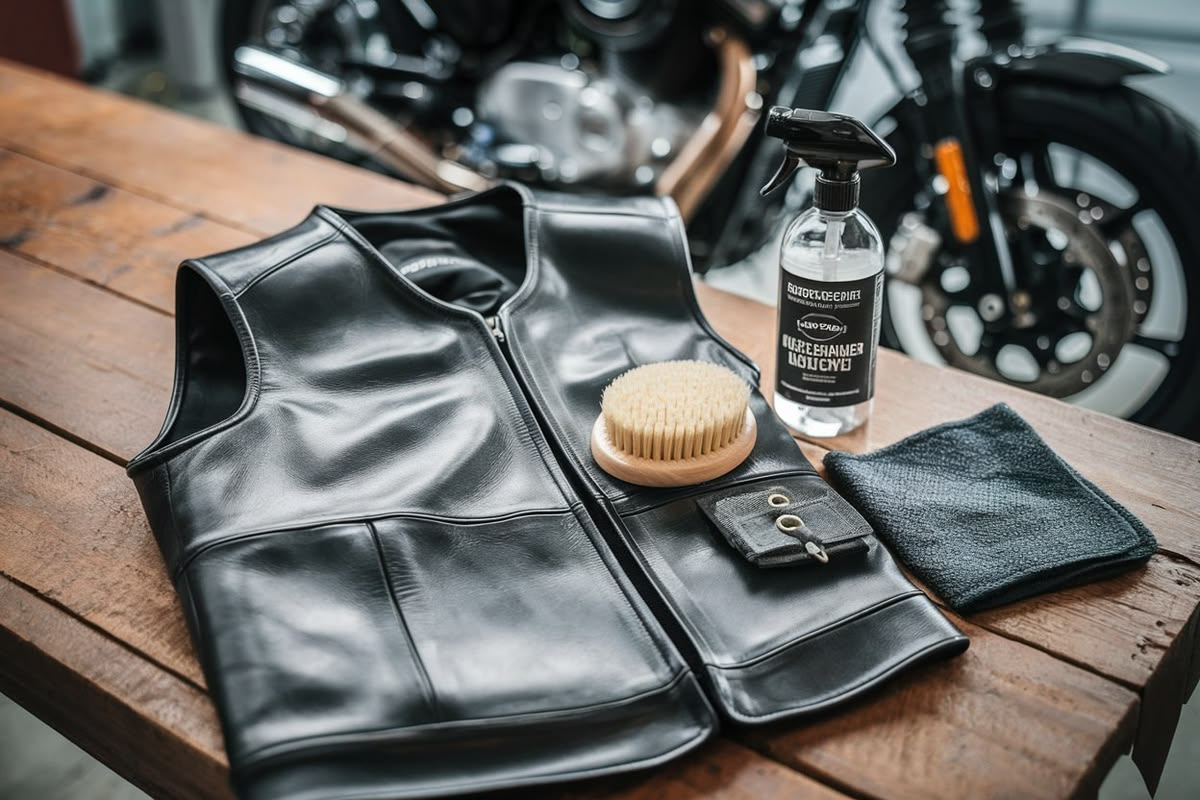
White marks can appear on a leather motorcycle vest after riding for several different reasons, including dried sweat salts, road salt, mineral deposits from water, cleaner residue, conditioner buildup, and surface abrasion. The marks may look chalky, powdery, streaked, or slightly cloudy depending on what caused them. In many cases, the leather itself is not permanently damaged, but the residue should still be identified before any cleaning or conditioning is attempted. Treating every white mark as dryness or fading can lead to unnecessary product use and make the problem worse.
The location of the marks often provides the best clue. White lines near the collar and armholes are commonly linked to sweat, while pale residue on the lower front or sides may come from road spray. Marks that appear after rain or washing may be mineral deposits or cleaner residue, and cloudy patches after conditioning can indicate product buildup. Looking at where and when the marks appeared makes it much easier to choose the right response.
Dried Sweat Salt Is One of the Most Common Causes
Sweat contains salts that remain behind after moisture evaporates. During hot rides, perspiration can collect around the collar, armholes, upper back, side panels, and waist, leaving pale or white residue once the vest dries. This is especially common when the vest is worn repeatedly in summer without enough time to air fully between rides.
On mens leather motorcycle vests, the marks often appear around the inside edges or wherever the leather and lining sit closest to the body. The residue may feel slightly rough or powdery when touched. If ignored, repeated sweat buildup can make the area look increasingly dull and may also affect stitching over time.
Road Salt Can Leave Chalky Marks on the Lower Vest
Winter riding introduces another major source of white residue. Road salt mixes with water, slush, and spray before reaching the rider, then dries onto the lower front, sides, pockets, and hem of the vest. Once the water evaporates, the mineral residue remains behind as a pale or chalky film.
These marks may appear heavier than ordinary sweat stains and can sometimes form irregular streaks. Because road salt can also contribute to leather dryness and metal corrosion, it should not be left on the vest for long periods. Gentle cleaning is safer than allowing layer after layer of residue to build up over the season.
Hard Water Can Leave Mineral Deposits
If a vest is wiped with tap water that contains a high mineral content, pale marks can remain after the water dries. Calcium and other minerals may be left behind on the surface, creating white spots or cloudy patches.
This can happen even when the rider is trying to clean the vest properly. The marks are especially visible on black or dark brown leather. Using too much water during cleaning makes the problem more likely because larger wet areas leave more mineral residue as they evaporate.
Rainwater Can Leave Uneven Drying Marks
Rain itself is not always perfectly clean. Water can pick up dust, pollution, road spray, and other contaminants before it dries on the vest. If the leather becomes wet in patches rather than evenly, those areas can dry at different rates and leave visible pale outlines.
The result may look like water spotting or a faint white border around the section that became soaked. This does not necessarily mean the leather has faded. Letting the vest dry naturally and then evaluating the surface often makes it easier to tell whether the mark is residue or an actual finish change.
Sweat and Road Dust Can Combine Into a Pale Film
White marks are not always pure salt. Fine road dust can mix with perspiration, body oils, and moisture, then dry into a light-colored film around seams and edges. This mixture often appears where the rider experiences both airflow and body heat, such as the shoulders, armholes, and upper chest.
The residue may be more stubborn than simple sweat salt because oily material helps the dust adhere to the leather. Light cleaning is usually better than aggressive rubbing because the grit can become abrasive. Removing loose dust first reduces the chance of scratching the surface.
White Marks Around the Collar Usually Point to Sweat
The collar is one of the highest-contact areas on a vest. It receives sweat, skin oils, sunscreen, hair products, and dirt from the rider's neck, so pale residue frequently appears there before other parts of the garment.
On womens leather motorcycle vests, close-fitting collars or shaped upper panels can keep the leather in more constant contact with the skin, making this buildup especially noticeable during summer. The marks may also be more obvious if the vest is dark. Cleaning the collar gently and allowing it to dry fully helps prevent residue from becoming layered over time.
Armhole Marks Often Come From Perspiration
The edges around the armholes sit very close to the underarms, making them another common place for dried sweat salts to appear. These areas also flex constantly, which means moisture and residue can work into the stitching and leather edge.
A pale line around the armhole is often more likely to be sweat than fading. If the residue returns quickly after cleaning, the rider may benefit from a moisture-wicking base layer that reduces direct sweat contact with the vest. Keeping the area dry also helps protect the stitching.
White Marks Near the Hem May Be Road Spray
The lower edge of the vest receives more contamination from the road than the upper chest or shoulders. Water, dust, salt, and tire spray can all reach the hem during wet or winter riding.
If the white marks are concentrated low on the vest, road contamination should be considered before body sweat. This is particularly true when the marks appear after riding on treated roads or after rain. Cleaning the lower section promptly helps prevent minerals and grime from settling deeper into the surface.
Conditioner Can Sometimes Leave a White or Cloudy Residue
Too much conditioner can create a cloudy film, especially if the product was applied heavily or not fully absorbed. Some conditioners contain waxes or oils that can remain on the surface as the product dries.
This residue may look pale or slightly hazy rather than sharply white. It is often more noticeable on black leather and may appear unevenly where extra product was applied. Wiping away excess with a clean soft cloth can help, but adding more conditioner usually makes the problem worse.
Wax-Based Products Can Develop Surface Bloom
Some leather-care products contain waxes that can migrate to the surface and create a light haze or bloom, especially with temperature changes. This can sometimes be mistaken for mold or salt.
The surface may look cloudy but remain smooth rather than powdery. A gentle buff with a clean cloth may reduce the appearance if the issue is product bloom. Before using any stronger cleaner, it is important to know what product was previously applied to the vest.
Cleaner Residue Can Dry White
Leather cleaner can also leave marks if too much product is used or if it is not wiped away thoroughly. Foam, soap residue, or cleaning solution may dry into pale streaks around seams and textured areas.
This is one reason more cleaner does not necessarily produce better results. Controlled application followed by careful removal is safer. If the marks appeared immediately after cleaning rather than riding, product residue should be considered before assuming the leather itself has changed.
Surface Abrasion Can Look Like a White Mark
Not every pale area can be wiped away. Friction from backpacks, seat contact, repeated rubbing, or rough objects can wear the colored finish and expose a lighter layer underneath. This type of mark usually feels smooth rather than powdery and stays visible after gentle cleaning.
On dark leather motorcycle vests, abrasion can appear as gray or whitish scuffing along edges, pocket corners, or high-contact areas. If the color has actually worn away, cleaning alone will not restore it. A leather repair or recoloring product may be needed depending on the finish.
Creases Can Look Lighter When the Finish Is Stressed
Leather folds around the waist, sides, and shoulders during riding. As those creases deepen, the finish can stretch and reflect light differently, making the fold appear lighter than the surrounding panel.
This can look like a white mark even when no residue is present. If the area remains flexible and smooth, it may simply be normal wear. If the line feels rough or begins opening into a crack, the leather should be inspected more carefully.
Mold and Mildew Can Also Appear Pale
White or gray spotting can sometimes indicate mold or mildew, especially if the vest was stored damp after riding. Unlike ordinary salt residue, mold may appear fuzzy, irregular, or accompanied by a musty smell.
This situation requires more caution because the problem is biological rather than simple surface contamination. If mold is widespread or deeply embedded in the lining or leather, professional cleaning may be safer than aggressive home treatment. Persistent musty odor should not be ignored even if the visible spots seem small.
How Can You Tell Sweat Salt From Road Salt?
Location and riding conditions usually provide the strongest clues. Sweat residue tends to appear near the collar, armholes, upper back, and body-contact areas, while road salt is more common around the lower front, sides, pockets, and hem.
Sweat marks may also appear after hot-weather riding even when the roads are completely dry. Road salt is more likely after winter riding, wet pavement, or slushy conditions. Both can look similar, so context matters as much as appearance.
How Can You Tell Residue From Actual Leather Damage?
Residue usually sits on top of the leather and can often be reduced with appropriate gentle cleaning. Damage such as abrasion or finish loss remains visible even after the surface is clean.
Run a clean cloth lightly over the area and inspect the texture. If the mark feels powdery or transfers slightly, residue is more likely. If the surface is smooth but permanently lighter, the finish itself may have worn or faded.
Do Not Scrub White Marks Aggressively
White residue can make riders want to scrub until the leather looks dark again, but this can damage the finish. Salt crystals, road grit, and dried contamination can act like abrasives if rubbed hard into the surface.
Start gently and remove loose material first. A soft cloth is usually safer than a stiff brush, particularly on smooth leather. Several light passes are better than one aggressive attempt.
Do Not Apply Conditioner Before Removing the Residue
Conditioner should not be used as a way to hide white marks. If salt, sweat, cleaner residue, or road grime is still present, conditioner can trap it against the leather and create uneven darkening.
Clean the surface first, allow it to dry completely, and then assess whether the leather actually feels dry. If it remains flexible and healthy, conditioning may not be necessary at all. This prevents over-treatment and keeps the surface cleaner.
Household Cleaners Can Make the Marks Worse
Strong soap, alcohol, bleach, and household degreasers may remove visible residue but can also strip dye or finish from the leather. The result may be a larger pale patch than the original mark.
Use products appropriate for the specific leather type and test them in a hidden area first. The safest cleaning method depends on whether the vest uses smooth finished leather, distressed leather, or another surface treatment. When in doubt, less aggressive treatment is usually better.
Let the Vest Dry Naturally After Cleaning
Leather can appear temporarily darker or uneven while damp, so it should be allowed to dry before the result is judged. Place the vest on a broad hanger in a shaded, ventilated area and avoid direct heat.
Hair dryers, radiators, and strong sunlight can dry the leather unevenly and create stiffness or color changes. Once the vest has returned to normal room temperature and is completely dry, any remaining marks are easier to evaluate.
A Simple Routine for Removing White Residue
Begin by identifying where the marks are located and what riding conditions occurred before they appeared. Remove loose dust gently, then use a slightly damp clean cloth or appropriate leather-safe method to lift the residue rather than grinding it into the surface. Work in small sections and switch to a clean part of the cloth as contamination transfers.
After cleaning, let the vest dry completely and inspect the surface again. If the mark is gone but the leather feels dry, condition lightly with a compatible product. If the mark remains unchanged and feels like part of the surface, it may be finish wear rather than removable residue.
How Can Riders Prevent White Marks From Returning?
The best prevention depends on the cause. Air the vest after sweaty rides, use moisture-wicking base layers, remove road salt promptly, and avoid leaving the garment damp overnight. Wipe away obvious road spray before it dries into a thick mineral layer, and do not apply more cleaner or conditioner than the leather needs.
Good storage also matters. Keep the vest in a dry, ventilated location and avoid sealed plastic when there is any chance of trapped moisture. Regular light maintenance prevents residue from building into a stubborn problem.
When Should a Professional Look at the Vest?
Professional leather care is worth considering when the white marks remain after gentle cleaning, appear to be deep finish damage, or are accompanied by cracking, discoloration, or mold. It is also a good option for expensive or heavily patched vests where experimenting with stronger cleaners could create permanent damage.
A leather specialist can determine whether the mark is salt, wax bloom, finish loss, mildew, or another issue. Correct diagnosis matters because each cause requires a different response. Treating the wrong problem can make the appearance worse.
Conclusion
White marks on a leather motorcycle vest can come from dried sweat salts, road salt, hard-water minerals, cleaner residue, conditioner buildup, wax bloom, surface abrasion, or mildew. The location and texture of the mark usually provide important clues, with sweat residue commonly appearing around the collar and armholes and road salt more often collecting along the lower front and hem. Not every pale mark is permanent damage, but it should be identified before cleaning or conditioning begins.
The safest approach is gentle maintenance rather than aggressive scrubbing. Remove loose grit, clean residue with a method suitable for the leather, let the vest dry naturally, and use conditioner only if the clean leather genuinely feels dry. Persistent marks that do not respond to careful cleaning may be finish wear or deeper contamination and are better evaluated professionally.
For riders looking for leather motorcycle vests suited to regular road use, hot-weather riding, and long-term wear, Born To Race offers options for both men and women. Contact Born To Raceto explore available styles and choose a vest with the fit, construction, and practical features that suit the way you ride.










Comments (0)