

What Actually Determines the Price of a Lab-Grown Diamond?
Learn what determines the price of a lab-grown diamond, from carat and cut to color, clarity, shape, certification and the ring setting around the stone.

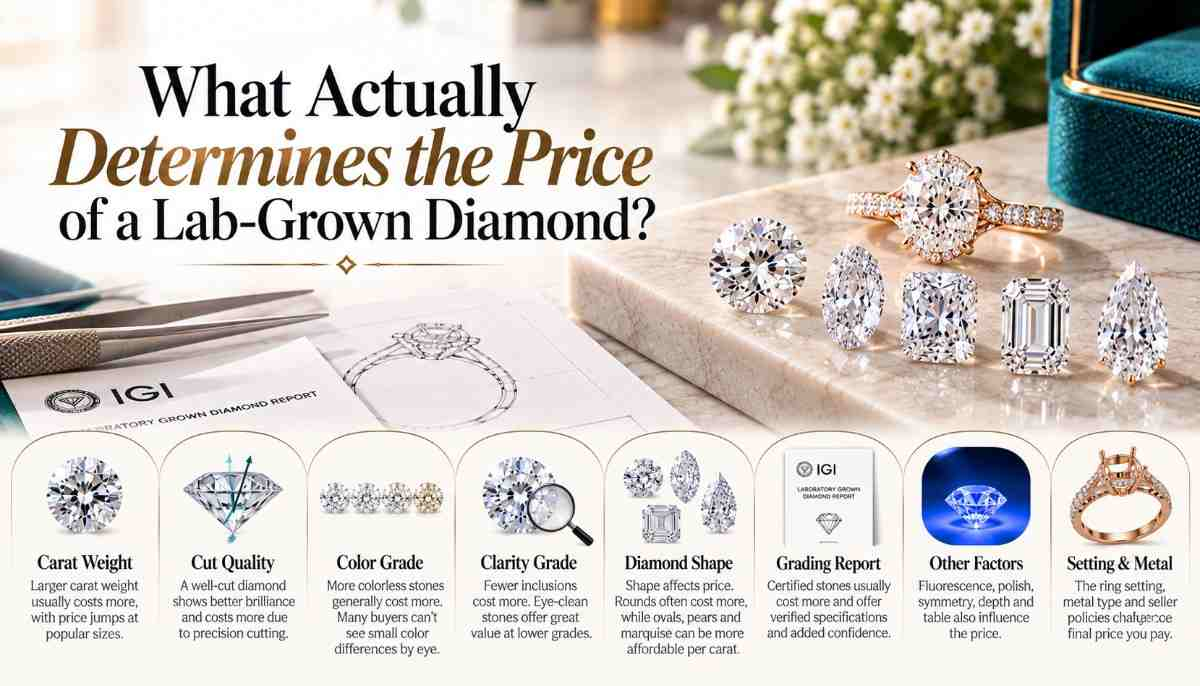
Two lab-grown diamonds can look almost the same in photos and still carry very different price tags. A 1.00 carat stone might cost one amount in one listing and noticeably more in another. Buyers often assume the seller is simply marking things up. Usually, the gap comes from specific, checkable factors. This guide explains what determines the price of a lab-grown diamond, so you can read a listing, spot real value, and avoid paying extra details you can't see.
Quick Answer
What determines the price of a lab-grown diamond?
Carat weight, cut quality, color and clarity set most of the price. Shape, the grading report, fluorescence and market supply also play a part. Larger, better-cut, more colorless stones cost more. Seller policies and the ring setting then change the final price you pay.
Carat Weight Has the Biggest Effect
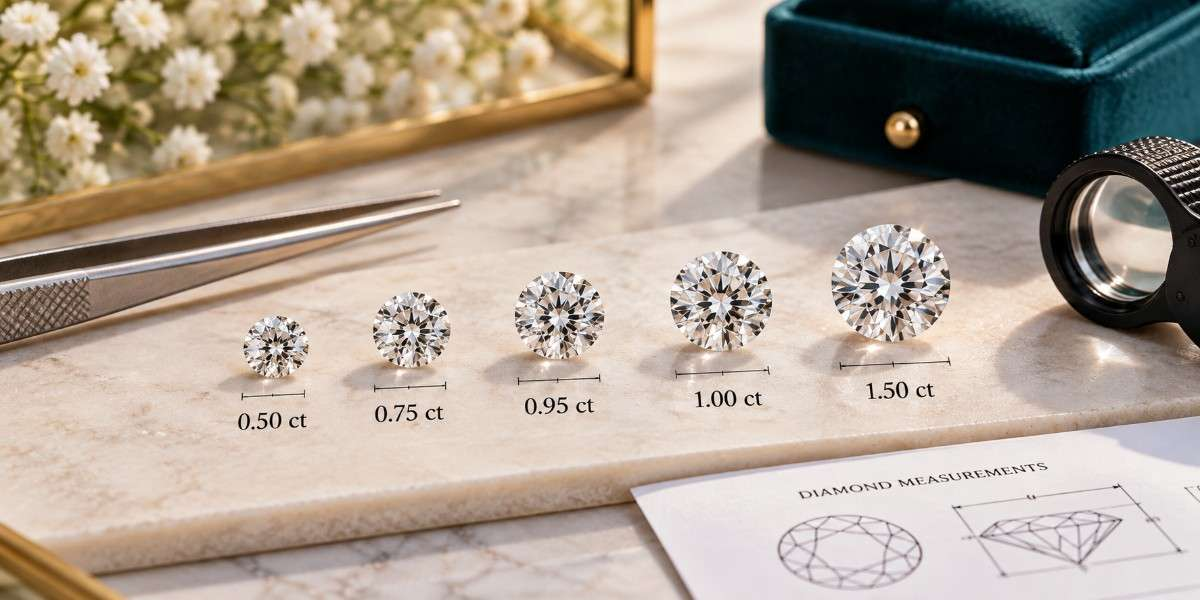
Carat measures weight, and price rises with it. The increase is not going smoothly. Prices tend to jump at popular weights like 1.00 carat, because many buyers search for those exact sizes.
A 0.95 carat diamond often looks nearly identical to a 1.00 carat stone but may cost less. If visual size matters more than the number on the report, this gap can save money.
Carat also does not equal visual size. Shape and cut change how large a stone looks from above, so check the millimeter measurements on the report.
Cut Quality Affects Both Looks and Cost
Cut describes how well a diamond's facets are angled and polished. It controls light return, which creates brilliance and sparkle.
A well-cut stone takes more skill and often more rough material to produce. That is why strong cut grades usually cost more. A weaker cut may save money, but the diamond can look dull even with great color and clarity.
If you want to spend money where the eye notices it, cutting is usually the best place to start.
Color and Clarity Grades
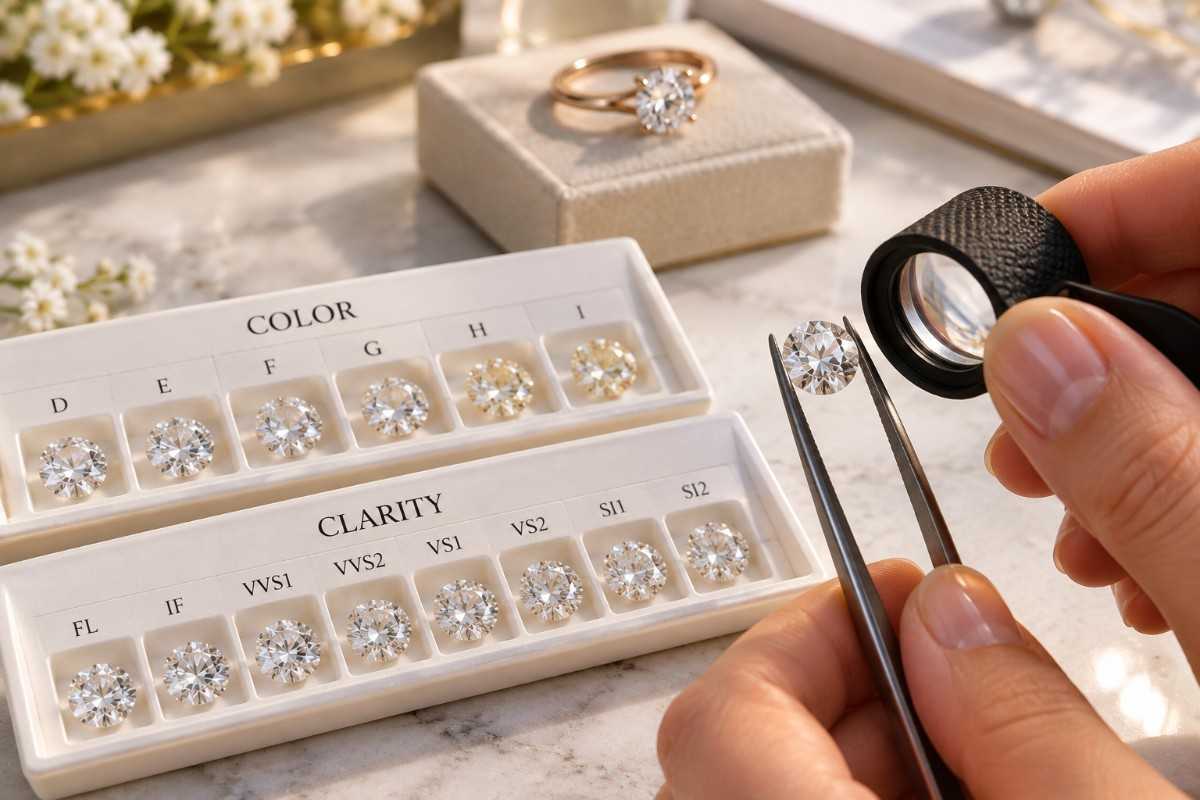
Color measures how colorless a white diamond is. Less color usually costs more. Many buyers can't see a one-grade difference once the stone sits in a ring, especially in yellow or rose gold.
Clarity describes tiny marks inside or on the surface of the stone. Most are invisible without magnification. A stone that looks clean to the naked eye, called "eye-clean," can cost much less than a flawless grade and look the same.
A smart approach is to pick the lowest color and clarity grades that still look clean to you, then put the savings toward a better cut or larger stone.
Shape Changes the Price
The shape is the outline of the diamond. Popular shapes often cost differently from each other at the same weight and quality.
|
Shape |
Typical pricing pattern |
|
Round |
Often priced higher per carat because of strong demand and rougher lost in cutting |
|
Oval |
Often more affordable per carat and looks larger |
|
Pear and marquise |
Often less costly per carat, with more visible surface area |
|
Cushion and emerald |
Price varies by cut quality and clarity |
These patterns shift with the market, so compare live listings rather than relying on a rule.
The Grading Report Matters
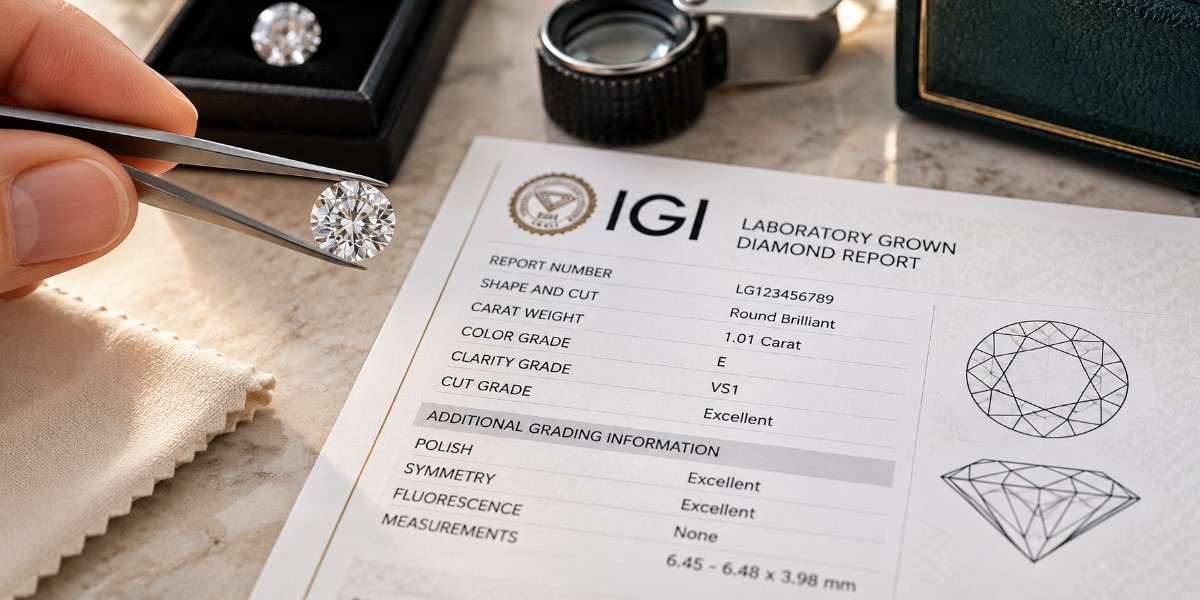
A diamond grading report, also called a certificate, records a stone's specifications. It lists carat weight, color, clarity, cut grade where applicable and measurements.
A report from an established laboratory adds confidence, and stones with reports often cost more than uncertified ones. Laboratories grade with different standards, so ask which lab issued the report. Confirm that the report number matches the exact stone you plan to buy.
Fluorescence, Polish and Symmetry
Smaller details can nudge the price:
-
Fluorescence: a glow under ultraviolet light. It rarely shows daily wear, but some buyers prefer none.
-
Polish and symmetry: the finish and facet alignment. Stronger grades help light return and often cost slightly more.
-
Depth and table: proportions that affect sparkle and visual size. Extreme numbers can signal weight in the wrong place.
None of these will usually outweigh cuts, but they can explain small differences between two similar stones.
Why Lab-Grown Prices Differ from Natural Stones
Lab-grown and natural diamonds share the same grading scale. Origins affect prices, though. Lab-grown stones generally cost less at the same size and quality because they're produced in controlled facilities rather than mined.
Production methods, technology, and supply levels also influence pricing, and these can change over time. Treat any price comparison as a snapshot and always compare live listings.
Setting, Metal and Seller Policies
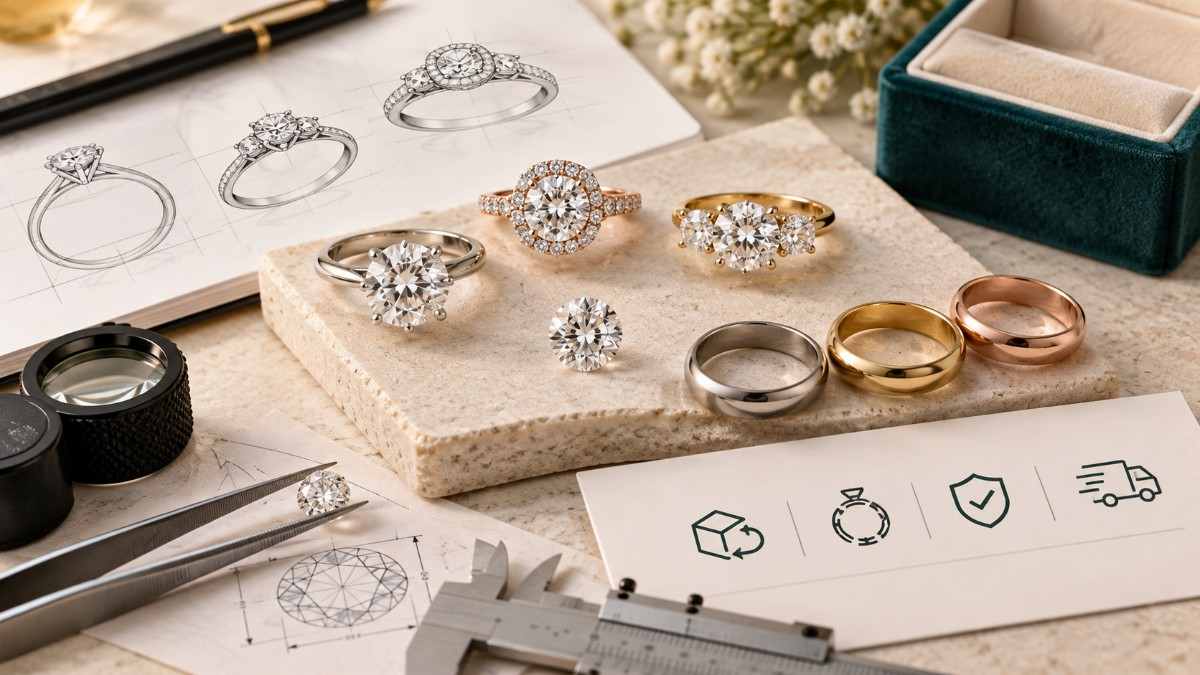
The diamond is only part of what you pay for. A finished ring includes:
-
Setting style: a solitaire usually costs less to make than a halo or three-stone ring
-
Metal: platinum usually costs more than 14K or 18K gold
-
Craftsmanship: stone placement, finish and build quality vary
-
Policies: returns, resizing, warranty and shipping all add real value
Jewelers and designers who build custom pieces can control this cost by choosing the mounting separately. You can browse a ring mounting collection to match a stone's dimensions to a suitable seat. Always confirm the stone millimeter size against the mounting before you commit.
How to Judge Whether a Price Is Fair
Use this short process:
-
Match the basics. Compare stones of the same shape and similar carats.
-
Compare cut grades first. Cut has the greatest effect on how the diamond looks.
-
Check color and clarity. Find grades you can't tell apart by eye.
-
Read the report. Confirm that the number matches the diamond.
-
Compare the full cost. Add the setting, shipping, fees, and policies.
-
View the stone. Photos and video show details specs can't.
Common Pricing Mistakes
-
Chasing carat alone. Weight is not appearance.
-
Paying for grades you can't see. Top color and clarity often add cost without visible change.
-
Ignoring the cut. It shapes sparkling more than any other factor.
-
Skipping the report. Without one, you rely on descriptions alone.
-
Comparing only diamonds. Setting policies change the total.
Questions Buyers Often Ask
1. Why do lab-grown diamonds cost less than natural diamonds?
Ans. Lab-grown diamonds are created in controlled facilities instead of being mined, which generally lowers cost at a given size and quality. Prices still depend on the 4Cs, shape and the market, so compare each stone to its own grades.
2. Which factor affects lab-grown diamond prices the most?
Ans. Carat weight usually has the largest effect, followed by cut, color, and clarity. For visible sparkle, cut often deserves the most attention in your budget.
3. Is a certified lab-grown diamond worth paying more for?
Ans. Often, yes. A grading report records the stone's specifications and lets you compare diamonds on facts. Check the lab and confirm the report matches the stone.
4. Does shape change the price of a lab-grown diamond?
Ans. Yes. Rounds often cost more per carat than ovals, pears or marquise stones, though market conditions shift. Compare live listings for the shape you want.
5. How can I get the best value in a lab-grown diamond?
Ans. Choose a strong cut, then pick color and clarity grades that look clean to your eye. Consider sizes just under popular weights, such as 0.95 carat, and compare total ring cost, including policies.
Conclusion
The price of a lab-grown diamond comes from carat weight, cut, color, clarity, shape, the grading report and the ring around it. No single number tells the whole story. Compare stones on facts, put your budget cut, and check the seller's policies before you pay.
If you're sourcing custom designs, you can explore mounting jewelry options to find settings that fit your stones.











Comments (0)