

Bandhas In Yoga: Understanding The Three Energy Locks
Understand the three main Bandhas in yoga: Mula, Uddiyana and Jalandhara. Explore their meaning, traditional importance, practice and precautions.
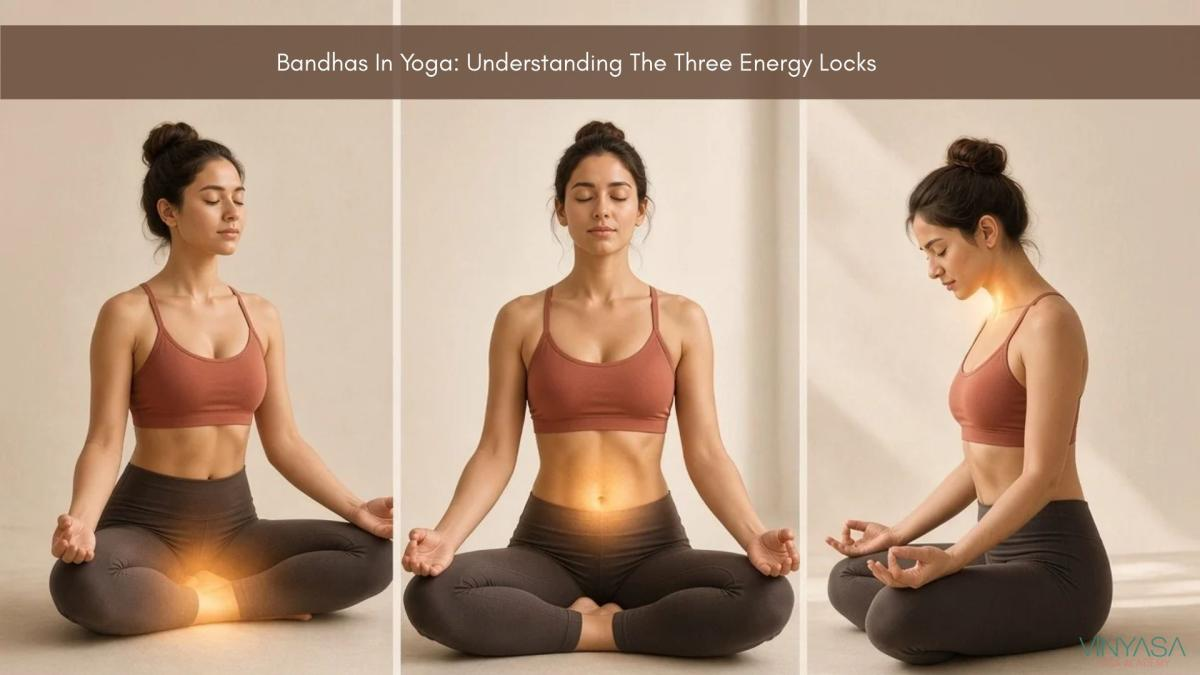
Yoga is often associated with stretching, balancing and holding different body positions. However, traditional yoga includes several techniques that are not always visible from the outside. Bandhas are one such part of yoga practice. They involve controlled muscular engagement and are traditionally understood as energy locks that help direct and regulate the movement of Prana, or life energy.
For someone new to yoga, the idea of an energy lock may sound difficult to understand. In simple words, a Bandha involves gently engaging a particular area of the body while maintaining awareness of breathing and posture. Three important Bandhas are Mula Bandha, Uddiyana Bandha and Jalandhara Bandha.
These techniques have an important place in traditional Hatha Yoga. Learning about them can help beginners understand why yoga is not only about flexibility but also about awareness, control and the relationship between the body and breath.
What Are Bandhas In Yoga, And Why Are They Important?
The Sanskrit word Bandha generally means lock, bind or hold. In yoga, Bandhas are techniques that involve controlled engagement of certain muscles and body regions. Traditional yoga teachings describe them as ways of directing Prana and supporting the practice of pranayama and meditation.
Students attending a 200 hrs yoga teachers training in rishikesh may study Bandhas as part of their introduction to Hatha Yoga, breathing practices and traditional yogic methods. Understanding these techniques helps students see how different parts of yoga work together.
Bandhas are not simply about tightening muscles as strongly as possible. They require attention, correct technique and a clear understanding of when to practise them. Their traditional purpose is connected with the movement of Prana, while their physical practice involves specific areas of the body.
The three main Bandhas are:
-
Mula Bandha – The root lock.
-
Uddiyana Bandha – The abdominal lock.
-
Jalandhara Bandha – The throat lock.
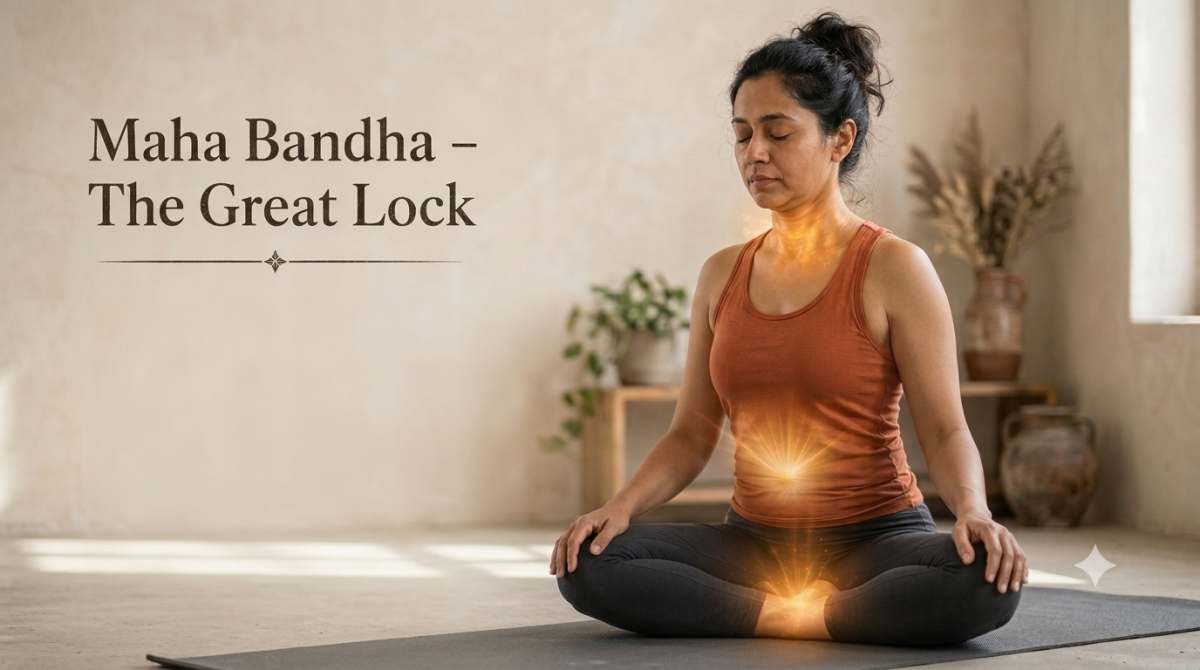
When all three are practised together, the combination is known as Maha Bandha, or the great lock.
Understanding The Three Main Bandhas
Each Bandha focuses on a different region of the body. Although they are connected in traditional yoga, beginners should learn them separately before attempting combined techniques.
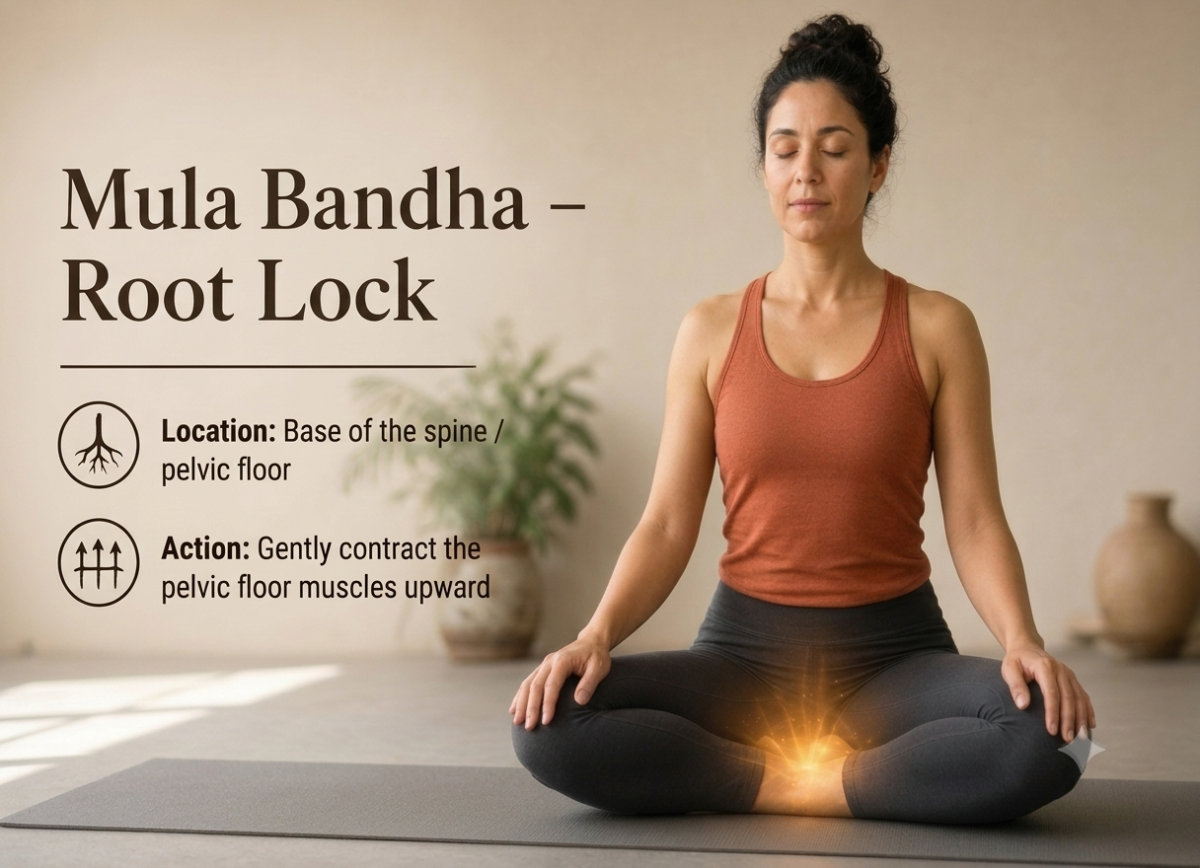
1. Mula Bandha: The Root Lock
Mula means root or foundation. Mula Bandha refers to a controlled engagement of the pelvic floor region.
In simple terms, the pelvic floor is a group of muscles located at the base of the pelvis. These muscles support the pelvic organs and play a role in bladder and bowel control.
In traditional yoga, Mula Bandha is associated with the root area and is understood as a technique for directing energy upwards.
How Is Mula Bandha Practised?
A beginner can start by sitting comfortably with the spine upright.
-
Relax the shoulders and face.
-
Bring attention to the pelvic floor.
-
Gently engage the pelvic floor muscles as though preventing the release of urine or gas.
-
Avoid tightening the buttocks, thighs or stomach unnecessarily.
-
Hold the engagement briefly while breathing comfortably.
-
Slowly release and return to a relaxed state.
The contraction should be gentle. It should not involve straining or holding the breath.
Beginners should not practise this technique by repeatedly stopping the flow of urine. That action is not recommended as a regular exercise method.
2. Uddiyana Bandha: The Abdominal Lock
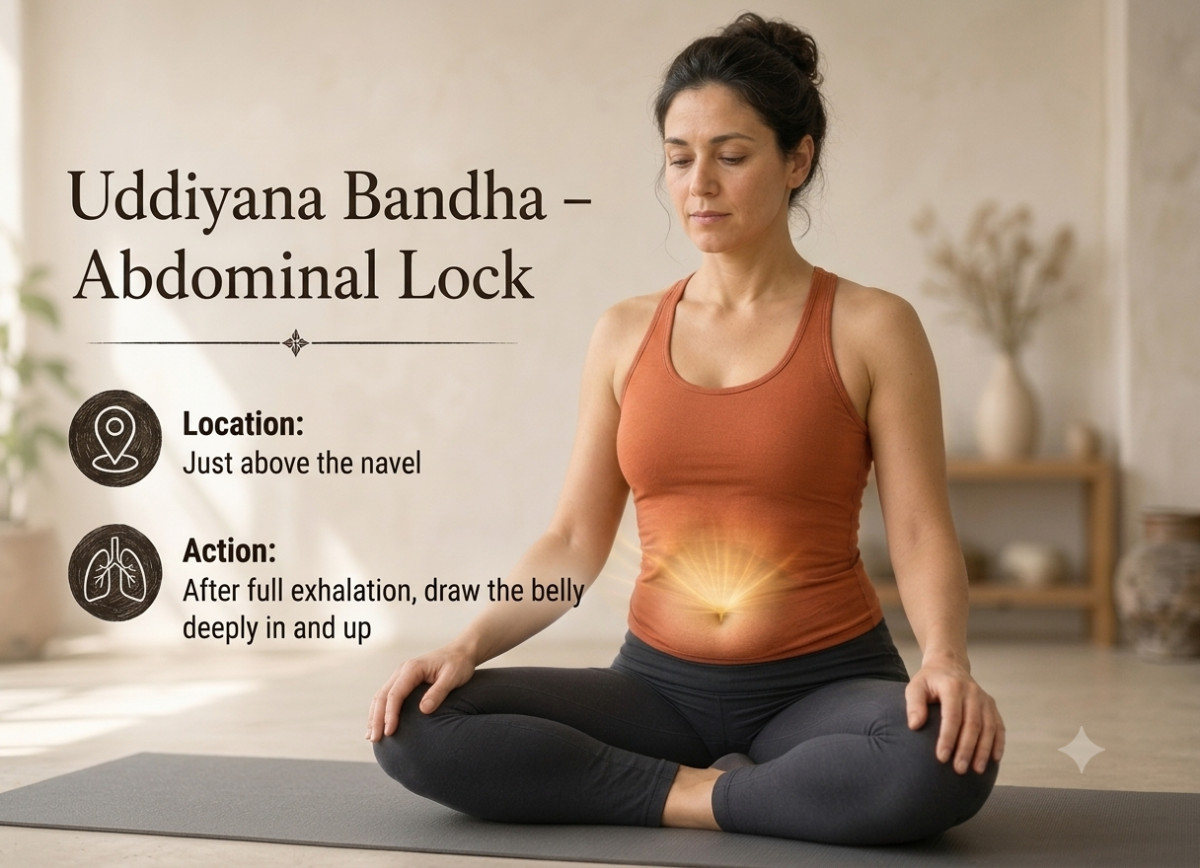
Uddiyana means rising or flying upward. Uddiyana Bandha is a traditional abdominal lock in which the abdominal wall is drawn inward and upward after exhalation.
This technique is different from ordinary abdominal tightening. It involves a specific combination of breath control and abdominal movement.
How Is Uddiyana Bandha Practised?
Traditional Uddiyana Bandha is generally practised on an empty stomach under qualified supervision.
-
Stand with your feet comfortably apart.
-
Bend your knees slightly and place your hands on your thighs.
-
Take a natural breath.
-
Exhale fully without straining.
-
Keep the breath out and gently expand the chest without inhaling.
-
Allow the abdominal wall to draw inward and upward.
-
Release the abdominal engagement before taking the next breath.
This practice should only be learned with proper guidance. It is not suitable for everyone, particularly people with certain heart, blood pressure, abdominal or digestive conditions, and during pregnancy.
3. Jalandhara Bandha: The Throat Lock
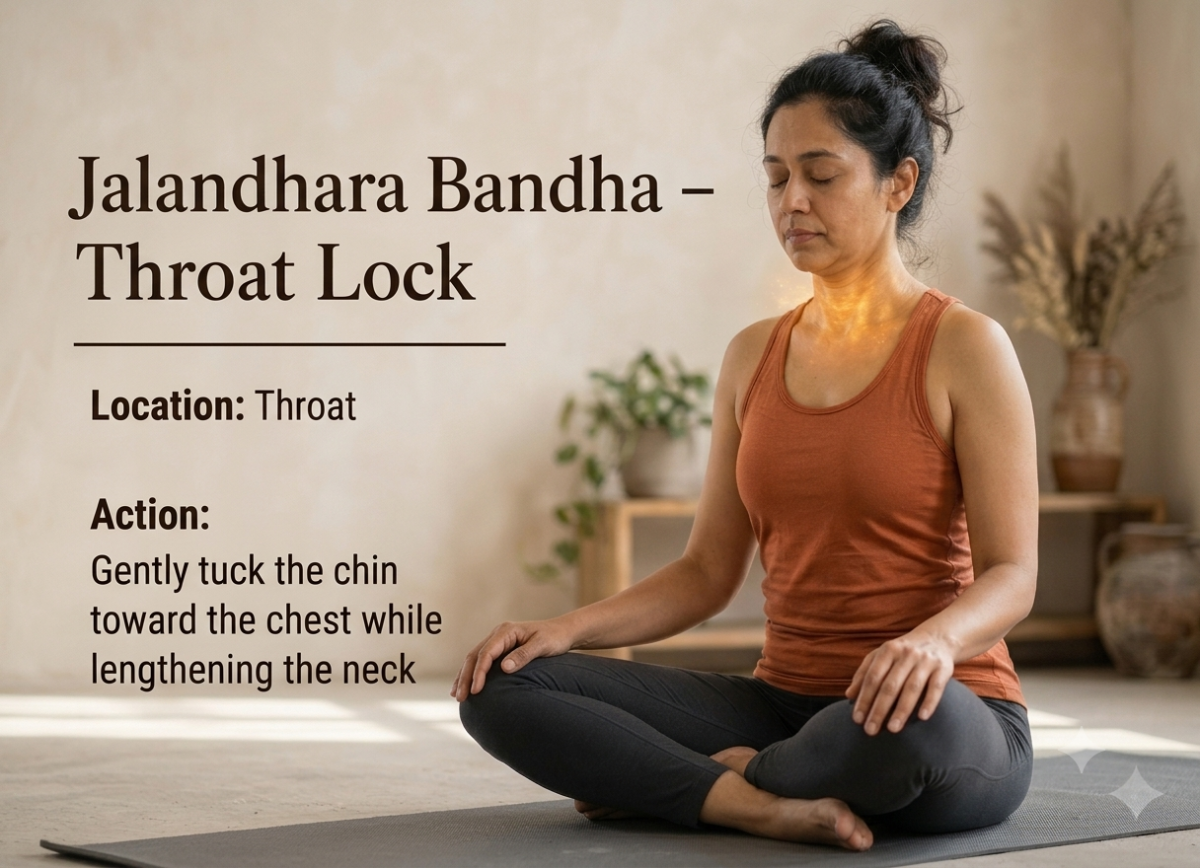
Jalandhara Bandha is commonly known as the throat lock. It involves a controlled lowering of the chin towards the upper chest while maintaining an appropriate position of the neck.
In traditional yoga, it is associated with regulating the flow of Prana during certain breathing practices.
How Is Jalandhara Bandha Practised?
-
Sit in a comfortable position with your spine upright.
-
Relax your shoulders.
-
Take a natural breath.
-
Gently lower the chin towards the upper chest.
-
Keep the neck comfortable without forcing the head downward.
-
Maintain the position only for the duration taught by a qualified instructor.
-
Slowly return the head to its normal position.
Beginners should avoid excessive pressure on the neck. People with cervical spine problems, neck injuries or other relevant conditions should seek professional guidance before attempting this technique.
What Is Maha Bandha?
Maha Bandha means the great lock. It refers to the traditional combination of Mula Bandha, Uddiyana Bandha and Jalandhara Bandha.
In certain Hatha Yoga practices, all three locks are brought together in a specific sequence while controlling the breath.
This is considered an advanced technique. It should not be attempted simply by combining the three individual movements without instruction.
The practice requires a good understanding of breathing, muscular engagement and the body's response to breath retention.
The Role Of Bandhas In Pranayama
Bandhas are closely connected with pranayama in traditional yoga. Pranayama involves working with the breath through different methods of inhalation, exhalation and, in some practices, breath retention.
During certain pranayama techniques, Bandhas are used to create controlled muscular engagement. Traditional yoga describes this as a way to guide Prana through the body's subtle energy system.
However, beginners should not assume that every breathing exercise requires a Bandha. Many simple pranayama practices can be learned without applying any energy lock.
A student should first develop comfortable breathing habits before exploring advanced breath control.
Possible Benefits And Traditional Importance Of Bandhas
Bandhas are traditionally valued for their role in developing control and awareness. Their physical and traditional aspects should be understood separately.
1. Better Awareness Of The Pelvic Floor: Mula Bandha introduces students to the pelvic floor muscles and their role in supporting the body.
2. Improved Muscular Awareness: Learning Bandhas can help students understand how different muscle groups work during yoga practice.
3. Greater Breathing Awareness: The techniques encourage attention to the relationship between breathing and muscular engagement.
4. Support For Traditional Pranayama: Bandhas are used in certain classical breathing techniques as part of a wider yogic method.
5. Greater Concentration: Practising a technique that requires careful attention can encourage focus and body awareness.
It is important to remember that claims about controlling life energy, balancing internal systems or producing specific medical results belong to traditional explanations and should not be presented as scientifically established health outcomes.
Common Mistakes When Practising Bandhas
Bandhas require patience. Beginners often make mistakes because they try to create strong muscular contractions without understanding the correct technique.
Some common mistakes include:
-
Tightening too many muscles at the same time.
-
Holding the breath without proper instruction.
-
Forcing the chin down during Jalandhara Bandha.
-
Practising Uddiyana Bandha after eating.
-
Treating Mula Bandha as a constant pelvic floor contraction.
-
Trying Maha Bandha before learning the individual techniques.
-
Ignoring pain, dizziness or discomfort.
A Bandha should never cause unnecessary strain. If dizziness, pain or breathing difficulty occurs, stop the practice.
How To Learn Bandhas Through Structured Yoga Education
Understanding Bandhas requires more than reading instructions. Students need to observe demonstrations, practise under guidance and understand the traditional background of each technique.
A structured yoga teacher training course can introduce students to the connection between asana, pranayama and traditional Hatha Yoga practices. Those exploring yoga teacher training india may come across different course structures depending on the school's teaching approach.
A yoga certificate course can provide an introduction to selected subjects, but students should check the actual curriculum and practical training hours.
People researching a yoga instructor course should look for proper instruction in anatomy, breathing and safe physical engagement.
A 200 hour yoga teacher training in india may provide foundational knowledge of yoga philosophy, posture practice, pranayama and teaching methods. However, advanced Bandha practices may require additional study.
A certified yoga instructor course should help students understand the limits of their teaching responsibilities. Similarly, yoga instructor certification is not the same as a medical or physiotherapy qualification.
Those considering yoga trainer certification should look for supervised practical learning rather than relying only on theoretical explanations.
A complete yoga teachers training program should explain both the traditional meaning and practical application of yogic techniques.
For anyone planning to become a yoga instructor india, learning how to explain difficult concepts in simple language is an important teaching skill.
Vinyasa Yoga Academy offers yoga education in Rishikesh and Bali, where students can explore different dimensions of yoga through structured learning. Anyone interested in a 200 hrs yoga teachers training in rishikesh should review the curriculum to understand which traditional techniques are included and at what level they are taught.
Conclusion
Bandhas are an important part of traditional Hatha Yoga. They involve controlled engagement of specific body regions and are traditionally understood as techniques for directing Prana.
Mula Bandha focuses on the pelvic floor, Uddiyana Bandha involves the abdominal wall, and Jalandhara Bandha uses a controlled throat and neck position. Their combination is known as Maha Bandha.
Although these practices may appear simple, correct technique and appropriate guidance are essential. Beginners should learn each Bandha gradually and avoid advanced breath retention or forceful muscular engagement.
Understanding Bandhas can help students appreciate the depth of yoga beyond physical postures. With patient learning and responsible practice, these traditional techniques become easier to understand.
Frequently Asked Questions

Vinyasa Yoga Academy is a Yoga Alliance USA-registered and ISO-certified yoga school with campuses in Rishikesh, India and Bali, Indonesia. Founded in 2010, it offers residential 100 hour, 200-hour, 300-hour, and 500-hour Yoga Teacher Training Courses (YTTC) at both locations, along with dedicated Kundalini Yoga Teacher Training programs (100, 200, 300, and 500-hour). Over 10,000 students from 60+ countries have trained under its E-RYT 500 certified instructors, covering multi-style asana practice, yoga philosophy, anatomy, and teaching methodology.






Comments (0)