

Why Are Hastelloy C276 Flanges Used in Flue Gas Desulfurization Systems?
Discover why Hastelloy C276 flanges are used in flue gas desulfurization systems for their corrosion resistance, strength, and durability in harsh environments.
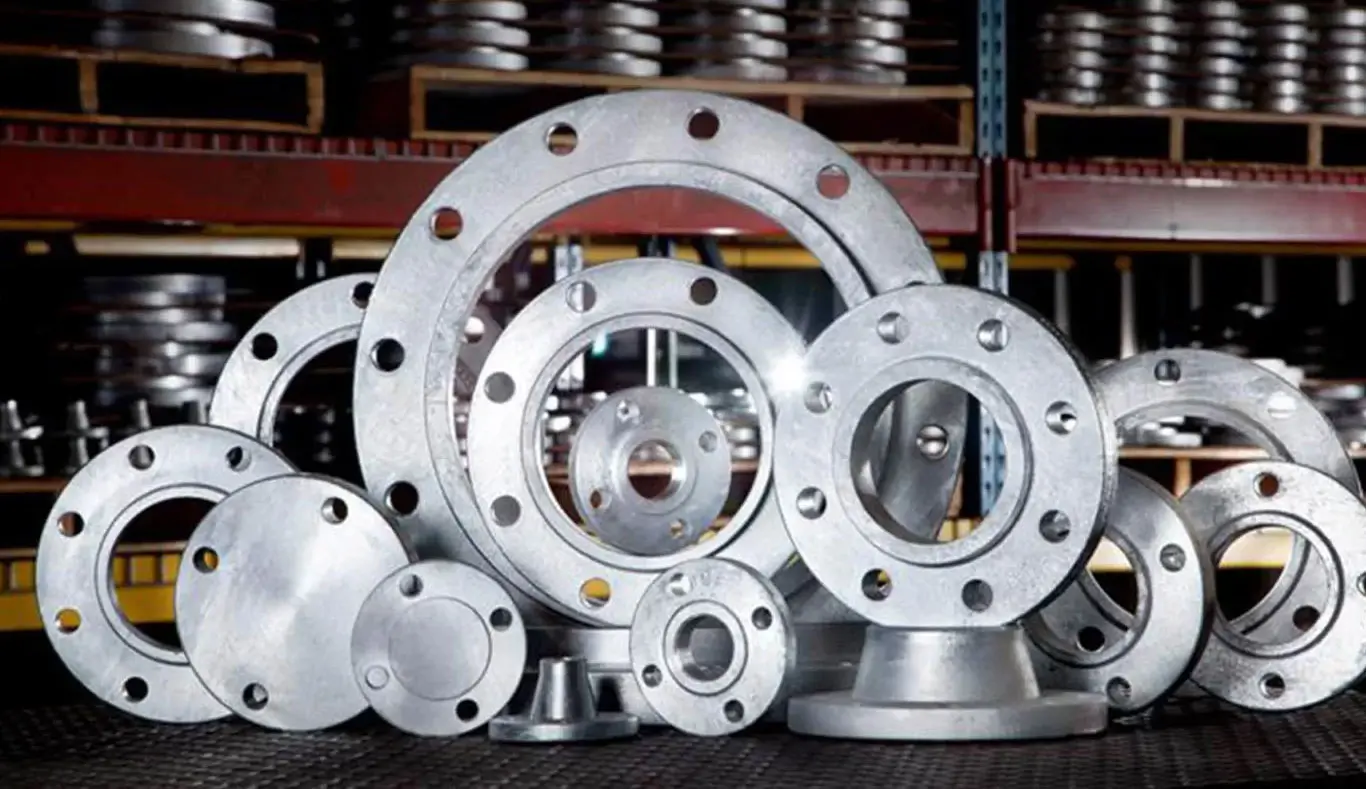
Coal-fired boilers send sulfur dioxide up the stack, and a wet scrubber strips it out first. That process creates one of the harshest environments in any plant. Sulfurous and sulfuric acids form as the gas cools, chlorides concentrate in the scrubber liquor, and moisture never leaves. Every flanged joint takes the hit, and one leak can shut down a line. Hastelloy C276 flanges for FGD systems give engineers a nickel-molybdenum-chromium alloy that holds up in this service. Here is why Hastelloy C276 flanges for flue gas desulfurization systems remain a preferred specification.
Why FGD Systems Require Corrosion-Resistant Flanges
Wet FGD units spray limestone slurry into the flue gas, leaving gypsum, dissolved sulfites, and acidic liquor. Absorber slurry holds pH 5 to 6, but condensate near the inlet can fall below pH 1. Recirculating liquor concentrates chlorides past 20,000 ppm, and temperatures swing from about 50°C in the absorber to over 150°C at the inlet. Carbon steel and 316L lose metal fast, especially at gasket faces and bolt holes where liquid pools. Hastelloy C276 flanges for corrosive FGD applications resist attack at exactly those weak points.
Excellent Resistance to Acidic and Chloride Environments
Hastelloy C276 (UNS N10276) combines roughly 57% nickel with 15 to 17% molybdenum, 14.5 to 16.5% chromium, and 3 to 4.5% tungsten. Molybdenum and tungsten block pitting. Chromium resists oxidizing acids, and the nickel base guards against chloride stress corrosion cracking, which splits austenitic stainless steels under tensile load. Crevice corrosion, the usual failure under gaskets, barely touches the alloy. Bolted FGD joints carry stress and trap chloride liquor at once, so this resistance targets their exact failure mode. Hastelloy C276 flanges for chloride and acid corrosion resistance keep those joints intact.
Performance in Wet Scrubbing Conditions
Under constant spray, slurry splash, and condensate drip, scrubber flanges never dry out. Lesser alloys need dry periods to rebuild their passive films, and a scrubber gives them none. C276 forms a stable passive layer that re-forms in acidic solutions, even when abrasive gypsum scuffs the surface. Smooth sealing faces keep gaskets seated through thermal cycling. Hastelloy C276 flanges for wet FGD scrubber systems protect the connection where liquid, acid, and chlorides meet.
Where Are C276 Flanges Used in FGD Systems?
Engineers specify Hastelloy C276 flanges for FGD scrubber piping applications at these points:
-
Scrubber piping: Flanges join spray headers and liquor lines, where acidic droplets and chloride films attack every bolted joint.
-
Absorber systems: Nozzle and manway flanges on absorber vessels seal against hot, acidic slurry and saturated gas without corroding at the gasket face.
-
Slurry circulation lines: Flanges on recirculation pipes handle abrasive gypsum slurry while resisting chloride pitting around bolt holes and raised faces.
-
Chemical dosing connections: Small-bore flanges on reagent and additive lines resist concentrated chemicals and stay leak-free at injection points.
-
Wet gas handling equipment: Flanges on ducts and quench sections face acidic condensate that forms whenever hot flue gas meets cooling water.
-
Drain and process piping: Drain-line flanges contact the most concentrated acidic liquor, so corrosion resistance there prevents leaks at the lowest points.
Long-Term Reliability of Hastelloy C276 Flanges
Corrosion determines flange lifespan in FGD service. A pitted raised face cannot compress a gasket evenly, and leaks follow. C276 avoids that slow metal loss, so bolt loads stay stable and sealing faces stay flat across years of operation. A corroded hub or bolt hole also weakens the joint under pipe load, so mechanical integrity matters as much as sealing. Fewer replacements mean fewer forced outages. Hastelloy C276 flanges for long-term FGD system reliability protect both.
Factors to Consider When Selecting C276 Flanges
Match every specification to the actual duty. Start with flange type: weld neck, slip-on, blind, socket weld, or lap joint. Confirm dimensions and pressure class against line design, and check operating temperature against allowable stress. Map chemical exposure, including acid strength, chloride level, and slurry solids. Keep flange, pipe, and fittings in compatible alloys. Specify standards such as ASTM B564 and ASME B16.5, and request material test certificates, PMI, and hydrotesting where the duty demands. Buyers researching how to select Hastelloy C276 flanges for FGD systems should treat this list as a checklist.
Conclusion
C276 suits FGD service because it resists acid, chlorides, and constant wetness, the three forces that destroy other flanges. Pitting, crevice attack, and stress corrosion cracking stay under control, so gaskets stay sealed and piping stays online. Correct specification and careful installation, including proper bolt torque and gasket choice, complete the job. Hastelloy C276 flanges for demanding flue gas desulfurization applications reduce shutdown risk. Nicorex Alloys is a stockist in Mumbai, ISO 9001:2015 certified and offers flanges with traceable documentation. Send us your size, class and quantity for a quote at Nicorex Alloys.

An engineer who loves writing about facts, properties, and applications of metals and materials.








Comments (0)