

What Can a Heart Scan Reveal About Your Health?
Explore how heart scans detect coronary calcium, narrowed arteries, and heart muscle damage, and how results help assess heart disease risk and guide care.

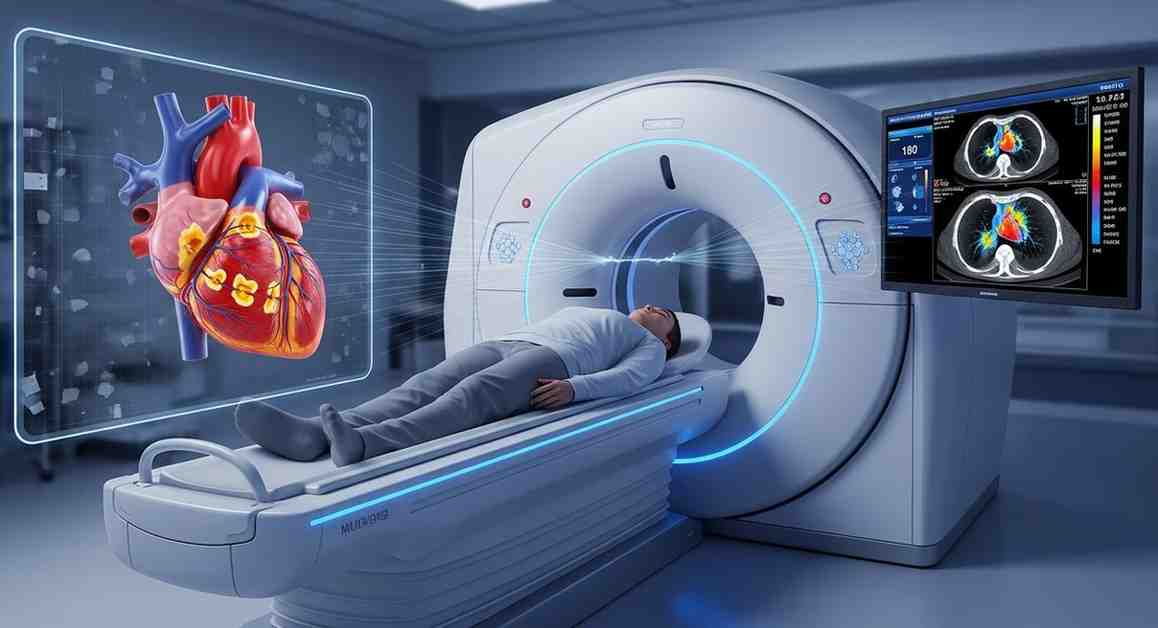
Heart disease can be asymptomatic; therefore, it can harm without leaving any symptoms. However, how can you understand whether there are any heart issues or not? The use of heart scans will allow medical specialists to investigate your heart and its surrounding arteries and find out some abnormalities or risks connected with heart disease.
The type of heart scan to be chosen depends on the test and its ability to show certain information. Heart scans can detect the amount of calcium in coronary arteries, assess the blood flow, heart function, and possible heart muscle damage. Therefore, it is necessary to understand the abilities of your test. In this article, information about popular heart scans, their use for ischemic heart disease diagnosis, and their results is provided.
What Is a Heart Scan, and What Can It Detect?
"Heart scan" refers to an imaging procedure that allows looking at certain parts of the heart or the blood vessels. The exact information obtained from the scan depends on the particular type of technology involved and the medical issue in question.
For instance, a coronary artery calcium scan involves CT to detect calcification of the coronary arteries. Calcifications show the presence of coronary atherosclerosis, where there is plaque in the arteries.
Different imaging procedures give different results. An echocardiogram is an ultrasound procedure that shows how well the heart works. A coronary CT angiogram helps to find out whether the coronary arteries have become narrowed or if there is any plaque in them. Cardiac MRI gives information about heart muscles and their damage.
One scan cannot detect all the possible diseases of the heart. It is determined by the doctor what type of scan should be done for a particular person.
How Can a Heart Scan Identify Ischemic Heart Disease?
Ischemic heart disease is a condition in which there is an insufficient supply of oxygen-filled blood to the cardiac muscle tissue due to a reduction in the lumen of the coronary arteries as a result of plaque formation.
The heart scan can be useful for the diagnosis of this condition; however, it depends on the kind of heart scan that is done. The calcium scan shows the amount of calcified plaque and the presence of the risk of coronary artery disease, but it will not show all types of plaques and how much blood actually gets to the cardiac muscle.
Coronary CTA (computed tomography angiography) gives better pictures of the coronary arteries and helps clinicians to find plaque and reduction in coronary arteries. Other scans, such as stress imaging, can be done to evaluate whether the heart flow becomes inadequate with increased effort from the heart.
For instance, one can experience chest pain during physical exercise. In this case, it will be necessary to diagnose whether the pain is caused by insufficient blood flow. Importantly, a normal calcium score does not completely rule out coronary artery disease.
What Do Heart Scan Results Mean for Your Prognosis?
"The ischemic heart disease prognosis" is an expression that denotes the outlook of the condition, which includes the chances of complications and how the treatment will influence the future condition of the patient.
Scan results can be used in the process of making the prognosis in the sense that they reveal whether the patient suffers from coronary plaques, narrowing of the heart vessels, or damage of the heart muscles. However, there are other factors that affect the prognosis of the disease, such as age, blood pressure, cholesterol, diabetes, smoking habits, exercise, and the seriousness of the heart disease that the patient has. An increase of the coronary calcium score means that there is a higher risk of suffering from calcified coronary plaques in the future, and it increases the probability of having cardiovascular problems. But the coronary calcium score does not give the exact time of the heart attack.
The information received after the scan will help the doctor in taking the necessary prevention measures, such as lowering the cholesterol level, the blood pressure level, giving up smoking, etc.
Living With Ischemic Heart Disease: What Helps?
Management of ischemic heart disease is a process that involves constant treatment of the condition in order to alleviate symptoms, safeguarding of the heart muscles, and avoid complications. The patients should be able to take their medication according to prescription, have check-ups from time to time, have a balanced diet, stop smoking, and exercise as directed by the physician. Cardiac rehabilitation may be used to increase exercise tolerance and decrease the cardiovascular risk factors. Whether other tests and rescans need to be done will be decided by the physicians depending on the symptoms. ViaScan, which offers health screening services in Irving, Texas, provides an example of how imaging and preventive assessments can help people investigate aspects of their health.
Conclusion
There are a number of ways in which a heart scan can give valuable insight into the health of your coronary arteries, how much narrowing of your blood vessels is present, the structure of your heart, or heart muscle injury, depending on the specific heart scan performed.
It would be wise to talk to your healthcare provider about your symptoms, family history, and other risk factors prior to getting any sort of heart scan. You need to know what a heart scan can tell you and what it can’t. ViaScan, which offers health screening services in Irving, Texas, provides an example of how imaging and preventive assessments can help people investigate aspects of their health.











Comments (0)