

How Industrial Plumbing Specialists in Melbourne Handle Complex Plumbing Requirements
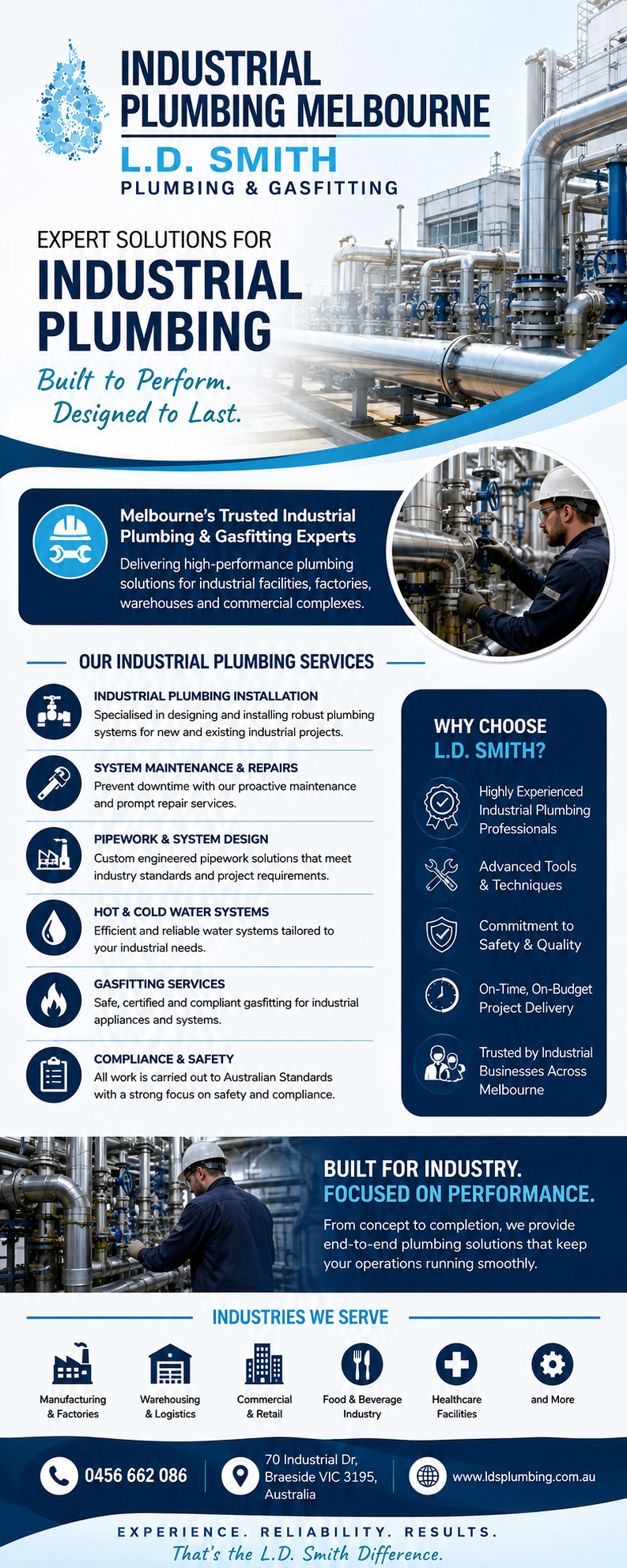
How Industrial Plumbing Specialists in Melbourne Handle Complex Plumbing Requirements
Industrial plumbing systems play an important role in keeping factories, warehouses, manufacturing facilities, commercial buildings, and processing plants operating safely and efficiently. Unlike standard residential plumbing, industrial plumbing involves larger pipe networks, specialised equipment, complex drainage systems, gas connections, and carefully planned water distribution. Even a small plumbing fault can affect production schedules, workplace safety, and the daily operations of an entire facility.
This is why businesses often rely on experienced industrial plumbing specialists who understand the technical demands of large-scale projects. Professional Industrial Plumbing Melbourne services cover everything from system design and installation to repairs, preventative maintenance, and specialised industrial applications.
L.D. Smith Plumbing & Gasfitting is one of Melbourne's experienced industrial plumbing service providers. The team delivers design, installation, and maintenance solutions for large-scale industrial projects. With skilled professionals, modern tools, and practical industry knowledge, the company helps businesses manage complex plumbing requirements and maintain reliable plumbing infrastructure.
In this article, we explore how industrial plumbing specialists manage challenging projects, address technical problems, and help businesses maintain efficient plumbing systems.
Understanding the Complexity of Industrial Plumbing Systems
Industrial plumbing systems are designed to support demanding environments where water, gas, drainage, and other connected services must operate reliably. These systems often serve multiple production areas, heavy-duty equipment, staff facilities, and specialised industrial processes.
The requirements of an industrial facility depend on its size, purpose, equipment, and daily operating demands. A manufacturing plant may need dedicated water supply lines, process drainage, and specialised pipework, while a food processing facility may require carefully designed systems to support cleaning and hygiene procedures.
Industrial plumbing specialists begin by understanding how the facility operates. They assess the existing infrastructure, identify potential limitations, and determine which plumbing solutions are suitable for the project.
Several factors can make industrial plumbing challenging:
-
Large and interconnected pipe networks.
-
High water demand and pressure requirements.
-
Specialised drainage and wastewater management.
-
Industrial gas connections and process equipment.
-
Limited access to existing pipes and machinery.
-
Strict workplace safety and regulatory requirements.
-
The need to minimise operational interruptions.
Experienced industrial plumbers consider these factors before recommending a solution. Careful planning helps reduce installation problems, prevent avoidable repairs, and support the long-term performance of industrial plumbing infrastructure.
1. Detailed Planning and Industrial Plumbing System Design
Proper planning is one of the most important stages of any industrial plumbing project. Before installation begins, specialists need to understand the facility's current requirements and how its plumbing infrastructure may need to change in the future.
The design process generally begins with a site assessment. Plumbers examine the building layout, existing pipework, water supply arrangements, drainage connections, and the location of machinery or processing equipment.
They also consider the expected water demand, operating pressures, temperature requirements, and maintenance access needed for the system.
For example, a growing manufacturing business may need additional production equipment that increases its water consumption. If the existing plumbing network cannot support the extra demand, the business may experience pressure problems or inconsistent water delivery.
An experienced industrial plumbing specialist can identify these concerns during the planning stage and recommend suitable pipe sizing, additional connections, or system modifications.
Good design also considers future expansion. Providing appropriate capacity and accessible service points can make later upgrades easier and help businesses avoid unnecessary reconstruction.
For businesses seeking Industrial Plumbing Melbourne services, working with experienced professionals from the beginning can help establish a reliable foundation for the entire project.
2. Installing Industrial Pipework and Water Distribution Systems
Industrial facilities often require extensive pipework to deliver water to different departments, machines, production lines, and service areas. These networks must be designed and installed to handle the facility's operating conditions.
Industrial plumbers assess the appropriate pipe materials, diameters, connection methods, and installation arrangements for each application. The selection depends on factors such as operating pressure, temperature, the type of fluid being transported, and relevant compatibility requirements.
Some projects may require specialised joining techniques, including electrofusion welding, where suitable polyethylene pipe systems are used. This method involves electrically heating a fitting to fuse it with the pipe, creating a joint when the process is correctly specified and performed.
L.D. Smith Plumbing & Gasfitting provides industrial plumbing services that include electrofusion welding for suitable applications.
During installation, specialists also pay attention to pipe supports, isolation valves, access points, and the placement of connections. These details are important because industrial pipework may need to withstand demanding operating conditions while remaining accessible for inspection and repairs.
Once installation is complete, appropriate inspections and testing help confirm that the system has been installed correctly and is ready for its intended use.
A properly designed and installed distribution system supports consistent water delivery, helps reduce leakage risks, and allows industrial operations to function more reliably.
3. Managing Complex Industrial Drainage Requirements
Industrial drainage systems must safely remove wastewater from production areas, washdown facilities, staff amenities, and other parts of a site. Depending on the business, wastewater may contain sediment, oils, grease, cleaning products, or other materials that require specific handling.
A standard drainage arrangement may not be suitable for every industrial application. Specialists must understand the nature of the wastewater, the volume produced, and the relevant discharge requirements before determining an appropriate solution.
For example, a food manufacturing business may need drainage arrangements that support frequent cleaning, while a workshop may require suitable measures to manage wastewater that could contain oils or other contaminants.
Industrial plumbers consider pipe gradients, drainage capacity, access for cleaning, and the location of collection points. They also assess whether existing drainage infrastructure can handle the facility's current and anticipated wastewater volumes.
Blocked drains, damaged pipes, and inadequate drainage capacity can lead to water accumulation, unpleasant odours, equipment disruption, and potential workplace hazards. Identifying these risks early helps businesses address problems before they become more serious.
Professional Industrial Plumbing Melbourne services can assist with designing, installing, inspecting, and maintaining drainage infrastructure suited to the demands of industrial environments.
4. Providing Industrial Gasfitting Solutions
Many industrial facilities rely on gas for heating, manufacturing processes, commercial equipment, and other specialised applications. These installations require careful planning because gas systems must operate safely and meet applicable technical and regulatory requirements.
Industrial gasfitting involves more than connecting pipes and appliances. Specialists must assess gas demand, pipe sizing, operating pressures, equipment specifications, ventilation requirements, and the overall arrangement of the installation.
Where industrial burners are involved, the plumbing and gasfitting team must consider the requirements of the connected equipment and the wider process system.
L.D. Smith Plumbing & Gasfitting provides industrial gasfitting services, including work involving process burners and package burners.
The correct installation and maintenance of these systems are essential for reliable operation. Inappropriate connections, deteriorating components, or incorrect operating conditions can create serious safety risks and affect production.
Qualified professionals can inspect relevant components, identify potential faults, and recommend repairs or modifications where required.
Industrial gas systems should be installed, tested, and serviced by appropriately licensed professionals. Businesses should also follow equipment manufacturers' instructions and applicable safety requirements.
By using experienced industrial gasfitting specialists, businesses can better manage the technical demands of gas infrastructure while maintaining an appropriate focus on workplace safety.
5. Installing and Maintaining Industrial Process Burners
Process burners are used in various industrial applications where controlled heat is required. They may form part of manufacturing equipment, heating systems, production processes, or specialised industrial machinery.
These systems require careful attention because their performance can affect product quality, energy use, production consistency, and workplace safety.
Industrial process burner work may involve assessing the existing gas supply, checking pipework, reviewing burner connections, and ensuring that the installation is suitable for the equipment's requirements.
Package burners can also require specialised installation and maintenance procedures depending on their design and intended application.
When a burner system does not operate correctly, the cause may involve the gas supply, associated pipework, control components, or the burner equipment itself. A systematic assessment helps identify the source of the problem instead of relying on unnecessary component replacement.
Routine inspections can also help identify wear, damaged connections, and other developing issues before they cause significant disruption.
L.D. Smith Plumbing & Gasfitting offers services relating to industrial process burners and package burners, helping businesses address specialised gas and heating requirements.
Because burner systems can involve combustion hazards and complex controls, work should be undertaken by suitably qualified specialists who understand the relevant equipment and safety procedures.
6. Using Electrofusion Welding for Suitable Industrial Pipe Systems
Industrial plumbing projects sometimes require specialised joining methods to create reliable connections within pipe networks. Electrofusion welding is one technique used with compatible polyethylene pipes and fittings.
The process uses an electrical heating element incorporated into the fitting. When the specified electrical current is applied, the fitting and pipe surfaces heat and fuse together under controlled conditions.
However, achieving a reliable joint depends on correct preparation and installation. Pipe surfaces must be prepared according to the manufacturer's requirements, components must be correctly aligned, and the welding cycle must follow the fitting specifications.
Environmental conditions, equipment calibration, and the handling of the joint during cooling can also influence the final result.
Industrial plumbing specialists understand the importance of following the correct procedure rather than treating electrofusion welding as a simple connection task.
This method can be useful in suitable industrial pipe systems where the material, operating conditions, and project specifications support its use.
After installation, the completed pipework should be inspected and tested as appropriate for the system. Accurate installation records can also support future maintenance and help site managers understand the configuration of the network.
For businesses undertaking complex plumbing upgrades, specialist pipe-joining expertise can contribute to dependable infrastructure and reduce the risk of problems associated with poorly installed joints.
7. Preventative Maintenance to Reduce Unexpected Disruptions
Industrial plumbing systems experience regular use, and some components operate under demanding conditions for long periods. Without suitable maintenance, small faults can develop into expensive repairs or interruptions to production.
Preventative maintenance involves inspecting plumbing infrastructure at planned intervals and addressing developing issues before they cause significant problems.
The maintenance schedule should reflect the type of facility, the condition of the equipment, operating demands, and the consequences of a potential failure.
Common maintenance activities include:
-
Inspecting accessible pipes and joints for leakage.
-
Checking valves and water supply connections.
-
Examining drainage systems for blockages or damage.
-
Assessing pipe supports and visible signs of corrosion.
-
Inspecting gasfitting components within the scope of the service.
-
Identifying deteriorating equipment and worn connections.
-
Recording faults and recommending necessary repairs.
For example, a minor leak near industrial machinery may initially appear manageable. However, if left unattended, it could damage nearby equipment, create slippery surfaces, or interrupt production.
Regular inspections help businesses identify such concerns and arrange repairs before the problem becomes more disruptive.
Professional industrial plumbers can also help facility managers prioritise maintenance tasks according to risk and operational importance.
A planned maintenance approach does not eliminate every plumbing failure, but it can improve visibility of the system's condition and help businesses make more informed decisions about repairs and upgrades.
8. Finding and Resolving Difficult Plumbing Problems
Industrial plumbing faults can be challenging to identify because pipework may run behind walls, beneath floors, above ceilings, or through restricted machinery areas.
A visible leak or pressure problem does not always indicate where the original fault occurred. The underlying cause may be located elsewhere in the system.
Experienced industrial plumbing specialists investigate the symptoms, review the system layout, and assess the relevant components before recommending repairs.
For instance, low water pressure may result from a supply restriction, a faulty valve, a leak, an unsuitable pipe diameter, or increased demand from recently installed equipment.
Similarly, repeated drainage blockages may indicate a deeper problem with pipe condition, capacity, or the type of material entering the drainage network.
A structured diagnostic approach helps specialists distinguish between immediate symptoms and underlying causes.
Where appropriate, they may use suitable inspection equipment and testing procedures to investigate concealed pipework or assess the performance of system components.
Once the cause has been identified, the repair can be planned around the facility's operating needs. This may involve replacing damaged sections, repairing connections, modifying pipework, or recommending a more comprehensive system upgrade.
Businesses seeking Industrial Plumbing Melbourne solutions benefit from working with specialists who can assess complex faults and provide practical recommendations based on the actual condition of the system.
9. Meeting Safety Standards and Regulatory Requirements
Industrial plumbing projects must account for the safety of workers, contractors, visitors, and the surrounding environment. The applicable requirements depend on the type of installation, the equipment involved, and the work being performed.
In Victoria, industrial plumbing and gasfitting work may be subject to relevant licensing requirements, plumbing standards, building regulations, gas safety requirements, and workplace health and safety obligations.
Industrial facilities may also need to consider environmental requirements for wastewater discharge, hazardous substances, and the handling of industrial waste.
Experienced specialists assess these obligations during project planning and ensure that work is performed within the scope of their qualifications and licences.
Safety considerations may include isolating services before repairs, controlling access to work areas, following appropriate lockout procedures where required, and ensuring that completed work is inspected and tested.
For gas installations, additional attention is needed to ensure that connections and equipment are suitable for the intended application and comply with relevant requirements.
Documentation is another important part of the process. Inspection results, testing records, maintenance reports, and details of completed modifications can help businesses maintain a clear record of their infrastructure.
Working with qualified professionals helps industrial operators manage compliance responsibilities and reduce the risks associated with poorly planned or incorrectly completed plumbing work.
10. Minimising Downtime During Industrial Plumbing Projects
For many industrial businesses, time is directly connected to productivity. A plumbing problem that interrupts a production line, restricts water supply, or affects essential equipment can have a significant operational impact.
Industrial plumbing specialists understand the importance of planning work around the facility's operating schedule wherever possible.
Before starting a project, they may consult site managers to understand production requirements, access restrictions, shutdown windows, and any areas that must remain operational.
Depending on the project, the work may be divided into stages so that different sections of the plumbing network can be upgraded or repaired separately.
Temporary service arrangements may also be considered where technically appropriate and safe. However, any temporary connections must be properly designed, installed, and assessed for the intended conditions.
Clear communication is essential. Facility managers should understand which services will be affected, how long the work is expected to take, and what preparations are required before the plumbing team arrives.
Good coordination helps reduce confusion and supports a smoother working process.
Although some repairs require immediate shutdowns for safety reasons, careful planning can help prevent avoidable interruptions during scheduled installations and upgrades.
11. Upgrading Existing Industrial Plumbing Infrastructure
Older industrial facilities may have plumbing systems that no longer meet current operating demands. Changes in production methods, new equipment, building extensions, or increased water consumption can place additional pressure on existing infrastructure.
In these situations, replacing the entire system may not always be necessary. A detailed assessment can help determine whether targeted improvements will provide a suitable solution.
Potential upgrades include replacing damaged pipework, increasing the capacity of selected supply lines, improving drainage arrangements, installing additional isolation valves, or modifying connections to accommodate new machinery.
The right approach depends on the condition of the existing system and the business's future requirements.
Industrial plumbing specialists evaluate the current infrastructure and identify areas where upgrades could improve reliability, accessibility, or performance.
They also consider whether proposed changes will affect connected equipment or other services within the facility.
For example, adding a new production line may require a review of water supply capacity, drainage volumes, and existing pipe connections. Making these changes without assessing the wider system could create pressure problems or drainage limitations.
A well-planned upgrade allows businesses to address current needs while preparing their facilities for future operational changes.
12. Choosing the Right Industrial Plumbing Specialists in Melbourne
Selecting a suitable industrial plumbing contractor is an important decision for any business managing complex infrastructure.
Industrial projects often involve more technical requirements than ordinary plumbing repairs, so experience with relevant systems and applications should be a key consideration.
Before engaging a contractor, businesses should evaluate several factors.
Relevant industrial experience: Look for professionals familiar with the type of facility, pipework, equipment, and processes involved in the project.
Appropriate licences and qualifications: Confirm that the contractor holds the licences and qualifications required for the specific plumbing or gasfitting work.
Range of services: A team capable of handling design, installation, maintenance, and specialised industrial requirements may help simplify project coordination.
Clear communication: The contractor should explain the proposed work, expected timeframes, potential risks, and maintenance considerations in straightforward language.
Testing and documentation: Ask how completed installations will be checked and what records will be provided.
Long-term support: Consider whether the contractor can assist with future inspections, repairs, and system modifications.
It is also useful to provide accurate information about the facility's current plumbing arrangement, operating requirements, and known problems before requesting a quotation.
This helps the contractor assess the project more effectively and develop a proposal suited to the site's actual needs.
For businesses looking for Industrial Plumbing Melbourne expertise, choosing a team with relevant technical experience and a practical approach to project delivery can make complex work easier to manage.
Why Choose L.D. Smith Plumbing & Gasfitting?
L.D. Smith Plumbing & Gasfitting provides industrial plumbing and gasfitting services for businesses that need practical solutions for complex infrastructure.
Industrial projects require careful coordination, technical knowledge, and an understanding of how plumbing systems interact with the wider facility. The company focuses on delivering design, installation, and maintenance services that address these requirements.
Its service capabilities include industrial plumbing, electrofusion welding, industrial gasfitting, backflow prevention, and work involving industrial process burners and package burners.
These services support businesses that need assistance with new installations, system modifications, maintenance requirements, and specialised industrial applications.
The team uses suitable tools and techniques to assess project requirements and develop solutions based on the intended application. Whether a business is planning a new industrial installation or addressing problems with an existing system, a detailed assessment helps establish the appropriate next steps.
Industrial plumbing requirements vary from one facility to another. For this reason, businesses should discuss their operating needs, existing infrastructure, and project objectives with an experienced professional before work begins.
By focusing on appropriate design, quality installation, and ongoing maintenance, L.D. Smith Plumbing & Gasfitting helps businesses manage the practical demands of industrial plumbing systems.
Conclusion
Industrial plumbing projects require a combination of technical expertise, careful planning, appropriate equipment, and ongoing maintenance. From installing extensive pipe networks and managing drainage systems to maintaining industrial gas connections and process burners, every part of the system must be suitable for the facility's operating requirements.
Experienced specialists assess these requirements before recommending solutions. They also consider workplace safety, relevant regulations, future expansion, and the need to minimise interruptions to business operations.
Choosing professional Industrial Plumbing Melbourne services can help businesses identify plumbing problems, maintain essential infrastructure, and plan upgrades with greater confidence.
L.D. Smith Plumbing & Gasfitting offers industrial plumbing and gasfitting expertise, including design, installation, maintenance, electrofusion welding, and specialised burner services.
Whether you are planning a large-scale industrial project, upgrading existing pipework, or arranging maintenance for a complex plumbing system, working with experienced professionals is an important step towards achieving a reliable and practical outcome.
Contact L.D. Smith Plumbing & Gasfitting to discuss your industrial plumbing requirements and determine the right approach for your facility.

Industrial Plumbing Specialists in Melbourne









Comments (0)