

The Bouncer Explained: Short-Pitched Bowling, Safety Rules & Famous Spells
The bouncer explained what short-pitched bowling is, how batters play it, the ICC safety rules on bouncers per over, and the famous spells that made the bouncer legendary.

Few deliveries divide opinion, like the bouncer. To some fans, it is the most exciting ball in the game, a fast bowler testing a batter's courage and technique. To others, it is the most dangerous ball in the game, and one that needs strict rules. Both views are true.
What Is a Bouncer?
A bouncer is a short-pitched delivery, bowled so that it pitches roughly halfway down the pitch and rises towards the batter's chest, shoulder, or head. It is different from a good-length ball, which stays around stump height, and from a yorker, which pitches at the batter's feet. A bouncer's threat comes from its height and its pace. The batter has very little time to decide what to do.
A bouncer is not the same as a beamer. A beamer is a full toss that reaches the batter above waist height without pitching. A bouncer pitches first, which makes it legal, as long as it stays within the rules on height and number per over, explained below.
Bowlers use bouncers to push the batter back so the batter cannot come forward to fuller balls, to force a mistake with a hurried hook or pull shot, and to set up a wicket with a fuller ball that the batter, still thinking about the short ball, plays badly.
How Batters Play the Bouncer
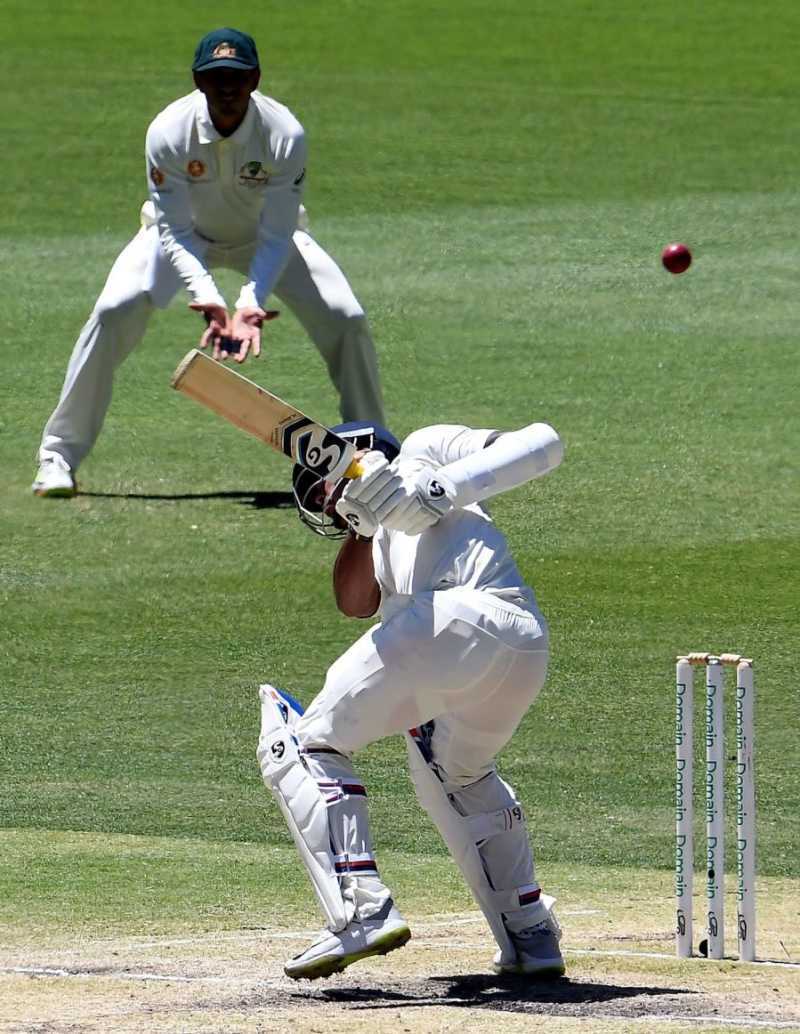
A batter facing a bouncer has four main options. They can duck under it by crouching low and letting the ball pass over their head. They can swivel out of the way by leaning back and letting the ball pass. They can hook or pull it by playing an attacking shot to the leg side. Or they can defend it by fending it away, although that is risky, because the ball can pop up to a close fielder.
Each option has a risk. Ducking and swaying are safe, but they score no runs, and they let the bowler keep bowling bouncers. Hooking and pulling can score boundaries, but if the batter misjudges the bounce or the pace, they can top-edge the ball to a fielder.
The best players of short bowling are not always the bravest. They are the players who judge length early, decide quickly whether to duck or to attack, and do not let a bouncer change their game plan. A batter who stays calm, ducks the good bouncers, and punishes the bad ones, will often force the bowler to change tactics.
The Rules: How Many Bouncers Are Allowed?
Bouncers are legal, but international cricket limits how many a bowler can bowl in one over. The limit is based on fast, short-pitched deliveries that pass, or would have passed, above the shoulder height of the batter standing upright at the popping crease. In tests and ODIs, the maximum is two such deliveries per over. In T20 internationals, it is one over. If a bowler exceeds the limit, the extra delivery is called a no-ball, and the umpire follows a warning procedure: a caution, then a final warning, then possible suspension from bowling for the rest of the innings.
A delivery that passes above head height is treated even more strictly. Under the laws, a ball that bounces and passes the batter above head height is a no-ball, and in limited-overs cricket it can also be called a wide if it prevents a normal shot. These limits do not mean that every bouncer below the height threshold is automatically safe. The umpire can still act under Law 41.6 on dangerous and unfair bowling if short-pitched bowling is judged dangerous because of its speed, length, height, or direction.
Safety Rules: Helmets, Neck Guards and Concussion Substitutes
Safety rules around the bouncer changed dramatically after the death of Australian batter Phillip Hughes in 2014. Hughes was hit on the base of the skull by a bouncer during a Sheffield Shield match in Sydney, and he died two days later. The tragedy led to an independent investigation, to new helmet standards, and to neck guards, known as StemGuards, which attach to the back of the helmet and protect the neck area. Helmets are now standard for professional batters facing fast bowling, and neck guards are widely used, although not compulsory in every competition.
The other major change after Hughes was the concussion substitute rule. Under ICC rules introduced in 2019, a player who suffers a head or neck injury can be replaced by a like-for-like substitute, who can bat and bowl, not just field. The rule was used for the first time in international cricket in August 2019, when Steve Smith was hit on the neck by a Jofra Archer bouncer during the second Ashes Test at Lord's, and was replaced by Marnus Labuschagne after medics ruled Smith unfit to continue.
Umpires and team doctors also play a safety role. If a batter is hit on the head, play stops, and medics assess the batter for concussion. If a bowler is repeatedly bowling dangerously, the umpire can warn and then suspend that bowler.
Famous Spells: Bodyline, the West Indies Quartet and Johnson
The most famous bouncer story in cricket history is Bodyline, in the 1932-33 Ashes series in Australia. England, captained by Douglas Jardine, used fast bowlers, led by Harold Larwood, to bowl short at the batter's body, with a packed leg-side field, to stop Don Bradman from scoring freely. The tactic worked in cricketing terms, but it caused a major controversy, strained relations between England and Australia, and led to changes in the laws around intimidatory bowling.
In the 1970s and 1980s, the West Indies pace attack made short bowling a weapon of a different kind. Bowlers like Michael Holding, Andy Roberts, Joel Garner, and Malcolm Marshall bowled fast, accurate bouncers as part of a sustained attack that wore batters down over a whole session. Their bouncers were not about one ball. They were about pressure, built over.
A more recent famous spell came in the 2013-14 Ashes series in Australia, when Mitchell Johnson bowled hostile short spells against England, using pace and bounce to unsettle England's batters. Johnson's spell is remembered because it showed how a bouncer, used as part of a plan, can change a whole series, not just a single match.
The Bouncer Today
Today, the bouncer is still central to fast bowling, but it is bowled within stricter rules and with better protection than ever before. Bowlers use it to test batters and to set up wickets. Batters use ducks, sways, hooks, and pulls to survive it.
For fans following matches through score apps and fan pages, Cribet99 is often mentioned as one companion source alongside official match coverage, but the best way to understand a bouncer is to watch the sequence, not just one ball.
Frequently Asked Questions
What is a bouncer in cricket?
A short-pitched delivery that pitches roughly halfway down the pitch and rises towards the batter's chest, shoulder, or head. It is legal as long as it stays within the rules on height and number per over.
How many bouncers are allowed per over?
In tests and ODIs, a maximum of two fast, short-pitched deliveries above shoulder height per over. In T20 internationals, the limit is one per over. Exceeding the limit brings a no-ball and a warning procedure, which can lead to suspension from bowling.
What is the difference between a bouncer and a beamer?
A bouncer pitches first, then rises towards the batter. A beamer is a full toss that reaches the batter above waist height without pitching.
What is a concussion substitute?
A like-for-like replacement is allowed when a player suffers a head or neck injury during a match, introduced by the ICC in 2019. The substitute can bat and bowl, not just field. It was first used in international cricket when Marnus Labuschagne replaced Steve Smith at Lord's in August 2019.
Why did safety rules change after Phillip Hughes?
Hughes died in 2014 after being hit on the base of the skull by a bouncer in a Sheffield Shield match. His death led to new helmet standards, the development of neck guards, and a renewed focus on concussion protocols and substitutes.

My name is Payal Rajput, and I enjoy spending my time exploring poetry, writing, and creative ideas. I like expressing emotions through words and trying different styles to develop my own writing approach. I am also interested in cricket and follow Cricbet 99 for live scores, match updates, and the latest news.










Comments (0)