

When Testicular Pain and Fertility Problems Appear Together
This blog explains how testicular pain occurring alongside fertility problems can signal underlying scrotal or reproductive conditions such as varicocele, epididymitis, orchitis, hydrocele, hernia, or even testicular tumours. It highlights that while pain does not always mean low sperm count, several painful conditions are recognised causes of oligospermia and can affect sperm production or transport. The article guides men on when to seek evaluation, what tests are typically done (semen analysis, scrotal ultrasound, hormone tests), and how treatment may improve both pain and fertility outcomes. It also introduces Dr. Aravind’s IVF clinics in Ganapathy, Thudiyalur, and Sundarapuram as trusted centres for confidential male-fertility assessment.

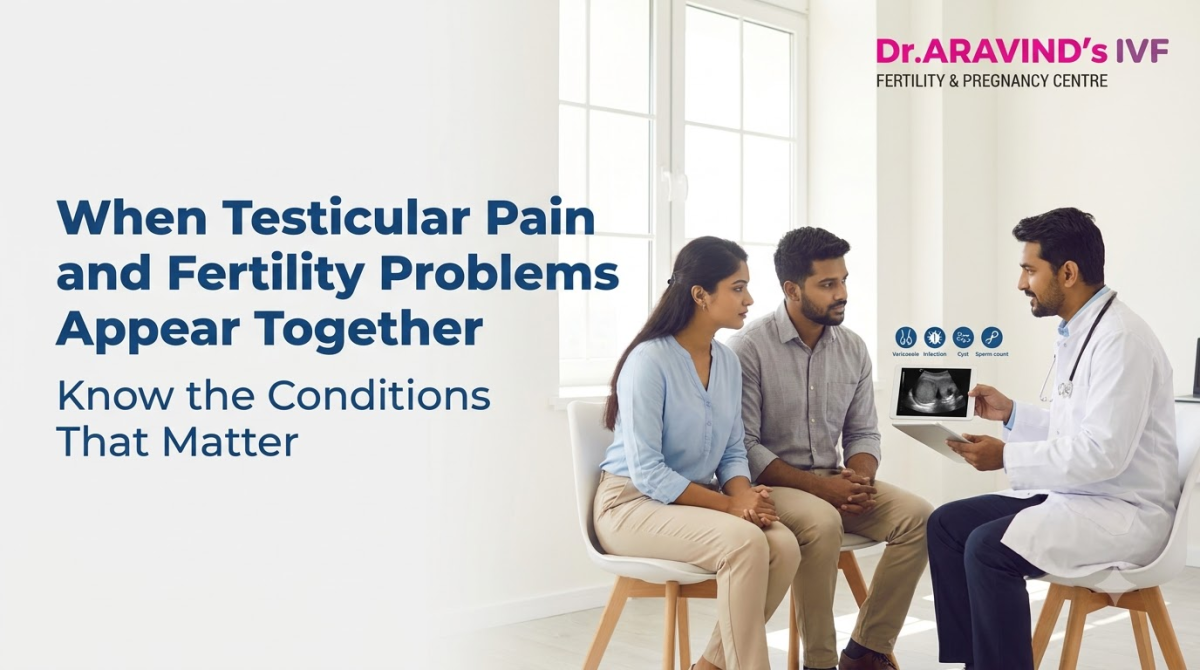
Testicular pain and fertility problems occurring together often point to an underlying scrotal or reproductive condition that needs evaluation. Pain does not always mean low sperm count, but several conditions that cause discomfort can also affect sperm production or transport. Recognising these links early can help couples avoid delays in treatment at the Best IVF centre in Ganapathy.
Why Testicular Pain Should Not Be Ignored in Fertility
Many men assume that mild or intermittent testicular discomfort is normal. However, when pain appears alongside difficulty conceiving, it may signal:
-
Inflammation or infection affecting the testicle or epididymis
-
Varicocele causing both heaviness and impaired sperm production
-
Obstruction or structural issues in the reproductive tract
-
Less commonly, tumours or other serious conditions
Some of these are recognised causes of oligospermia (low sperm count) and require targeted management.
For more information about sperm-related concerns, read oligospermia symptoms in Coimbatore.
Common Conditions Linking Pain and Fertility Issues
1. Varicocele
A varicocele is an enlargement of the veins within the scrotum. It is one of the most common correctable causes of oligospermia.
Typical features include:
-
Dull ache or heaviness, often on the left side
-
Discomfort that worsens after standing or physical activity
-
Sensation of a “bag of worms” above the testicle
-
Possible reduction in testicular size over time
Varicocele can raise testicular temperature and increase oxidative stress, which may impair sperm production and lead to low sperm count, poor motility, or abnormal morphology.
2. Epididymitis and Orchitis
Epididymitis (inflammation of the epididymis) and orchitis (inflammation of the testicle) can be caused by infections (including sexually transmitted infections) or non-infectious inflammation.
Symptoms may include:
-
Pain, swelling, and tenderness in the scrotum
-
Warmth or redness
-
Fever or urinary symptoms in some cases
Severe or recurrent infections may damage the epididymis or testicular tissue and contribute to causes of oligospermia or obstructive infertility.
3. Testicular Torsion (Past or Present)
Testicular torsion is a twisting of the testicle that cuts off blood supply. It causes sudden, severe pain and is a surgical emergency.
Even if the testicle is saved, prior torsion can lead to:
-
Reduced testicular function on the affected side
-
Lower overall sperm production, especially if both testicles are involved
-
Chronic discomfort or sensitivity
Men with a history of torsion should have a fertility-focused evaluation if conception is difficult.
4. Hydrocele, Spermatocele, or Epididymal Cyst
These are fluid-filled swellings around or near the testicle.
They may cause:
-
Painless or mildly painful swelling
-
Heaviness or dragging sensation
-
A noticeable lump above or behind the testicle
While often benign, large or long-standing cysts can cause discomfort and, in some cases, affect testicular function or sperm transport.
5. Inguinal Hernia
A hernia that extends into the scrotum can cause:
-
A bulge in the groin or scrotum
-
Heaviness or pain, especially after lifting or standing
Large hernias can affect comfort and, rarely, testicular blood flow or sperm transport.
6. Testicular Tumours
Although less common, testicular cancer can present as:
-
A painless lump or swelling
-
A feeling of heaviness or change in testicular consistency
-
Sometimes dull pain or discomfort
Any new lump or persistent change in the testicle should be evaluated promptly. Treatment for testicular tumours (surgery, chemotherapy, radiation) can significantly affect fertility, so sperm banking is often discussed before treatment.
When Should You Seek Evaluation?
You should consider seeing a specialist at the IVF centre in Ganapathy if you have:
-
Persistent testicular pain or heaviness lasting more than a few weeks
-
Pain along with difficulty conceiving (after 12 months of trying if the female partner is under 35, or 6 months if she is 35 or older)
-
Visible or palpable lumps, swelling, or enlarged veins in the scrotum
-
A history of undescended testicles, testicular injury, infection, torsion, or surgery
-
Prior chemotherapy, radiation, or testosterone/anabolic steroid use
Early assessment helps identify reversible causes of oligospermia and plan timely treatment.
How Is It Evaluated?
An IVF centre in Coimbatore may recommend:
-
Detailed history and physical examination: Including assessment of testicular size, consistency, and presence of varicocele, hydrocele, cysts, or masses.
-
Semen analysis: At least two tests to assess sperm concentration, motility, and morphology.
-
Scrotal ultrasound: To confirm varicocele, hydrocele, cysts, hernia, or other structural issues and to assess blood flow.
-
Hormone tests: Testosterone, FSH, LH, prolactin, and thyroid function when indicated.
-
Infection screening: If symptoms suggest epididymitis or orchitis.
-
Further tests: Genetic testing in selected men with severe oligospermia or suspected tumours.
This work-up helps determine whether the pain is linked to a condition that may affect fertility.
Can Treatment Improve Both Pain and Fertility?
Often, yes:
-
Varicocele: In selected men with a palpable varicocele, infertility, and abnormal semen parameters, repair may improve sperm count and reduce discomfort.
-
Infection: Appropriate antibiotics and anti-inflammatory treatment can resolve infection and may protect future sperm production.
-
Cysts or hydrocele: Surgery may be considered if they are large, symptomatic, or affecting daily life.
-
Hernia or tumours: Surgical management is often required; fertility implications depend on the specific condition and treatment.
The best IVF centre in India should provide balanced counselling about the potential benefits, limitations, and timing of any intervention in the context of overall fertility planning.
Our Clinic
Dr. Aravind’s IVF – Ganapathy & Coimbatore
Dr. Aravind’s IVF provides confidential male-fertility evaluation for couples across Coimbatore. Our clinics are conveniently located in:
-
Ganapathy (primary centre)
-
Thudiyalur
-
Sundarapuram
The team reviews scrotal symptoms, semen analysis, hormone health, ultrasound findings, lifestyle factors, medical history, and partner-related fertility concerns to recommend a suitable next step.









Comments (0)