

How to Report a Crime Online: A Step-by-Step Guide
Reporting a crime online can be simple when you know the right steps. Find the correct law enforcement agency, gather accurate details, preserve screenshots and payment records, and submit your report. For scams, consider FTC and FBI IC3 reporting, contact your bank quickly, protect your accounts, and avoid recovery scams.
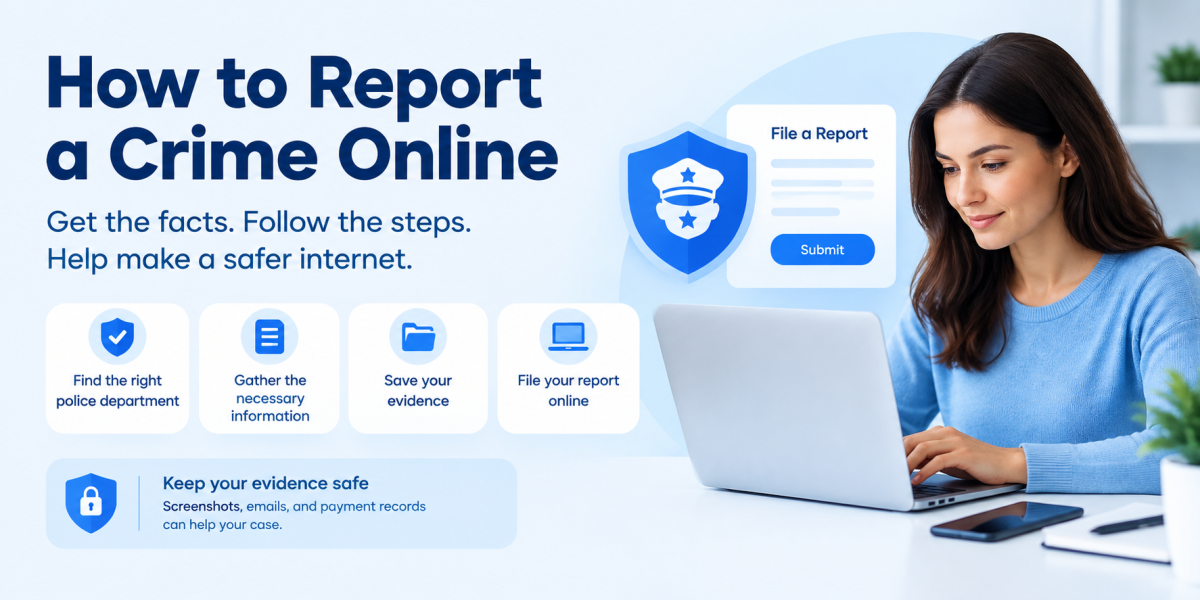
When you become the victim of a crime, knowing what to do next can feel overwhelming. Whether you have experienced fraud, identity theft, property theft, harassment, or another type of incident, reporting it promptly can help create an official record and may assist law enforcement in identifying patterns or connecting your case with other investigations.
Fortunately, many police departments and law enforcement agencies now provide online reporting options for certain non-emergency incidents. If you are wondering how to file a police report online, the process is often straightforward, although the exact requirements vary depending on where the incident occurred.
At Unscammed, we believe that people should have clear information about what to do after experiencing a scam or other form of fraud. Here is what you need to know before submitting a report.
When Should You Report a Crime Online?
Online reporting is generally intended for non-emergency situations. Examples can include certain types of theft, property damage, fraud, identity theft, lost property, and other incidents that do not require an immediate police response.
The U.S. government recommends contacting the local law enforcement agency where the crime occurred to determine how the incident should be reported. Many agencies provide online systems or dedicated non-emergency reporting options.
However, an online report is not appropriate for every situation.
If you or another person is in immediate danger, call 911. If a serious crime is currently taking place or you need an immediate police response, do not wait for an online reporting system.
For non-emergency incidents, however, being able to file a police report online can save time and provide a convenient way to document what happened.
Find the Correct Police Department
One of the most important steps is making sure your report goes to the appropriate law enforcement agency.
Generally, you should contact the police department or sheriff's office responsible for the location where the incident occurred. This may be different from the agency closest to your home.
For example, if you were visiting another city when your property was stolen, the police department serving that location may be responsible for the report.
You can search for the relevant agency online and visit its official website. Look for sections labeled "Online Reporting," "File a Report," "Non-Emergency," or similar wording.
If you are unsure which agency to contact, USA.gov recommends searching for the local law enforcement agency where the crime occurred.
Understand What Information You May Need
Before you begin an online report, gather as much relevant information as possible. Having your information organized can make the process easier and help you provide a clearer account.
Depending on the type of incident, you may need:
-
Your name and contact information
-
The date and approximate time of the incident
-
The location where it happened
-
A description of what occurred
-
Information about the person or business involved
-
Transaction details, if money was involved
-
Names, usernames, phone numbers, or email addresses connected to the incident
-
Website addresses or social media profiles
-
Screenshots, receipts, messages, emails, or other relevant records
-
Information about property that was stolen or damaged
-
The approximate value of financial or property losses
Try to describe the incident accurately and in chronological order. Avoid guessing when you are uncertain. If you do not know an exact date, amount, or identity, provide the information you do have.
Save Your Evidence
If you have been scammed, do not immediately delete messages, emails, payment records, or other information connected to the incident.
Screenshots can be particularly useful when dealing with online scams. Save copies of suspicious messages, profiles, websites, receipts, payment confirmations, and communications with the person who contacted you.
If you are reporting cyber-enabled fraud to the FBI's Internet Crime Complaint Center, or IC3, you can provide detailed information about the incident and the person or organization involved. IC3 advises complainants to retain original evidence because law enforcement agencies may need it later. Internet Crime Complaint Center
Keep your evidence somewhere secure. Organizing it in a folder can also make it easier to provide information to your bank, payment provider, police department, or other reporting agency.
How to File a Police Report Online
Once you have identified the appropriate law enforcement agency, visit its official website. Find its online reporting portal and review the eligibility requirements before starting.
The reporting system may ask questions to determine whether your incident qualifies for an online report. If it does, you will generally be asked to provide information about what happened.
When completing the report:
-
Enter your information accurately.
-
Provide the date, time, and location of the incident when known.
-
Explain what happened clearly and factually.
-
Include information about financial or property losses.
-
Identify suspects or suspicious accounts if you have relevant information.
-
Attach supporting documentation if the system allows it.
-
Review your answers before submitting.
-
Save the confirmation or report number after submission.
Your local agency may contact you for additional information or tell you that another reporting method is required.
What If the Incident Involves a Scam?
Scams can be complicated because they may involve several organizations at the same time. If you lost money through an online scam, contacting your local police department may be one part of the reporting process, but it may not be the only report you should make.
The Federal Trade Commission accepts reports involving scams, fraud, and bad business practices through ReportFraud.ftc.gov. The FTC explains that reports can help investigators identify patterns, build cases, and alert others about emerging scams.
For cyber-enabled fraud, scams, and other internet-related crimes, you may also consider reporting the incident to the FBI's IC3. IC3 serves as a central reporting point for cyber-enabled criminal activity, and complaints can be referred to appropriate law enforcement or partner agencies when applicable.
This means that if you need to file a police report online after an online scam, you should also consider which federal or consumer-protection reporting channels apply to your situation.
Contact Your Bank or Payment Provider Quickly
If money was sent to a scammer, reporting the incident should not be your only priority.
Contact the bank, credit card company, payment app, cryptocurrency service, or other financial institution involved as soon as possible. Explain that the transaction may be fraudulent and ask what options are available.
The faster you act, the more opportunities there may be to secure your account, dispute a transaction, or prevent additional unauthorized activity.
Also change passwords if you believe your accounts have been compromised. Use strong, unique passwords and enable multifactor authentication whenever possible.
What Happens After You Submit a Report?
Submitting an online report does not necessarily mean that an investigation will immediately begin.
The law enforcement agency may review your information and determine whether it has enough information or jurisdiction to investigate. You may receive a report or reference number, and an officer may contact you for additional information.
Keep your report number in a safe place. You may need it when communicating with the police, your financial institution, insurance company, or another organization.
For federal cybercrime reporting, IC3 states that complaints are analyzed and may be referred to federal, state, local, or international law enforcement and partner agencies for possible investigation.
Be Careful of Follow-Up Scams
Unfortunately, criminals sometimes target people who have already lost money.
Someone may contact you claiming they are a police officer, government investigator, lawyer, recovery specialist, or cybersecurity expert. They may promise to recover your money in exchange for an upfront payment or personal information.
Be cautious.
The FBI warns that scammers impersonate IC3 and falsely claim they can recover victims' funds. IC3 states that it does not work with non-law-enforcement entities to recover lost funds and will not directly contact victims to request money.
Never send additional money simply because someone promises to recover money you previously lost.
How Unscammed Can Help
Reporting a scam can feel confusing, especially when you are unsure which organizations need to be contacted.
Unscammed helps people understand their reporting and recovery options after scams. Its platform is designed to help users report scams, organize information, and take appropriate next steps. unscammed.com
The important thing is to act promptly, preserve your evidence, contact relevant financial institutions, and use official reporting channels.
If you need to file a police report online, start by identifying the correct local law enforcement agency and checking whether it accepts your type of incident through its online reporting system.
Final Thoughts
Being scammed or becoming the victim of a crime can be stressful, but you do not have to remain silent. Reporting an incident creates a record and can provide useful information to law enforcement and other organizations working to identify criminal activity.
If your situation is an emergency, call 911. For eligible non-emergency incidents, check your local police department's website for online reporting options.
For scams and fraud, consider additional reports to agencies such as the FTC and IC3 when appropriate. Most importantly, act quickly, preserve evidence, protect your accounts, and be cautious of anyone who promises guaranteed recovery.
At Unscammed, our goal is to help people take informed steps after a scam and feel more confident about what to do next.

Unscammed AI is an automated consumer defense platform built to fight digital fraud. It streamlines the complex recovery process by using AI to generate and file structured fraud reports directly to the FTC, FBI (IC3), and bank fraud units. Trusted by over 50,000 users, it has processed over $50 million in scams. The platform also features Unscamy, a 24/7 toll-free AI companion that detects phone fraud in real time to stop losses before they happen.



Comments (0)