

Single-Line vs Dual-Line Lubrication Systems: Which One Does Your Machinery Need?
The single-line versus dual-line decision isn't about which Motorised Lubrication Unit costs less upfront — it's about matching the system to your point count, distance, and fault-monitoring needs.

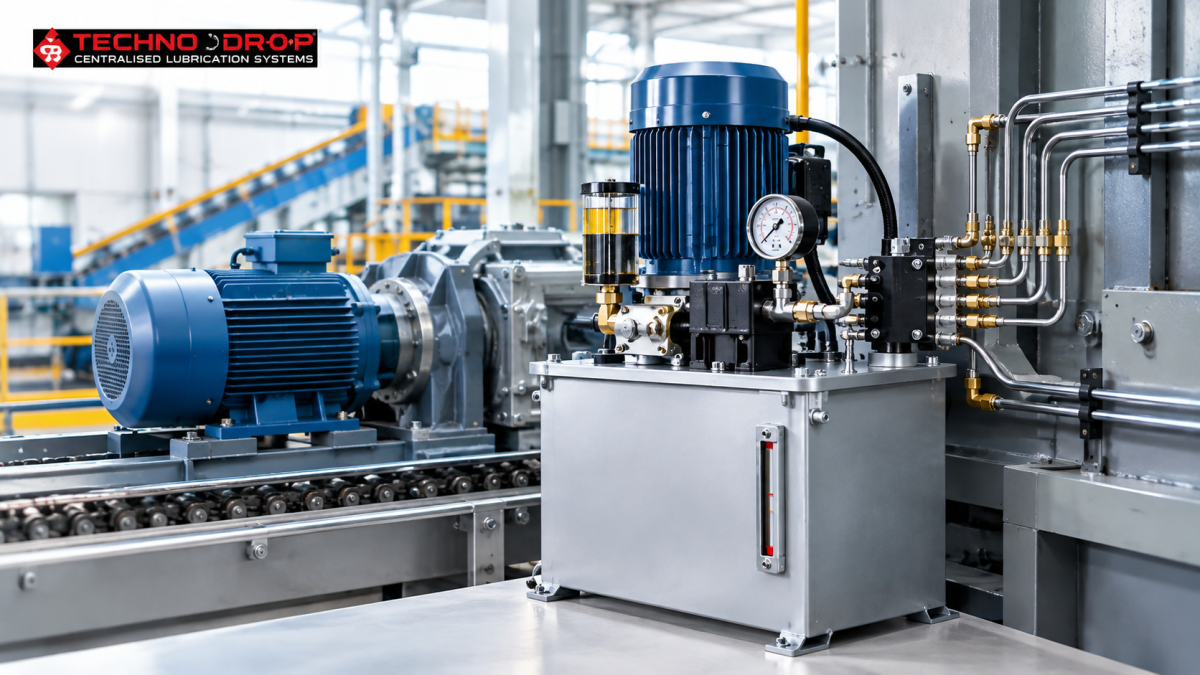
A maintenance manager at a rolling mill once told us his team was greasing 40 bearing points by hand, twice a shift, because the plant's original lubrication system had been specified wrong from day one. Nobody had asked whether the machine needed a single-line or dual-line setup. Somebody just picked one off a catalogue page. Eighteen months later, three bearings had seized.
That's the real cost of getting this decision wrong. A lubrication system isn't a commodity part you match on price. It's a design choice tied to your machine's load points, distance, and duty cycle. Get the topology wrong, and you're either underfeeding critical points or overpaying for complexity you don't need.
This piece breaks down single-line and dual-line lubrication systems on the criteria that actually matter to a plant floor — not marketing copy.
Specification
Single-Line Resistance Systems
A single-line system runs one main feed line from the pump to a series of metering valves, each delivering a fixed dose of grease or oil to its lubrication point. The system depends on line pressure building up sequentially — valves further from the pump receive lubricant after those closer to it.
-
Typical working pressure: 15–40 bar
-
Best suited to: 10–80 lubrication points
-
Line length: works reliably up to roughly 30–40 metres from the pump before pressure drop becomes a problem
-
Common in: conveyor systems, smaller stamping presses, packaging lines
Dual-Line Systems
A dual-line system uses two alternating main lines and reversing valves at each point, feeding lubricant in two directions in sequence. It's built for scale.
-
Typical working pressure: 150–350 bar
-
Point capacity: handles 100 to over 2,000 lubrication points on a single system
-
Line length: performs reliably over 100+ metres, which matters on large rolling mills and cement kilns
-
Common in: steel and rolling mills, cement plants, large mining equipment, power generation turbines
Here's the detail most buyers skip entirely: dual-line systems give you point-by-point fault monitoring, because each reversing valve can be fitted with a position indicator. Single-line systems generally can't tell you which specific point failed — only that the line pressure dropped somewhere downstream. If early fault diagnosis matters to your maintenance strategy, that's not a footnote. That's the whole decision.
Objective
Five questions to put to any lubrication system supplier before you sign a purchase order.
1. How many lubrication points does the system need to serve — today and in five years?
A bad answer sounds like "we'll size it for what you have now." Plants expand. A system that can't scale past its current point count means a full re-engineering job the moment you add a machine.
2. What's the maximum line distance from pump to the farthest point?
A bad answer is a shrug. Distance determines whether a single-line system can even maintain pressure. Suppliers who don't ask this question upfront haven't done a proper site survey.
3. What's the duty cycle and ambient temperature at the installation site?
A bad answer treats every plant the same. A cement plant running at 45°C near a kiln needs different grease viscosity and seal materials than a machine shop at ambient temperature.
4. Can the system report a fault at the individual point level, or only at the line level?
A bad answer conflates the two. This is the single-line versus dual-line question in disguise, and a supplier who glosses over it is selling you the cheaper system without telling you what you're giving up.
5. What's the warranty on the pump unit versus the metering valves?
A bad answer bundles everything into one vague "one year on the system." Pumps and valves fail differently and should carry separate, specific terms.
Benefits
Reduced unplanned downtime. Under-lubricated bearings are one of the leading causes of unscheduled stoppages on rolling and conveyor lines. A correctly sized lubrication system removes the guesswork from manual greasing schedules.
Lower grease consumption. Metered dosing means each point gets exactly what it needs — not what an operator eyeballs with a grease gun. We've seen plants cut lubricant consumption by roughly 20–30% after switching from manual to automatic dosing.
Extended bearing and component life. Consistent, correctly timed lubrication reduces metal-to-metal contact wear, which directly protects your highest-cost rotating components.
Fewer safety incidents. Manual greasing often means a technician reaching into a live machine or climbing to an awkward point on a running conveyor. Automating that removes a recurring safety exposure from your plant.
Lower long-term maintenance labour cost. Once a system is commissioned correctly, it needs periodic checks, not daily manual rounds. That frees your maintenance crew for the work that actually needs a skilled hand.
Better fault traceability with dual-line systems. As covered above, point-level monitoring means your team finds a blocked line before it becomes a seized bearing, not after.
Availability
We manufacture and supply lubrication systems across India, with direct engineering support for the industrial clusters where our systems see the heaviest use — the steel and rolling mill belts of Chhattisgarh and Jharkhand, cement manufacturing hubs in Rajasthan and Madhya Pradesh, and the heavy engineering and machine-building clusters around Pune and Ahmedabad.
Being manufacturer-based in India rather than routing every order through an importer matters more than most buyers realise until they need a replacement valve in a hurry. A dual-line reversing valve failure at a mill in, say, Raipur, shouldn't mean a three-week wait on an imported part. Local manufacturing means faster spares turnaround and site visits that don't depend on an overseas service calendar.
As Motorised Lubrication Unit Manufacturers in India, we work directly with OEM machine builders and end-user plants — not exclusively through a dealer network — which keeps technical questions from getting diluted through two or three layers of resellers before they reach someone who can actually answer them.
About Us
We've been building centralised lubrication systems for Indian manufacturing plants for over a decade, and if there's one thing that changed how we spec systems, it's this: we stopped recommending single-line systems for anything above 80 points after watching two separate rolling mill clients deal with pressure drop issues on long runs. That's not a rule from a catalogue. That's a decision we made after fixing our own mistake in the field.
Our engineering team visits the site before quoting a system for anything beyond a standard catalogue configuration. We've turned down orders where a customer insisted on a single-line system for a 150-point application, because selling it would have meant handing them a maintenance problem eighteen months down the line. We'd rather lose that order than install something we know will fail.
If you're evaluating a lubrication system for a new installation or replacing a failing one, send us your point count, line distances, and current lubrication method — even a rough sketch works. We respond with a technical recommendation within 48 hours, and there's no minimum order quantity on spares or metering valves for existing installations. For a new system, typical lead times run 3–5 weeks depending on point count and customisation.
Conclusion
The single-line versus dual-line decision isn't about which Motorised Lubrication Unit costs less upfront — it's about matching the system to your point count, distance, and fault-monitoring needs. Get the specification right, and a lubrication system runs quietly in the background for years. Get it wrong, and you're back to a technician with a grease gun, wondering why bearings keep failing early.
FAQs
1. What‘s the main difference between a single-line and dual-line lubrication system?
Single line is one main feed line and is adequate for small number of points, shorter distances. And dual line is two lines alternating with reversing valves built for large spread out installations. No one single line arrangement is the way to go, but most if not all plants under 80 points is good with a single line, past that dual is the answer.
2. Can I upgrade from a single-line to a dual-line lubrication system later?
Typically, yes, but this is not just by swapping out a few parts. There are sufficiently major alterations to the pump unit, line sizes and valve types that it is more akin to re-install rather than upgrade. If a significant expansion is anticipated within a 2-3 year period, it is worth specifying dual line from the start even at a higher capital cost.
3. How do I know how many lubrication points my machine needs?
First consult the machine‘s OEM maintenance documentation, 90% of the time they list all grease points. If you cannot find it, our engineering team can visit the site and perform a survey and determine this for you, we would advise to visit as opposed to guess, as the undercount goes straight back to your previously outlined downtime issue.
4. Do lubrication system suppliers in India offer AMC or maintenance contracts?
Yes, we do, and really would suggest one to be considered on dual-line systems given the extra complication of reversing valves and sensors to read. For single-line systems a less costly annual inspection would suffice.
5. What grease or oil types work with these systems?
NLGI grades 0 through 2 can be pump handled by both single and dual line systems. The more lightly loaded duty applications use oil systems. Note that at high-ambient temperatures such as cement kilns, which are long term, high-temperature environments, one NLGI 1 formula is necessary. Using the incorrect grade is the leading reason for the valve blockage we encounter on service calls.







Comments (0)