

How to Choose Beds for Hostels, Dormitories and Shared Rooms

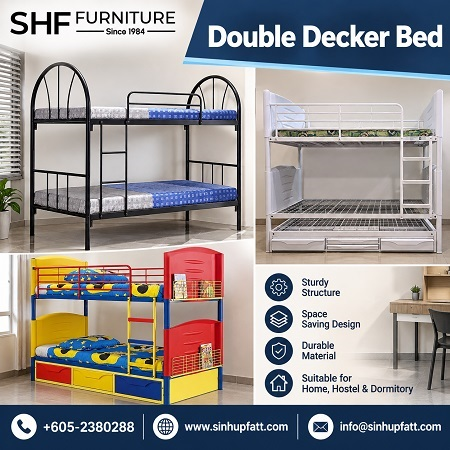
Choosing the right beds for high-occupancy spaces comes down to four factors: structural durability, space efficiency, compliance with safety standards, and long-term maintenance. A double decker bed is often the most practical solution for hostels, dormitories, and shared rooms because it maximises floor space without compromising sleeping capacity. Material quality, weight load ratings, and assembly design should all influence your final purchase decision.
Why Bed Selection Matters More Than Most Operators Think
In high-occupancy environments, beds are not just furniture — they are infrastructure. A poor choice leads to frequent repairs, safety complaints, and faster replacement cycles. The wrong bed can cut a unit's usable lifespan from ten years down to three.
For hostel owners and property managers, beds represent one of the highest-impact capital expenditures in the fit-out budget. Getting this decision right protects both your guests and your bottom line.
What Type of Bed Works Best in Shared Rooms?
The answer depends on room size, occupancy target, and resident profile. That said, most institutional buyers consistently land on one of three configurations:
-
Double decker beds (bunk beds) — Best for maximising bed count per square foot. Ideal for hostels, student dormitories, and worker quarters.
-
Single beds — Suitable when space is not a constraint and privacy is a priority.
-
Triple-tier bunks — Used in high-density worker accommodation or military-style barracks. Requires ceiling height above 3 metres.
For most hostel and dormitory applications in Malaysia, the double decker configuration remains the most space-efficient and cost-effective option. It allows operators to fit two residents into the footprint of one bed without sacrificing structural integrity when the right frame is selected.
Key Factors to Evaluate Before Buying Hostel Beds
1. Frame Material and Load Capacity
Steel frames remain the industry standard for hostel beds and dormitory beds because they offer a higher strength-to-weight ratio than wood. Look for beds with a minimum load rating of 150kg per bunk level. Beds in student accommodation see daily stress from movement, weight shifts, and repeated use — frames need to handle that without warping or loosening over time.
Powder-coated steel resists rust and is easier to clean, which matters in shared rooms with high humidity or poor ventilation.
2. Safety Features You Cannot Compromise On
Upper bunk safety is non-negotiable. Key safety specifications to check:
-
Side guardrails on the upper bunk (minimum 160mm above mattress surface)
-
Stable ladder with non-slip rungs
-
No sharp edges or exposed bolt ends
-
Secure cross-bracing at the base and top frame
In Malaysia, the Department of Occupational Safety and Health (DOSH) sets general guidelines for workplace and accommodation safety. If your property houses foreign workers or students, compliance with these standards also reduces your liability exposure significantly.
3. Mattress Compatibility
Many operators focus on the bed frame and treat the mattress as an afterthought. This is a mistake. Bunk beds for hostels require mattresses that are firm enough to prevent sagging but thin enough to maintain safe clearance between bunks — typically between 15cm to 20cm in thickness.
Foam or spring mattresses with removable, washable covers are far more practical for shared rooms than fixed-cover options. Hygiene management becomes much easier when covers can be stripped and laundered between occupants.
4. Assembly and Disassembly Design
High-turnover environments need beds that can be reconfigured without specialist tools. Some double decker bed models can be separated into two single beds when the occupancy model changes — this flexibility adds long-term value to the purchase.
Ask suppliers about the time required for full assembly and whether replacement parts are readily available. A bed that takes four hours to assemble and cannot be repaired locally becomes a maintenance liability.
5. Room Layout and Clearance Requirements
Before ordering in bulk, map out your room dimensions against the bed footprint. Standard double decker beds measure approximately 200cm (L) x 90cm (W) x 165cm (H). You will need:
-
Minimum 75cm aisle clearance between beds
-
At least 90cm of vertical clearance above the upper mattress surface
-
Clear egress paths to doors and emergency exits
Poor spacing is one of the most common complaints in dormitory environments and often triggers fire safety inspection failures.
Comparing Bed Options for High-Occupancy Rooms
|
Bed Type |
Best For |
Space Efficiency |
Cost Range (Approx.) |
Durability
|
|---|---|---|---|---|
|
Double Decker Bed (Steel) |
Hostels, dormitories |
High |
RM 400 – RM 900 |
Very High |
|
Single Bed (Steel) |
Private rooms, smaller shared rooms |
Low |
RM 180 – RM 400 |
High |
|
Triple Bunk Bed |
Worker quarters, high-density lodging |
Very High |
RM 700 – RM 1,200 |
High (requires ceiling height) |
|
Wooden Bunk Bed |
Low-traffic student rooms |
High |
RM 350 – RM 800 |
Moderate |
What Institutions and Property Managers Often Overlook
Bulk purchasing without a pilot test is a common and costly mistake. Before committing to a full order, install two to four units and monitor them for four to six weeks. Check for frame loosening, ladder stability, and noise under load. This step alone can save thousands in replacements.
Warranty terms are equally important. A credible supplier should offer a minimum of one year on frame integrity. If a supplier cannot back their product with a clear warranty, that is a signal worth taking seriously.
Storage integration is another underused feature. Beds with built-in drawers or under-bunk storage reduce the need for additional furniture in tight rooms, which directly impacts how comfortable and functional a shared space feels to residents.
Choosing a Reliable Supplier in Malaysia
Local sourcing matters for lead times, after-sales support, and the ability to inspect products before committing to large orders. A supplier with an established catalogue of institutional furniture will understand load requirements, dormitory configurations, and the specific demands of student accommodation or worker housing better than a general retailer.
Look for suppliers who stock beds designed specifically for commercial use — not residential variants repurposed for institutional settings. The structural differences are significant.
For operators sourcing quality bunk beds and institutional beds in Malaysia, SHF Furniture Sdn Bhd offers a practical range built for high-occupancy environments, with options that balance durability, space efficiency, and value across different room configurations.
Read Also:- Why Steel Lockers Are the Smartest Storage Investment for Modern Workplaces
How to Choose the Right Office Furniture for a Modern Workplace









Comments (0)