

Email Warmup for Cold Email: The Complete Guide for 2026
Email warmup is the process of building sender reputation for new or inactive mailboxes. This guide covers how to warm up Gmail, Outlook, and SMTP accounts, the tools that make it automatic, and why 96%+ inbox placement is achievable in 10-15 days. Free 7-day trial at mailwarmuppro.com.
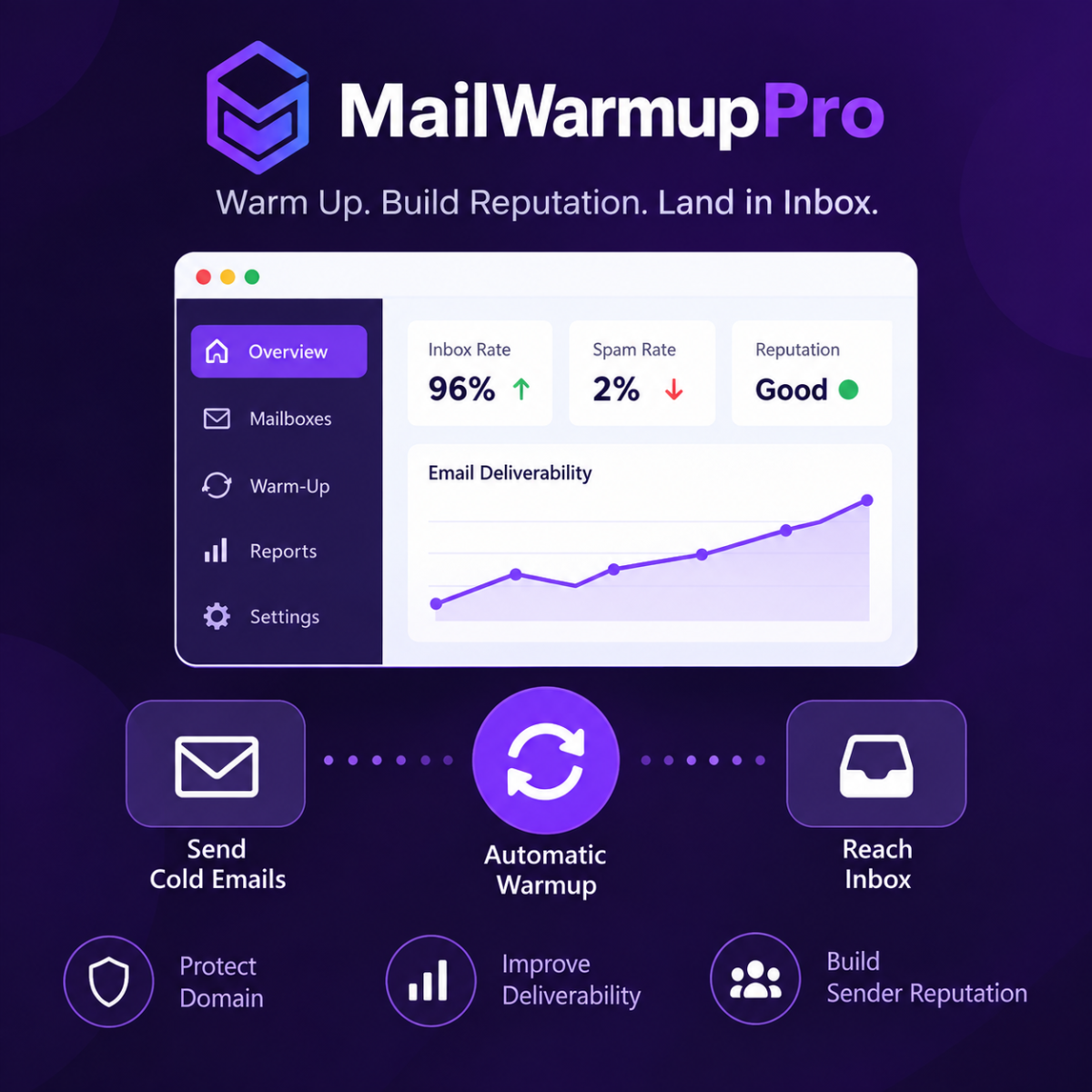
Email remains an important communication channel for businesses, especially for B2B outreach, sales, networking, and customer communication. However, sending emails successfully is not only about writing a good subject line or creating an attractive message. Email deliverability plays an equally important role.
If emails consistently land in spam or promotional folders, even a well-written campaign may receive very few responses. This is where email warmup becomes useful. Warmup is the process of gradually establishing a positive sending history for a new, inactive, or recently configured mailbox.
What Is Email Warmup?
Email warmup involves gradually increasing the volume of emails sent from a mailbox instead of immediately sending a large number of messages.
A newly created mailbox generally does not have much sending history. Sending hundreds of emails immediately can create unusual activity from the perspective of email providers. A gradual approach allows the mailbox to establish a more consistent sending pattern.
During a warmup process, emails can be exchanged between accounts, with interactions such as opens, replies, and continued conversations contributing to normal-looking email activity.
The goal is not simply to send more emails. The objective is to establish consistent sending behavior while maintaining proper authentication and avoiding patterns associated with spam.
Why Does Email Warmup Matter?
Email providers evaluate multiple signals when deciding where an email should be delivered. These can include sending patterns, authentication, domain reputation, recipient engagement, bounce rates, complaint rates, and other technical signals.
A mailbox that suddenly changes from sending almost nothing to sending hundreds of emails per day may require additional scrutiny.
This is why businesses often include warmup as part of their overall email deliverability strategy. A gradual increase in sending volume can help establish a more predictable sending pattern before a larger outreach campaign begins.
However, warmup alone cannot guarantee inbox placement. Content quality, recipient lists, authentication, domain reputation, and sending behavior all remain important.
How Should You Warm Up an Email Account?
There is no single sending schedule that works for every mailbox. The appropriate volume depends on factors such as the age of the domain, mailbox history, provider, previous sending activity, and the type of emails being sent.
A simple approach is to begin with a small number of emails and gradually increase the volume over several weeks.
For example:
- Week 1: 5–10 emails per day
- Week 2: 10–25 emails per day
- Week 3: 25–50 emails per day
- Week 4: Gradually increase according to mailbox performance
These numbers should be treated as an example rather than a universal rule. If a mailbox starts experiencing bounces, spam placement, or other deliverability problems, increasing volume further may not be appropriate.
Email Authentication Is Essential
Warmup should not be considered a replacement for proper email authentication. Before increasing sending activity, businesses should configure the major authentication records for their domain.
SPF helps specify which servers are authorized to send email on behalf of a domain.
DKIM adds a cryptographic signature to outgoing messages, helping receiving servers verify that the message has not been altered and that it was authorized by the sending domain.
DMARC builds on SPF and DKIM by allowing domain owners to specify how receiving providers should handle messages that fail authentication checks.
Correctly configuring these records can provide a stronger technical foundation for an email warmup strategy.
Free Email Warmup Options
Businesses with only one or two mailboxes may prefer starting with a simple manual process. For those looking for a free email warmup option, the basic principle is to begin with low sending volumes, communicate with real contacts, and gradually increase activity.
Manual warmup can work for a small number of accounts, but it becomes difficult to manage when a business operates multiple mailboxes. Tracking daily sending volume, replies, conversations, and mailbox activity manually can quickly become time-consuming.
This is one reason automated warmup platforms have become popular among businesses managing several sending accounts.
Choosing an Email Warmup Tool
When evaluating an email warmup platform, businesses should look beyond the number of emails it can send. Important considerations include supported email providers, authentication requirements, scheduling controls, monitoring capabilities, reporting, and how the system handles replies and conversations.
It can also be useful to review an email warmup blog containing practical information about sender reputation, authentication, spam placement, and deliverability.
A platform should complement a broader email strategy rather than being treated as a solution for every deliverability problem.
Comparing Email Warmup Platforms
There are several tools available for businesses that want to automate mailbox warmup. When comparing them, consider pricing, supported providers, number of mailboxes, scheduling features, reporting, and ease of use.
Businesses already using another warmup platform may also research a Mailwarm alternative to compare available features and pricing before choosing a service.
The right choice depends on the number of mailboxes being managed and the organization's overall outreach requirements.
Warmup Is Only One Part of Deliverability
One common misconception is that warmup alone guarantees that emails will reach the inbox. In reality, deliverability depends on several factors.
A good email infrastructure should combine:
- Proper SPF, DKIM, and DMARC configuration
- A clean and relevant recipient list
- Low bounce rates
- Appropriate sending volumes
- Useful and relevant email content
- Responsible follow-up practices
- Consistent sending behavior
- Monitoring of domain and mailbox reputation
It is also important to remove invalid addresses and avoid repeatedly emailing recipients who do not engage with your messages.
Final Thoughts
Email warmup is best viewed as a gradual reputation-building process rather than a quick fix for spam placement. New or inactive mailboxes can benefit from controlled sending activity, while established mailboxes should still maintain consistent and responsible sending practices.
Before beginning a larger campaign, businesses should configure authentication, maintain a clean recipient database, start with reasonable volumes, and monitor their email performance.
For businesses managing multiple mailboxes, an automated warmup solution can simplify scheduling and monitoring. Those interested in learning more can explore MailWarmupPro and its email deliverability resources before deciding which approach fits their requirements.

MailWarmupPro is an automated email warmup platform designed for cold email teams, agencies, and SaaS founders. Our mission is simple: keep cold emails out of spam. The platform gradually warms up your mailboxes, creates authentic reply threads, and automatically pulls emails out of spam folders — so your sender reputation stays strong and your outreach lands where it should: the inbox. What you get: • 96%+ inbox placement • Works with Gmail, Outlook, and custom SMTP • Authentic reply threading (no fake opens) • Automatic spam recovery • Mailbox health monitoring • Integrates with your current sending tool Try it free for 7 days — no credit card needed. 🌐 https://mailwarmuppro.com










Comments (0)