

Why Every Facility Needs Reliable Public Address System Today
Effective communication across large spaces is impossible without the right technological infrastructure.

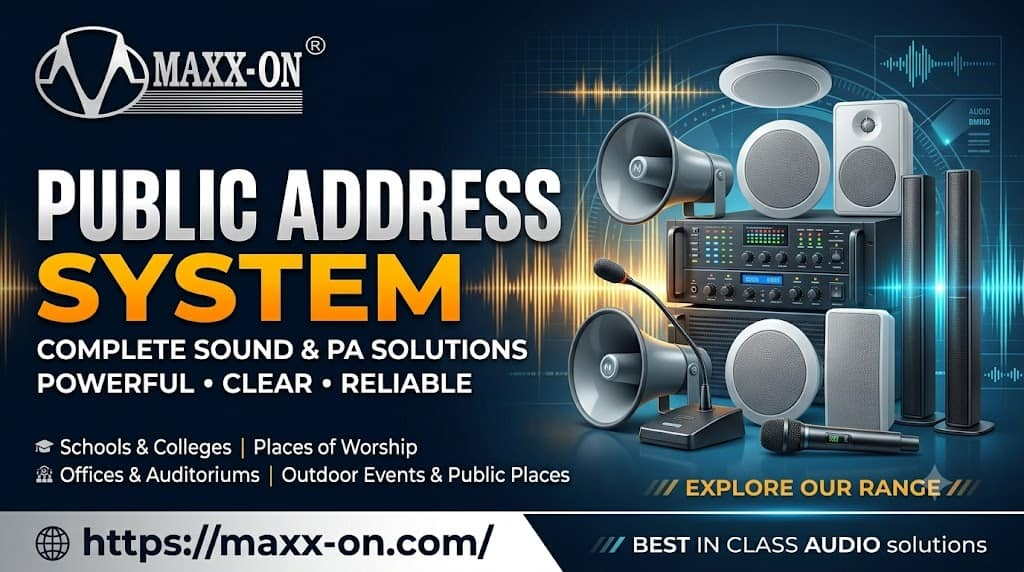
Whether you are managing a sprawling corporate campus, a bustling transportation hub, or a busy educational institution, conveying information clearly to a massive crowd is a critical operational requirement. This is exactly where a public address system becomes indispensable. By seamlessly amplifying sound and distributing it across designated zones, this essential audio equipment ensures that every announcement, emergency alert, and background track is heard perfectly by the intended audience.
Investing in a robust audio distribution network is no longer a luxury for modern buildings; it is a fundamental necessity for safety, efficiency, and daily operations.
The Core Components of a Public Address System
To understand how these networks function so efficiently, it is helpful to look at the individual hardware components that make up the entire architecture. A standard setup relies on a chain of devices working in perfect harmony to capture, process, amplify, and deliver sound.
Audio Input Devices: The journey of sound begins here. This category primarily includes dynamic and condenser microphones used for live vocal announcements. It can also include digital media players or automated voice modules for pre-recorded messages and background music.
Mixing Consoles: Once the audio is captured, it is routed to a mixer. This device allows operators to blend multiple audio sources, adjust volume levels, and tweak frequencies (bass and treble) to ensure the output is crisp and intelligible.
Power Amplifiers: Audio signals from a mixer are generally too weak to drive large speakers. Amplifiers boost this low-voltage signal into a high-voltage current, providing the necessary electrical power to project sound across vast distances without losing clarity.
Loudspeakers: This is the final stage of the audio chain. Speakers convert the amplified electrical signals back into acoustic sound waves. Depending on the venue, these can be ceiling-mounted acoustic drops, wall-mounted cabinet units, or weatherproof horn speakers for outdoor environments.
Key Benefits of Installing a Public Address System
Implementing a dedicated sound amplification network offers numerous advantages that directly impact the safety and functionality of any environment.
Rapid Emergency Broadcasting: In the event of a fire, security breach, or natural disaster, time is of the essence. A centralized audio network allows facility managers to issue instant, facility-wide evacuation protocols, preventing panic and guiding occupants to safety.
Targeted Zone Paging: Modern setups allow administrators to divide a building into separate audio zones. This means an operator can page an individual in the warehouse without disrupting a meeting happening in the executive boardroom.
Automated Scheduling: Many institutions use these networks to broadcast scheduled chimes, shift-change alarms, or automated daily announcements, which streamline operations and reduce the need for manual intervention.
Atmosphere Enhancement: Beyond verbal communication, these setups are excellent for broadcasting ambient background music. In retail environments and waiting rooms, carefully curated background audio greatly enhances the visitor experience and reduces perceived waiting times.
Common Applications Across Various Sectors
Almost every major industry relies on centralized audio networks to maintain order and facilitate smooth operations.
Educational Institutions: Schools and universities use these networks constantly for morning assemblies, bell schedules, paging students, and lockdown drills.
Transportation Hubs: Airports, train stations, and bus terminals depend entirely on automated and live announcements to inform passengers about boarding times, gate changes, and security protocols.
Retail and Commercial Spaces: Shopping malls utilize overhead speakers to play promotional messages, find lost individuals, and provide an inviting musical atmosphere for shoppers.
Corporate Offices and Industrial Plants: Warehouses and large factory floors use heavy-duty horn speakers to overcome loud machinery noise, ensuring that safety warnings and administrative pages are always heard loud and clear.
What to Consider When Choosing a System
Selecting the appropriate equipment requires careful planning and an understanding of the specific environment where it will be installed.
Acoustic Challenges: Highly reverberant spaces with glass walls and hard floors require carefully angled, highly directional speakers to prevent echoes.
Indoor vs. Outdoor Durability: If the network extends to parking lots or sports fields, the exterior equipment must feature a high ingress protection rating to withstand rain, dust, and extreme temperature fluctuations.
Scalability: Always choose an architecture that can grow with your facility. IP-based network systems are highly recommended today because they allow administrators to add new speakers simply by connecting them to the existing local area network.
Conclusion
A high-quality public address system is a vital investment in the safety, security, and operational efficiency of any large-scale environment. By choosing the right components and understanding the specific acoustic needs of your space, you can guarantee that your most critical messages will always cut through the noise.
Frequently Asked Questions (FAQs)
What is the primary purpose of a public address system?
The main function is to amplify a sound source—such as a human voice, recorded message, or music—and distribute it to a large audience over a wide area clearly and audibly.
Can these systems be connected to existing computer networks?
Yes. Modern IP-based configurations connect directly to a building's existing local area network (LAN). This allows for easier installation, remote management through software, and virtually limitless scalability without running heavy copper speaker wires.
How do you prevent audio feedback when making an announcement?
Audio feedback (the loud squealing noise) occurs when a microphone picks public address system up the sound from a nearby speaker. To prevent this, operators should ensure speakers are pointed away from the paging microphone, use directional microphones, and utilize built-in acoustic echo cancellation features found in modern mixers.








Comments (0)