

When Does a BLDC Ceiling Fan Make Sense for Your Space?

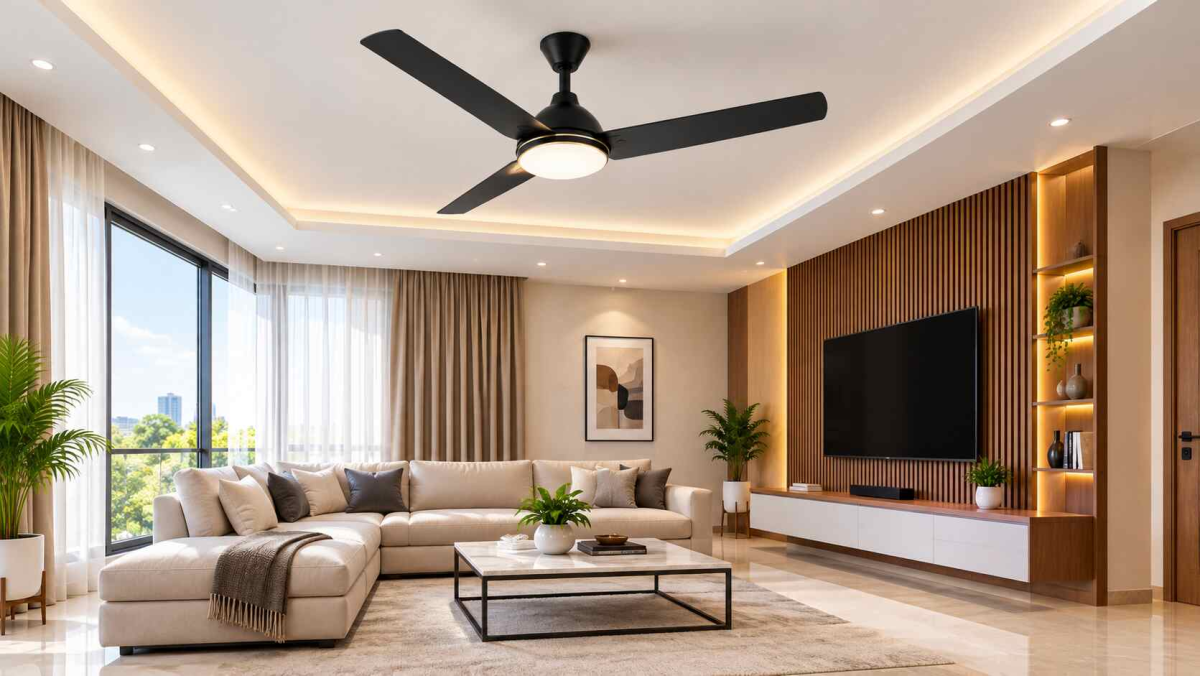
Picture this: a container of ceiling fans sits at port, cleared, ready to move — except the buyer's compliance team flags the motor spec. "Energy efficient" was on the label. BLDC wasn't. Three weeks lost. One line item. That's how thin the margin for error gets when you're sourcing a BLDC Ceiling Fan for resale or private-label distribution, and it's why the spec sheet deserves more scrutiny than most buyers give it.
The Spec Detail Most Buyers Skip
Here's what catalogs rarely mention for a BLDC Ceiling Fan: sweep size and RPM tell you almost nothing about real-world efficiency. Input wattage under running load — not at idle — is the number that actually validates the claim printed on your packaging.
Motor and Power Draw
Running load tells the real story. A properly engineered BLDC motor draws roughly 28–32W at top speed. An induction motor of equivalent sweep pulls 70–75W. That gap comes from the switched-reluctance design itself, not from marketing language.
Speed Control
No capacitor regulator. No speed-step hum. Just stepless control via remote or app — which matters more than it sounds when you're the one fielding after-sales complaints about noise.
Build and Sweep Options
Sweep sizes typically run 1200mm and 1400mm, with blade material — aluminium die-cast versus engineering plastic — chosen based on your target price band.
One spec nobody puts on the datasheet: BLDC fans need a stable neutral line. Older buildings with shared neutral wiring sometimes see flicker or shortened lifespan. Flag this to your end customer before installation — not after the complaint call.
What Separates a Supplier From a Vendor
Five questions separate a real supplier from someone who just took your PO:
-
When does QC inspection happen? If the answer is "at packing," that's too late — a motor defect should've been caught before the batch was finished.
-
Is the certificate current? A lapsed ISO renewal is worse than having no certificate at all. It means nobody was checking.
-
Does MOQ flex for trial orders? Rigid minimums push first-time buyers into risk they never agreed to.
-
Does lead time change with season? Quoting identical lead times year-round isn't planning — it's guessing.
-
What's the defect resolution policy, in writing? "Case by case" isn't a policy. It's a negotiation you'll lose once the container's already at your warehouse.
Benefits That Actually Move Procurement Decisions
Lower running cost isn't just a green-label talking point — it's the total-cost-of-ownership argument that protects your own margin when you resell. Longer motor life, because BLDC units run cooler with less bearing wear, translates into fewer warranty claims landing back on your desk.
Quieter operation addresses the single most common return reason for ceiling fans in retail. Remote and app compatibility opens a premium SKU tier without touching your existing supply chain. Stable RPM under voltage fluctuation matters directly in regions where grid supply isn't consistent — fewer field complaints, fewer replacement units shipped. And a lighter overall unit weight reduces freight cost per container, which adds up faster than most buyers budget for.
Sourcing From Gujarat: A Supply Chain Note, Not Just an Address
We manufacture out of J K Industrial Park, Mavdi-Lodhika Road, Rajkot, Gujarat. That's not a location line for a letterhead — Rajkot's dense base of fan-component suppliers shortens our own upstream lead times, and that's what actually protects your delivery date. Buyers researching BLDC Ceiling Fan Suppliers in India often skip past this, but ancillary manufacturing density around a factory matters more than the pin code itself.
About Rotex Fans
We've been building fans out of Rajkot since 2017, and we hold ISO certification — which for us means documented QC checkpoints, not a claim on a brochure. Something buyers rarely ask but probably should: every production batch gets pre-dispatch sampling, not just the first and last cartons off the line. That habit alone has caught more packaging weaknesses than any post-shipment complaint ever has.
Ready to Source? Here's What We Need From You
Tell us your target sweep size, expected order volume, and destination port, and we'll move fast. MOQ starts at container-load quantities for export orders, though smaller trial batches can be negotiated for first-time buyers. Specification queries get a response within 24 business hours. Once specs are locked, sampling approval typically takes 7–10 days, depending on where your batch falls in the production schedule.
Conclusion
Sourcing a BLDC Ceiling Fan well comes down to three things: verifying the motor spec, checking whether a supplier's QC discipline is documented or just claimed, and being honest about lead time before it becomes a crisis. Skip the specification stage and you'll pay for it later — during sampling, or worse, after customs clearance. Rotex Fans, among the established BLDC Ceiling Fan Manufacturers working out of Rajkot, builds its process around that reality instead of around the sales pitch.
FAQs
Is a BLDC Ceiling Fan worth the higher unit cost for resale?
Depends entirely on your buyer. If your end market pays attention to electricity bills, yes — the payback story sells itself. If you're moving volume into a price-sensitive retail segment, that same pitch falls flat. Know your market before committing shelf space.
What's the typical MOQ for BLDC Ceiling Fan Manufacturers in India?
Container-load quantities are standard for export pricing, though it varies by manufacturer. Smaller trial orders are possible with most BLDC Ceiling Fan Suppliers, usually at a slightly higher per-unit cost.
How long does sampling approval actually take?
Once specifications are locked, expect 7–10 days. The real delay factor isn't production capacity — it's specs getting finalized late in the process.
Do BLDC Ceiling Fan Dealers need a different after-sales setup?
Not a separate setup, but a different one. BLDC electronics fail differently than capacitor-based motors, so your service team needs a short troubleshooting update rather than a complete retraining.
What happens if a shipment arrives with transit damage?
A supplier worth working with has a documented packaging standard and resolves damage claims against agreed terms — not case by case. Get that policy in writing before your first order, not after something breaks.
Is ISO certification alone enough to judge quality?
It's a filter, not a guarantee. Check the renewal date, and ask exactly what the certification audits — some cover process discipline, others say little about actual output.
Can specifications be customized for private-label orders?
Within reason. Blade material, remote branding, and packaging are usually flexible. Core motor specifications are less so — retooling those affects both your lead time and unit cost.








Comments (0)