

Bad Dirt, Bad Bids: What Excavation Quotes Don't Tell You

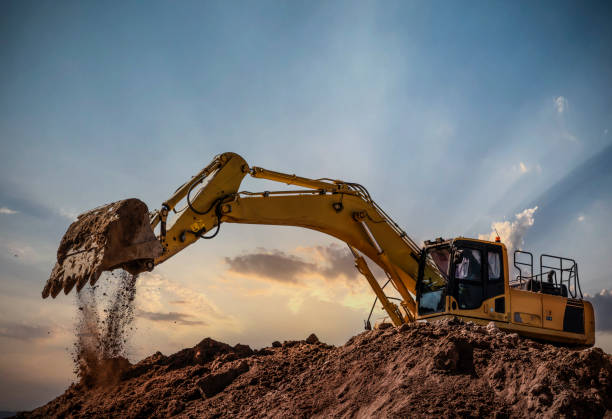
There's a reason two bids on the same job can come back thirty percent apart, and it usually has nothing to do with greed. It's what each crew assumed about the ground. One guy walked the lot, poked around, maybe dug a test hole. The other pulled a number off a satellite image. That gap is why people typing local excavation companies near me in Winchester into their phone at eleven at night should slow down a little before picking whoever answers first. Let's be real, excavation looks like brute force from the road. Big machine, big pile of dirt, done by Friday. But underneath it's a series of small calls about soil, slope and water, and getting any of those wrong doesn't show up for a year or two. Then it shows up all at once.
The Lot Next Door Means Nothing
People assume soil is regional. Their neighbor's system works fine, their cousin's build went smooth, so theirs will too. Doesn't work that way. Two properties on the same road can be completely different once you're a few feet down. One has decent loam over gravel and drains like it's supposed to. The other hits heavy clay at thirty inches and holds water for weeks. Around Virginia there's also shale ledge and buried rock that gives no warning at all until the bucket bounces off it. And rock is not a small line item, hammering a trench through it costs several times what digging one costs. An old fill from a structure nobody remembers is another one. Nobody wrote it down, you just found it.
Almost Every Problem Is A Water Problem
Water is patient. It'll spend three years finding a path and then take it every time it rains after that. Wet crawlspaces, settling slabs, driveways that rut out every spring, most of it traces back to grade rather than construction. The fix is boring and it's all in the shaping. Positive fall away from the house, swales that actually move volume instead of just looking like a dip in the lawn, culverts sized for a real storm instead of whatever pipe happened to be on the trailer. One that catches homeowners constantly, somebody adds topsoil for a nicer yard five years after the build and buries the original slope. Now water runs at the foundation instead of away from it, and nobody connects the two events.
Site Prep Is The Invisible Half Of The Budget
Clearing, stump removal, rough grading, building pads, utility trenching. None of it looks like much. Nobody takes a photo of a well-compacted pad. But fill placed in proper lifts and compacted right is why a slab stays flat, and fill dumped in one big heap is why it cracks eighteen months later and the framer catches blame for something that happened before he arrived. Moisture content matters too, which is why crews sometimes stop when the ground is too wet. That's not them being soft. That's them refusing to bury a problem they'd have to come back for. Trenching has the same logic, bedding under a water line and clean backfill keeps that pipe from getting crushed as the ground settles.
Septic Is Where Shortcuts Get Really Expensive
Wastewater punishes cheap work harder than anything else on a property. Handling septic installation repairs in Winchester VA and the counties around it means working through health department permitting, soil evaluations, and staged inspections, and there's no version of the job where that gets skipped. A conventional gravity system needs the right soil profile plus enough usable area to put it. When the perc comes back poor, you're looking at alternatives, pump systems, drip dispersal, sometimes a mound. Those cost more and nobody enjoys hearing it. But putting a standard drainfield into soil that can't absorb the effluent just moves the bill a few years down the road, with soggy ground and a smell that eventually gets inside the house.
Repair Or Replace, And How To Actually Tell
A lot of systems people call failures aren't failures. The tank hasn't been pumped in a decade, the effluent filter is packed solid, roots found a joint in a line, or the distribution box settled crooked and is feeding everything into one trench while the others sit dry. Real fixes, and they cost a fraction of a new system. Other times the drainfield is biomatted over for good and jetting or resting won't bring it back. The only way to know is inspection, honestly. Anybody quoting a septic repair over the phone without seeing it is guessing, and those guesses tend to get revised once the machine is already parked in the yard.
Vetting A Crew Without Getting Burned
Ask for the actual insurance certificate, not a verbal yes. Find out who performs the work, the company itself or a sub nobody vetted. Ask who pulls permits and who schedules inspections. Ask, specifically, what the rock clause says, because you want that answer before anybody starts, not after. Get spoil haul-off written into the scope, leftover dirt piles cause more arguments than almost anything. And ask how often they actually work your area. Knowing the soils, knowing the inspectors, knowing which roads a lowboy can get down, that's worth more than a slightly cheaper bid from two hours away.
The Machine Doesn't Make The Decisions
Excavators, dozers, skid steers loaded with attachments. All impressive. But it's the operator reading the ground through the bucket that keeps the job honest. Knowing when subgrade feels wrong and needs undercut instead of just getting covered up. Knowing when a bank needs laid back rather than cut vertically because vertical is quicker. Trench collapses still kill people every year in this country and nearly every one was preventable with shoring, benching or sloping and somebody competent actually watching the hole. That's not paperwork. That's the whole reason everyone drives home.
Where It All Lands
The short answer is that good excavation disappears and bad excavation announces itself for years. Nobody thinks about the ground until there's standing water where the garden should be, and by then the repair costs several times what doing it right would have. Whether it's a driveway that sheds water properly, a pad that won't settle, or septic installation repairs Winchester VA homeowners need done correctly the first time, it keeps coming back to the same handful of things. Honest site assessment, enough local experience to know what's under the grass, and someone willing to say the pricier option is the correct one. Ask questions early. Get it in writing. And don't let the lowest number make the decision by itself, because the dirt keeps score whether anybody's watching or not.










Comments (0)