

Why Do Some Investors Always Seem One Step Ahead?

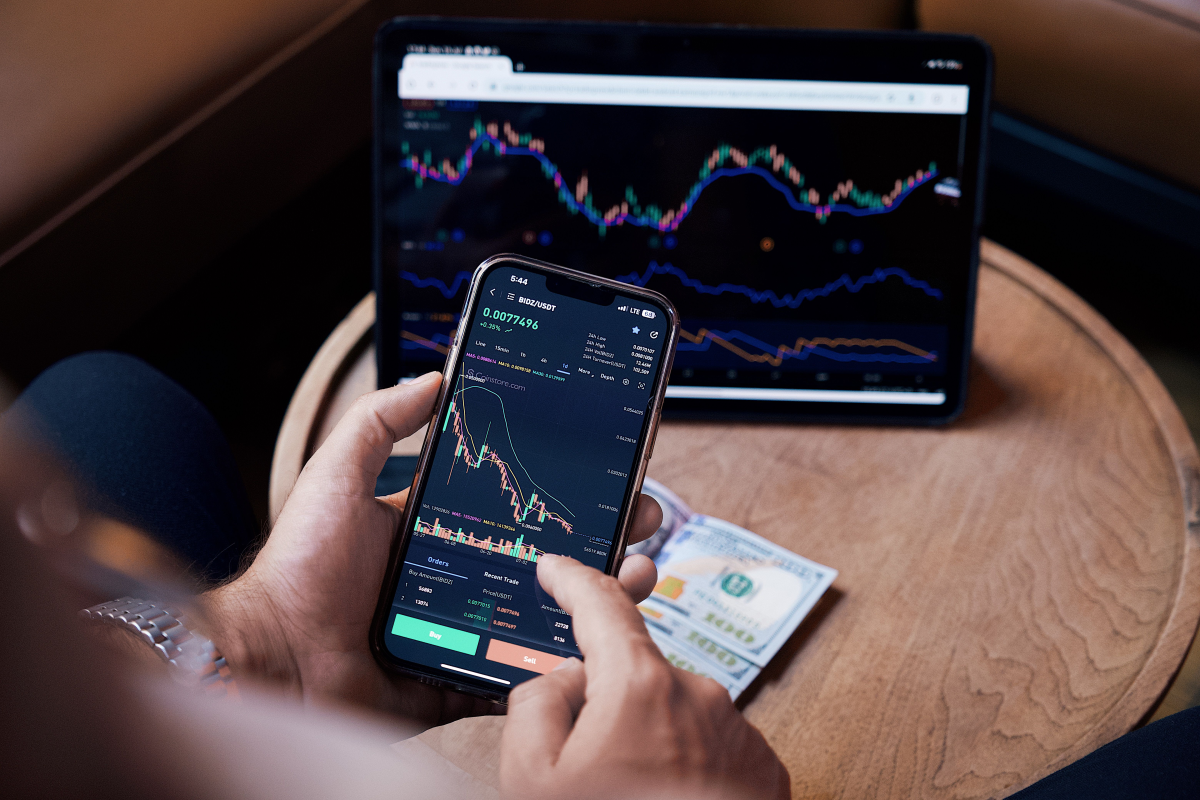
You know the type. Someone mentions a stock at dinner and this one person already has an opinion on it, already knows the earnings date, already has a read on where options flow is pointing. It's not because they're smarter than everyone else at the table. Truth is, it usually comes down to access and habit, they built a consistent process around financial market intelligence and stuck with it long enough for it to actually pay off. That's really the whole secret, if you can even call it that. There's no shortcut hiding behind it, just repetition and a willingness to look past the surface.
Information Overload Isn't The Same As Insight
There's more market data available right now than any single person could read in a lifetime. News alerts, earnings calls, social sentiment, options flow, all of it pouring in constantly. And yet, somehow, most people still feel like they don't know enough to make a confident decision. That's because raw information isn't insight. Insight comes from filtering that noise down into something usable, spotting the handful of signals that actually matter and ignoring the rest. Anyone can collect data. Fewer people know what to do with it once they have it.
Predictive Analytics: Useful, Just Not A Crystal Ball
People get overly excited about predictive models, like they're some kind of secret weapon that guarantees profit. They're not. What predictive analytics actually does is take historical patterns, unusual volume, options positioning, earnings reactions, and calculate the statistical likelihood of something similar happening again. It's probability-based, not certainty-based. Big difference. Traders who treat these tools as a probability edge tend to do fine. Traders who treat them as a guarantee usually end up disappointed, sometimes expensively so.
Nobody Talks Enough About Backtesting, And They Should
Here's something a lot of newer traders skip entirely, testing an idea against past data before actually risking money on it. It sounds obvious when you say it out loud, but plenty of people just don't do it. They see a pattern once, get excited, and jump straight into a live trade. Backtesting won't tell you a strategy will definitely work going forward, markets are too messy for that kind of promise, but it will tell you whether the idea has any real historical backing or if it was just a lucky coincidence dressed up as a system.
What Options Activity Reveals That Stock Charts Miss
A stock's price chart only tells part of the story, honestly maybe the smaller part. Options volume and open interest frequently shift ahead of a big price move, not after it happens. That kind of activity is public data, sitting there for anyone willing to look, yet most casual investors never check it. Watching derivatives activity alongside the stock itself gives a fuller picture of what's actually going on beneath the surface, instead of just reacting to price after the fact like everyone else is doing.
Where Investment Research Tools Come Into The Picture
Nobody, and I mean nobody, has the time to manually track earnings dates, options flow, fundamental ratios, and volume anomalies across a real watchlist every single day by hand. It's just not sustainable, even for someone doing this full time. That's the whole reason investment research tools exist in the first place, to gather all these scattered pieces into one place so a person isn't stitching together ten browser tabs at midnight trying to make sense of it all. These tools don't replace judgment. They just clear away the busywork so the judgment part actually gets a fair shot.
Quantitative Analysis Sounds Harder Than It Actually Is
The word "quantitative" scares people off more than it should. It conjures images of hedge fund quants with physics degrees, but the basic idea is simple enough for anyone. It just means using numbers and repeatable patterns to guide a decision instead of a gut feeling or a headline that sounded convincing. Did volume look unusual before an announcement? Has a stock historically reacted a certain way to specific news types? Those are quant-style questions, and you don't need an advanced degree to start asking them, you just need to actually look at the numbers before acting.
Good Data Still Can't Save You From Bad Emotions
Here's the part that's a little uncomfortable to admit. Even with strong research sitting right there, people still make bad trades, and it's rarely because the data was wrong. It's because panic or greed took over midway through. Someone sees a stock dip and bails out of a position their own research said to hold onto. Or the opposite happens, they get greedy and overstay a trade way past where the signals said to exit. Solid market intelligence gives someone a reference point to fall back on in those moments, something to check against instead of just reacting on instinct.
Fundamentals Haven't Gone Anywhere, Despite What Chart Enthusiasts Say
With so much attention on technical setups and algorithmic signals these days, it's easy to forget that a company's actual fundamentals, earnings, debt levels, revenue trends, still drive real long-term value. Charts show what already happened. Fundamentals explain why it might keep happening, or why it's about to stop. A stock can look technically strong for weeks while its fundamentals quietly deteriorate underneath, and sooner or later that gap closes, usually not softly either.
Pulling It All Together
So what's the real answer here? There isn't one single tool or magic signal that solves everything, no matter what some flashy ad promises you at 11pm. Real progress comes from stacking layers together, fundamentals, options data, quantitative signals, and a genuine respect for what backtested history actually shows versus what it can't. Leaning on capable investment research tools alongside a disciplined approach to gathering financial market intelligence won't make every trade a winner, nothing does that, but it tilts the odds in your favor over time. And in a market this unpredictable, tilting the odds even slightly is honestly about as good as it gets.








Comments (0)