

How Vacuum Packaging Extends Shelf Life and Maintains Quality in the Food Industry
A vacuum sealer machine is no longer a back-of-house convenience; it is a frontline tool in food safety compliance, waste reduction, and product integrity management.
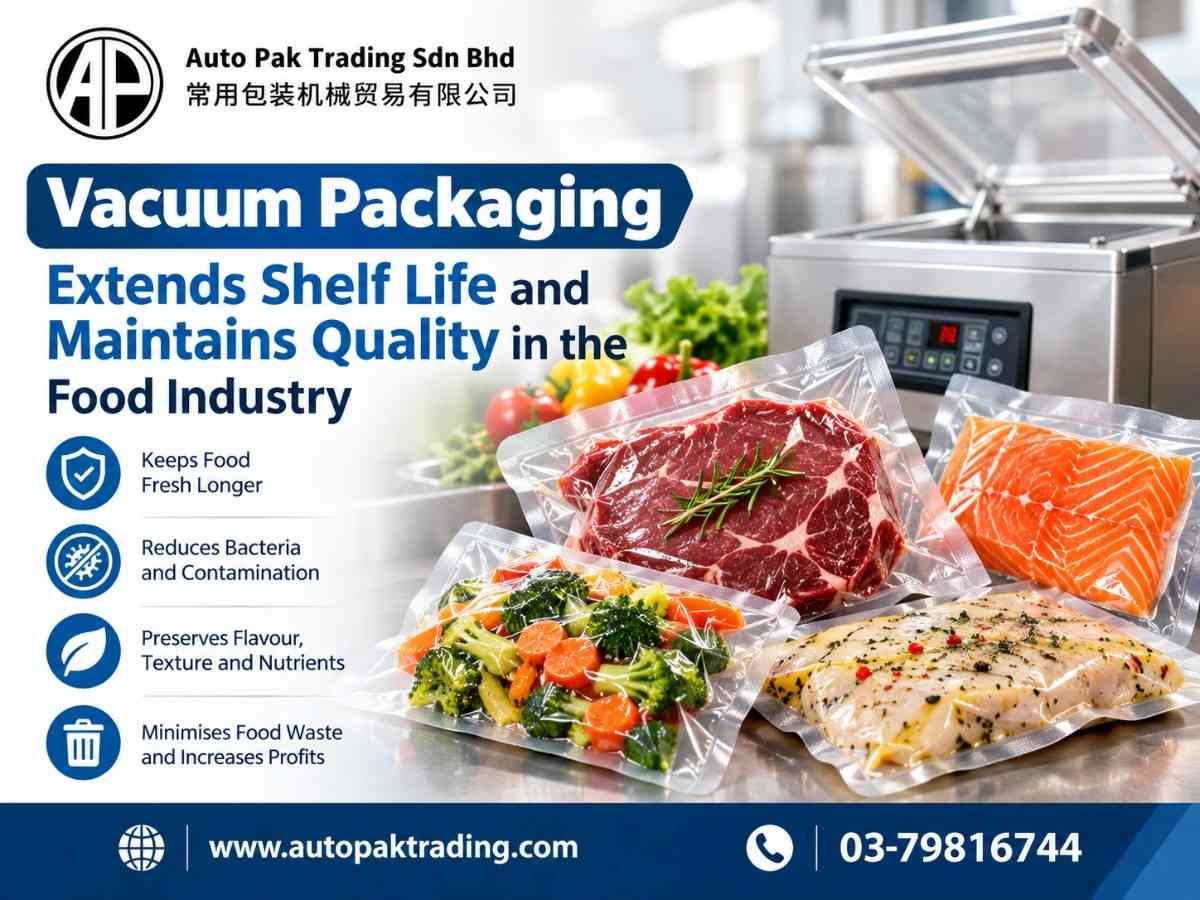
Vacuum packaging extends food shelf life by removing oxygen from the sealed environment, which directly inhibits aerobic bacterial growth, mold development, and oxidation. This preservation method retains moisture, color, texture, and nutritional value significantly longer than conventional packaging. Depending on the product, vacuum sealing can extend shelf life by two to five times compared to standard packaging methods.
For quality control managers, food safety officers, and procurement teams, understanding the science behind vacuum preservation is not optional — it is operationally critical. A vacuum sealer machine is no longer a back-of-house convenience; it is a frontline tool in food safety compliance, waste reduction, and product integrity management.
The Science Behind Oxygen Removal and Bacterial Suppression
Most food spoilage is driven by aerobic microorganisms — bacteria, yeast, and molds that require oxygen to survive and multiply. When oxygen concentration inside a food package drops below 1%, the growth rate of these organisms slows dramatically. At near-zero oxygen levels, aerobic spoilage is effectively halted.
This is the foundational principle behind vacuum packaging. By mechanically extracting air before sealing, the internal atmosphere shifts from approximately 21% oxygen (ambient air) to less than 1%. The result is a preserved microenvironment that dramatically slows biochemical degradation.
Beyond microbial control, oxygen removal also prevents oxidative rancidity in fats and oils, enzymatic browning in fresh produce, and myoglobin oxidation in red meats — the reaction responsible for the undesirable grey-brown discoloration that signals quality loss to end consumers.
How Does Vacuum Packaging Prevent Freezer Burn?
Freezer burn occurs when moisture migrates from the surface of frozen food into the surrounding air space inside the package. This dehydration causes the characteristic dry, leathery texture and white crystalline patches that compromise both appearance and palatability.
Vacuum sealing eliminates the air gap entirely. With no air space remaining, there is nowhere for sublimated moisture to migrate. The result is that vacuum-sealed frozen products prevent freezer burn far more effectively than loosely wrapped or zip-lock packaged alternatives, maintaining original texture and moisture content throughout the storage cycle.
For supermarket procurement teams sourcing pre-packaged frozen goods, this directly translates to reduced return rates, lower shrinkage losses, and improved customer satisfaction scores on frozen product lines.
Shelf Life Extension: What the Numbers Show
The practical shelf life gains from vacuum packaging are substantial and product-specific. Here is a general comparison based on food industry data:
|
Food Category |
Standard Packaging Shelf Life |
Vacuum Sealed Shelf Life
|
|---|---|---|
|
Fresh red meat (refrigerated) |
3–5 days |
14–21 days |
|
Hard cheese |
1–2 weeks |
4–8 months |
|
Cooked meats / deli products |
3–5 days |
2–3 weeks |
|
Dry goods (nuts, grains) |
3–6 months |
1–2 years |
|
Smoked fish (refrigerated) |
5–7 days |
3–4 weeks |
These figures are consistent with standards referenced by food safety bodies globally. For operations running high-volume processing lines, the cumulative reduction in spoilage waste represents a measurable improvement in cost efficiency and compliance performance.
Retaining Flavor, Moisture, and Appearance
Flavor Integrity
Volatile aromatic compounds in food — the molecules responsible for freshness and flavor depth — are highly susceptible to oxidation and evaporation. In conventional packaging, these compounds dissipate continuously. Vacuum sealing traps them within the package, meaning the product reaching the consumer retains the flavor profile intended at point of processing.
This is particularly relevant for marinated meats, spiced ready meals, specialty cheeses, and cured products, where flavor is both a quality indicator and a brand differentiator.
Moisture Retention
Moisture loss is one of the primary causes of weight reduction and textural degradation in packaged food. Vacuum packaging creates a sealed barrier that significantly reduces transepidermal moisture loss from food surfaces. This is critical in chilled distribution chains, where products may spend several days in transit before reaching retail shelves.
Visual Appeal and Color Stability
Color is the first quality cue consumers evaluate. Oxidation accelerates discoloration in nearly every food category — from the greying of beef to the browning of cut vegetables. By removing oxygen, vacuum packaging preserves the natural color range that signals freshness, directly supporting category performance at point of sale.
Hygienic Food Packaging: Compliance and Safety Standards
From a food safety compliance perspective, hygienic food packaging is not simply about cleanliness during sealing — it encompasses the entire post-seal environment. A properly formed vacuum seal creates a tamper-evident, hermetically closed package that limits post-processing contamination and cross-contamination risks throughout the cold chain.
Food safety officers working under HACCP frameworks will recognize vacuum packaging as a critical control point in post-cooking and pre-distribution stages. The seal integrity directly affects the product's microbiological safety profile. This is why seal validation and machine calibration are not routine maintenance tasks — they are compliance requirements.
Pakistan's food industry operates under PSQCA standards and is increasingly aligning with international food safety frameworks as export markets expand. Operations that invest in reliable, consistently performing vacuum sealing equipment are better positioned to meet these evolving regulatory demands and satisfy quality audits from both domestic and international buyers.
Choosing the Right Vacuum Sealer Machine for Commercial Applications
Chamber vs. External Vacuum Sealers
Chamber vacuum sealers remove air from within an enclosed chamber before sealing. They handle liquids, marinades, and high-moisture products effectively. External sealers extract air directly from the bag opening — suitable for drier products at lower throughput volumes. For industrial food processing in Pakistan, chamber machines are the standard for consistent, high-volume output.
Key Specifications Quality Teams Should Evaluate
-
Vacuum pressure levels: Look for machines achieving below 5 mbar absolute pressure for optimal oxygen extraction.
-
Seal bar width and temperature control: Determines compatibility with different bag thicknesses and materials.
-
Cycle time per pack: Directly affects line throughput and labor efficiency.
-
Stainless steel construction: Essential for hygiene compliance in food-grade environments.
-
Gas flush capability: Modified atmosphere options (N₂ or CO₂) for products requiring residual gas environments.
Procurement teams should also assess ease of seal inspection, availability of local technical support, and spare parts access — all factors that affect long-term operational reliability rather than just upfront cost.
Practical Applications Across Food Segments
Vacuum packaging is not a single-category solution. Its application spans the breadth of commercial food operations:
-
Meat and poultry processors: Extended refrigerated shelf life, reduced drip loss, improved case-ready presentation.
-
Dairy operations: Mold prevention in cheese aging, extended life for butter and cream products.
-
Seafood exporters: Critical for maintaining freshness compliance across longer distribution chains.
-
Bakeries and confectionery: Prevention of staling and moisture migration in baked goods.
-
Ready meal manufacturers: Combined with retort or sous vide processing for shelf-stable convenience foods.
-
Supermarket delis and in-store processing: Portioned products sealed for extended display life and reduced daily waste.
What Food Safety Officers Often Overlook
Seal failure is the single most common point of vacuum packaging breakdown — and it is frequently caused by contamination of the seal area by liquids, fats, or product debris rather than equipment malfunction. Establishing a sealing protocol that includes wipe-down of seal zones before closing is a basic but often skipped step that directly impacts seal integrity.
Additionally, vacuum packaging does not eliminate anaerobic pathogens. Clostridium botulinum, for example, thrives in low-oxygen environments. This is why vacuum packaging must be integrated with appropriate temperature control, and never treated as a standalone food safety intervention. It works within a system — not as a replacement for one.
For operations looking to upgrade their sealing equipment or standardize packaging protocols across multiple processing lines, Autopak Trading offers a focused range of commercial vacuum sealer machines suited to varying throughput demands and food categories. Their product range supports procurement teams in making specifications-driven decisions rather than price-only purchasing choices. Visit Autopak Trading to explore the full range.
Frequently Asked Questions

Auto Pak Trading Sdn Bhd, located in Kuala Lumpur, Malaysia, specializes in supplying a wide range of packaging machines. Our offerings include strapping machines, sealers, vacuum sealer machine malaysia, shrink tunnels, filling machine and stretch wrapping equipment. We cater to diverse industries, ensuring efficient and reliable packaging solutions. Visit our website for detailed information on our products and services. At Auto Pak Trading, we are committed to providing top-quality vacuum pack machine that enhances packaging efficiency and meets the specific needs of our valued clients.





Comments (0)