

MVP Development Company in USA: Build, Test, and Launch Your Product
Launching a new software product comes with many decisions. You need to validate your idea, understand what users actually need, control development costs, and get the product into the market without spending months building features that may never be used. This is where MVP development can make a major difference.
A reliable MVP Development Company in USA helps startups, entrepreneurs, and established businesses turn an initial product idea into a functional digital product. Instead of developing every planned feature from the beginning, the MVP approach focuses on the core functionality needed to solve a specific customer problem and collect real-world feedback.
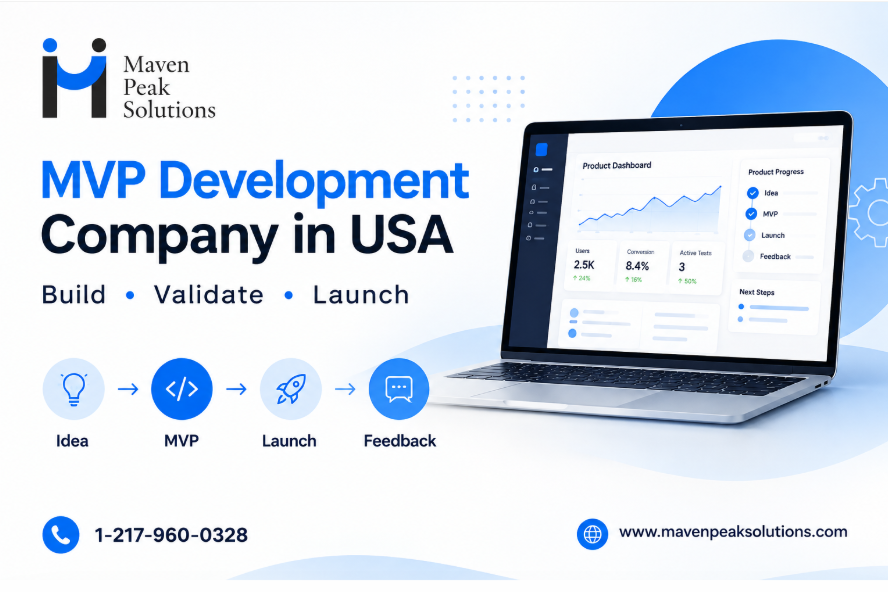
Whether you are planning a SaaS platform, mobile application, web application, marketplace, or business software, an MVP can give you a practical way to test your concept before making a larger technology investment.
What Is MVP Development?
MVP stands for Minimum Viable Product. It is an early version of a software product that includes the essential features required to provide value to users and test the core business idea.
MVP development is not about creating an incomplete product. The goal is to identify the most important functionality, build it properly, release it to a selected audience, and learn from actual user behavior.
For example, imagine you want to build a food delivery platform. A complete product may eventually include advanced recommendations, loyalty programs, multiple payment options, restaurant analytics, delivery tracking, promotions, and many other features.
An MVP could initially focus on:
- User registration
- Restaurant listings
- Food selection
- Order placement
- Basic payment processing
- Order status updates
Once customers start using the platform, their feedback can help determine which additional features should be developed next.
Why Businesses Choose MVP Software Development
Building a complete software platform from day one can require significant time, resources, and development costs. MVP software development provides a more practical starting point for many businesses.
The first benefit is faster market validation. Instead of spending a long development cycle creating a complete platform, businesses can release a functional version and observe how potential customers respond.
An MVP can also help you understand whether users actually need the proposed solution. Business owners may have assumptions about customer preferences, but real usage data and feedback can provide more useful insights.
Another advantage is controlled development spending. By concentrating on essential functionality first, companies can allocate resources toward features that directly support the product's initial purpose.
This approach is particularly useful for startups that need to demonstrate a working concept to potential customers, investors, or business partners.
How an MVP Development Company Helps
Choosing an experienced MVP development partner can make the development process more structured. A professional team can help transform a product concept into technical requirements, define the initial feature set, design the user experience, develop the application, test its functionality, and prepare it for launch.
The process generally starts with product discovery.
During this stage, the development team reviews your business objective, target audience, competitors, product requirements, and expected user journey. The information is then used to determine which features belong in the initial product.
The next step is MVP planning. Features are prioritized based on their importance to the product's core purpose. This helps prevent unnecessary functionality from entering the first development cycle.
After planning, UI and UX design can be created around the primary user journeys. A simple and intuitive interface can make it easier for early users to understand the product and provide meaningful feedback.
Development then focuses on building the selected features into a functional product.
Businesses looking for broader software development services can also expand their development requirements beyond the initial MVP as the product grows.
MVP Engineering for Startups and Growing Businesses
Startups often need to move quickly while working with limited resources. MVP engineering allows founders to focus their initial development efforts on the product's core value proposition.
For example, a startup developing a business management platform may initially require:
- Account creation and authentication
- Customer management
- Dashboard functionality
- Basic reporting
- Notifications
- Data management
- Subscription or payment functionality
Advanced reporting, automation, integrations, and AI-based features can be introduced later after the initial product has been validated.
This staged approach can make product development easier to manage. It also gives the business an opportunity to prioritize future development based on customer feedback rather than assumptions.
MVP Development Process
A structured MVP development process typically includes several stages.
1. Product Discovery
The first stage is understanding the product idea, target users, business objectives, and market requirements. This creates a foundation for technical planning.
2. Feature Prioritization
Not every feature belongs in the first release. The development team identifies the functionality that directly supports the primary user problem.
3. UI/UX Design
The user interface is designed around important workflows. The objective is to create a clear experience without adding unnecessary complexity.
4. Product Development
Developers build the MVP using appropriate technologies based on the product's requirements, scalability expectations, security needs, and future roadmap.
5. Testing
Testing helps identify functional problems, usability issues, performance concerns, and compatibility problems before the product reaches its initial users.
6. Launch
Once the product meets the agreed requirements, it can be released to a controlled group of users or the intended market.
7. Feedback and Iteration
User feedback, product analytics, support requests, and usage patterns can help determine what should be improved or developed next.
This creates a continuous product development cycle rather than treating the first release as the final version.
MVP vs Full Product Development
The biggest difference between MVP development and traditional full-scale development is the initial scope.
A full product may require dozens or hundreds of features before launch. MVP development starts with the functionality that is most important to the product's core use case.
This does not mean that the final product will remain small. An MVP can become the foundation for a much larger software platform.
For businesses that already have detailed requirements and need a complete software solution, custom software development can support more extensive functionality and specialized business requirements.
What Types of Products Can Be Built as an MVP?
MVP development can be applied to many types of digital products.
Common examples include:
- SaaS platforms
- Mobile applications
- Web applications
- Ecommerce platforms
- Online marketplaces
- Booking platforms
- Healthcare applications
- Fintech applications
- Education platforms
- Business management software
- Customer portals
- Subscription-based platforms
- AI-powered applications
The appropriate MVP scope depends on the product's users, business model, technical requirements, and primary objective.
Choosing an MVP Development Partner in the USA
When comparing MVP development companies, businesses should look beyond development pricing alone. The right partner should understand product requirements, technical architecture, user experience, testing, deployment, and future development needs.
Consider factors such as:
- Previous software development experience
- Understanding of MVP methodology
- Technical capabilities
- UI/UX expertise
- Communication process
- Development and testing practices
- Post-launch support
- Ability to scale the product later
It is also useful to discuss your product roadmap before development begins. A strong initial architecture should allow the product to evolve as requirements become clearer.
Build Your MVP With a Clear Product Strategy
A successful MVP starts with a clear understanding of the problem you are trying to solve. The goal is not simply to build fewer features. The goal is to build the right features for the first stage of the product.
An experienced MVP development team can help you move from an initial idea to a working digital product through structured planning, design, development, testing, and launch.
If you are preparing to validate a new software idea or transform an existing business concept into a digital product, working with an experienced MVP Development Company in USA can give you a structured starting point for product development.
As the product gains users and market feedback, additional functionality can be introduced based on actual business requirements. This makes MVP development a practical approach for companies that want to test, learn, improve, and build toward a larger software solution.
Protecting your business starts with basic security controls. A Small Business Cybersecurity Checklist should cover strong passwords, multi-factor authentication, regular software updates, secure backups, firewall settings, employee access controls, and phishing awareness. Your team should review user permissions and backup systems regularly to reduce security risks. A clear Small Business Cybersecurity Checklist also helps you respond faster to data breaches and common cyber threats. Maven Peak Solutions is a businesses across the USA. https://www.mavenpeaksolutions.com/blog/small-business-cybersecurity-checklist-before-connecting-ai-and-automation








Comments (0)