

Why Is the Right Cricket Gear Important for Young Players?
Choosing the right cricket gear for young players helps ensure safety, comfort, and better performance. Learn how parents can select suitable bats, pads, gloves, helmets, and other essential cricket equipment for children.
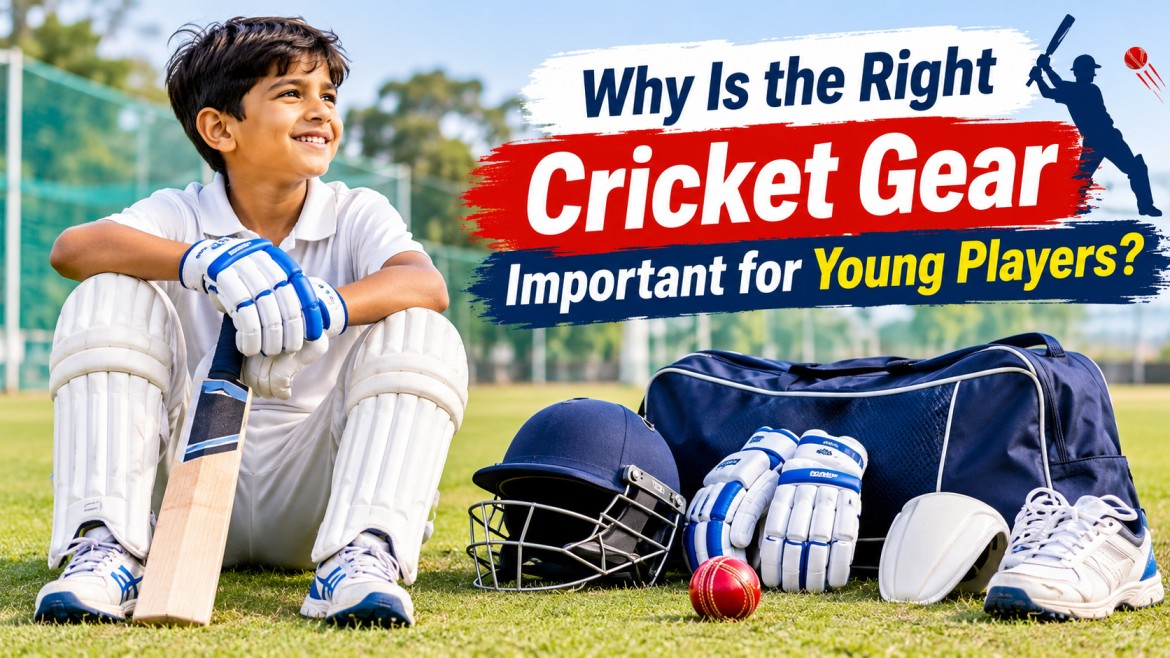
Cricket provides children with an excellent opportunity to enhance their fitness levels, improve teamwork, discipline, and confidence. It requires constant practice and appropriate equipment from mastering the basics of batting to participating in their first match. Nevertheless, picking the necessary cricket equipment can be difficult for parents since children keep growing and improving at the same time.
The right Cricket Gear for Young Players will assist in providing safety, comfort, and improvement in their performance. Properly fitting equipment gives children the freedom of movement, training various shots, and concentrating on developing their game. Parents should take into account age, height, physical condition, experience, and needs for training of their child before purchasing any products.
1. Proper Gear Helps Protect Young Players
Safety always needs to be ensured when children start playing cricket as a hard cricket ball can hurt children without adequate protective equipment. It would also be quite challenging for beginners to gauge the speed and direction of the ball.
Cricket Safety Gear ensures the reduction in injuries that can take place during the course of training and games. The important protective gears will depend upon the age of a child and the form of cricket being played. Important equipment includes a helmet, pads, gloves, and abdominal guard.
It is necessary for parents to ensure that all protective gear fits well because loose equipment might cause problems during the play, whereas bigger equipment may disturb balance and control. It is also necessary that a helmet is properly fitted.
It does not guarantee the prevention of every injury but will help the children to be more confident. It is also essential for parents to ensure that children follow all coaching instructions of their coach.
2. The Right Bat Makes Learning Easier
Choosing a bat involves more than looking at its design or price. Children need equipment they can lift, control, and swing comfortably. A bat that is too heavy or long may make it difficult to play shots, maintain balance, and develop correct batting techniques.
Before buying a bat, parents should consider the following factors:
-
Size: The length should suit the child's height and reach.
-
Weight: The player should be able to lift and swing it without struggling.
-
Balance: The bat should feel manageable during practice shots.
-
Handle and grip: The handle should feel comfortable and support a steady hold.
-
Playing level: Beginners and regular players may have different requirements.
A properly sized cricket bat can help children focus on timing, footwork, and shot selection instead of struggling with equipment that does not suit them.
Parents can ask their child to hold the bat in a normal batting stance and practise a few controlled swings before making a final decision.
3. Comfortable Pads and Gloves Support Better Performance
Batting involves coordination, reaction time, and confidence. Children may be unable to focus on the ball due to the uncomfortable gear.
Cricket Batting Pads provide protection for the lower legs and knees when receiving deliveries. The batting pads must cover the right areas of the body and ensure proper mobility. Parents must ensure that the straps fit well and allow the child to flex his knees and run properly.
Cricket Gloves provide hand and finger protection as well as a secure grip for players. Big gloves may interfere with the player’s bat handling skills. On the other hand, gloves that fit tightly may hinder the proper functioning of the fingers.
While assessing these pieces of equipment, parents must ensure that the following factors are considered:
-
Fits properly and is not too tight.
-
Correct amount of padding in the parts that require it.
-
Properly strapped up and stitched firmly.
-
Allows for bending the knee joints and gripping the bat properly.
-
Flexing the fingers easily.
4. How to Choose Cricket Gear for Children
Each piece of equipment serves a different purpose. Parents should understand what their child needs for coaching sessions, practice matches, and competitive games before purchasing a complete kit.
|
Equipment |
What Parents Should Check |
Main Benefit |
|
Bat |
Size, weight, and balance |
Supports control and batting technique |
|
Helmet |
Secure fit and safety standards |
Helps protect the head |
|
Batting pads |
Leg coverage and secure straps |
Protects the lower legs |
|
Gloves |
Finger fit, padding, and grip |
Supports hand protection and bat control |
|
Abdominal guard |
Correct size and secure fit |
Protects a vulnerable area |
|
Cricket shoes |
Fit and grip for the playing surface |
Supports stability and movement |
|
Kit bag |
Capacity, compartments, and straps |
Keeps equipment organised |
The exact requirements depend on the child's age and playing format. Parents should also consult the coach or academy to understand which items are necessary for regular training.
5. Good Equipment Can Build Confidence
Young players often feel nervous when facing faster deliveries, playing against experienced opponents, or trying unfamiliar techniques. Equipment that fits well can help reduce distractions and allow them to focus on learning.
For example, a child who can swing the bat comfortably may find it easier to practise different shots. Properly fitted protective equipment can also help players concentrate on their footwork and decision-making.
Parents can support this progress by:
-
Encouraging regular practice without placing unnecessary pressure on results.
-
Asking coaches for advice on suitable equipment.
-
Allowing children to try different sizes before buying.
-
Checking comfort after longer practice sessions.
-
Replacing items that become damaged or no longer fit properly.
Good equipment is only one part of development. Consistent practice, patient coaching, and encouragement are equally important in helping children improve.
6. Consider Material and Quality Before Buying
Cricket equipment is available in different materials, designs, and price ranges. Parents do not always need to buy expensive products, particularly when their children are beginners. Fit, comfort, durability, and suitability for the player's level should come first.
For example, bats made from kashmir willow are a common option for practice and recreational cricket. Parents should compare the bat's weight, balance, finish, and intended use before selecting one.
Before purchasing any equipment, check for:
-
Visible cracks or damage.
-
A secure handle and properly fitted grip.
-
Strong stitching and functional straps.
-
Comfortable inner materials and suitable padding.
-
Product sizing that matches the child's needs.
It is also sensible to consider how often the child plays. Someone attending one coaching session a week may need different equipment from a young cricketer who trains regularly and participates in tournaments.
7. Avoid Buying Equipment That Is Too Large
The growth rate of children is fast. This makes the parents want to invest in larger-sized equipment that will stay with the child for several years. But large-sized gear may impact on the movement, balance, and comfort of the kid.
An oversize bat may make the kid adjust the posture and oversize gloves may affect the grip. Pads that are not fitted well may slide off while running or swinging.
But the parents need to:
-
Select the equipment depending on the height and strength of the kid.
-
Check the sizing chart of the manufacturer.
-
Take advice from a professional cricket retail store.
-
Check the fitting as the kid grows up.
-
Replace the oversize items if they are affecting comfort or safety.
The proper fitting of the equipment for the present requirement is better than picking larger-sized equipment.
8. Teach Children to Maintain Their Equipment
Caring for cricket equipment can make children more responsible and can increase the lifespan of the items that they have purchased. Parents must ensure that children take up some basic maintenance practices right from the start.
Some of these basic maintenance practices are as follows:
-
Ensure that pads and gloves are cleaned after practice and are left to dry out.
-
Ensure that the bat is stored in a dry place, away from extreme heat and moisture.
-
Ensure that the handle, grip, and blade are not damaged.
-
Check the helmet, straps, and padding for damage.
-
Ensure that all equipment is properly organized in an appropriate kit bag.
-
Replace any protective gear which can no longer provide adequate protection.
Helping Young Players Get Started
Choosing the right equipment is not difficult at all. First of all, parents need to assess what requirements their child currently has, check whether the gear fits, and draw up a budget. Some assistance from a coach or a knowledgeable cricketer shop owner will simplify the entire process.
The right equipment will allow children to train conveniently and improve their skills, enjoying themselves while doing so. This, along with proper training and guidance, will form a great base for their future cricket career.

NSS Cricket Store is a cricket equipment store in Dhakoli, Zirakpur, offering cricket bats, batting and wicket-keeping gear, kit bags, accessories, custom bat options, and professional cricket bat repair services. Established in 2016, the store helps players choose cricket equipment based on their playing level, preferences, and requirements, with delivery available across India and worldwide. Visit: https://nsscricketstore.com









Comments (0)