

AI Readiness Assessment: Is Your Business Ready to Adopt Artificial Intelligence?
Assess your business’s AI readiness with expert AI consulting services. Identify data, technology, skills, and strategy gaps and build a practical roadmap for successful AI adoption.
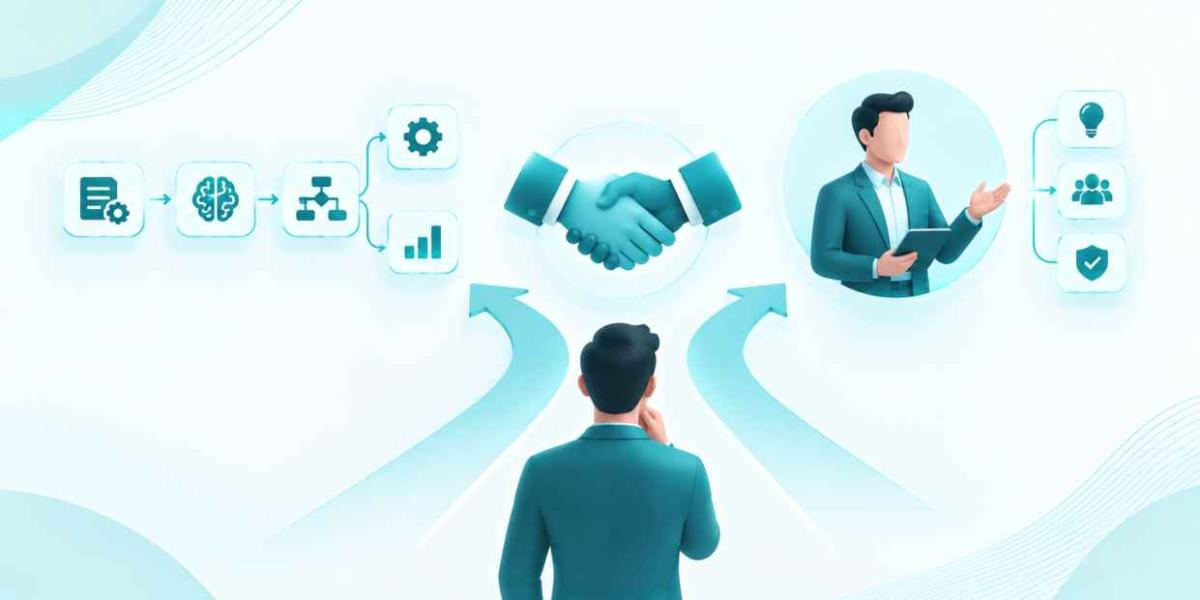
Artificial intelligence is rapidly becoming a strategic priority for businesses across industries. From automating repetitive tasks to improving customer experiences and supporting better decision-making, AI can create significant opportunities for organizations of all sizes. However, adopting AI successfully requires more than simply selecting an AI tool or investing in a new technology.
Before implementing artificial intelligence, businesses need to understand whether their data, infrastructure, workforce, processes, and leadership are prepared for AI adoption. This is where an AI readiness assessment becomes valuable.
An AI readiness assessment evaluates the current state of a business and identifies the capabilities, gaps, risks, and opportunities that can influence an AI implementation. With the support of AI Consulting Services, businesses can create a structured roadmap for adopting AI based on their specific goals and resources.
What Is an AI Readiness Assessment?
An AI readiness assessment is a structured evaluation designed to determine how prepared an organization is to adopt and scale artificial intelligence.
It typically examines several areas, including:
-
Business objectives and AI use cases
-
Data quality and accessibility
-
Technology infrastructure
-
Existing business processes
-
Security and compliance
-
Employee skills and AI awareness
-
Leadership support
-
Budget and investment requirements
-
Scalability and long-term strategy
The goal is not simply to determine whether a company can use AI. It is to identify where AI can create measurable value and what needs to be improved before implementation.
Why Businesses Should Assess AI Readiness First
Many organizations rush into AI adoption because competitors are already using generative AI, automation, machine learning, or intelligent analytics. However, implementing AI without proper preparation can result in unnecessary costs, poor adoption, security concerns, and disappointing outcomes.
For example, an organization may have an excellent AI use case but lack clean and accessible data. Another company may have strong infrastructure but no employees with the skills required to manage AI systems.
An AI readiness assessment helps identify these challenges before significant resources are committed.
It also allows businesses to prioritize AI initiatives based on potential business impact rather than adopting technology simply because it is trending.
Key Areas of an AI Readiness Assessment
1. Business and Strategic Readiness
The first question businesses should ask is: Why do we want to adopt AI?
AI should support a clear business objective. Potential goals may include reducing operational costs, improving customer support, accelerating document processing, increasing sales efficiency, or improving decision-making.
An AI Strategy Consulting approach can help leadership identify high-value opportunities and connect AI initiatives with broader business goals.
Instead of asking, “Where can we use AI?” organizations should ask:
“Which business problems can AI solve better, faster, or more efficiently?”
This shift helps create a more practical AI strategy.
2. Data Readiness
Data is one of the most important foundations of successful AI adoption.
Businesses should evaluate:
-
Where their data is stored
-
Whether data is structured or unstructured
-
Data quality and consistency
-
Data accessibility
-
Data security
-
Data ownership
-
Availability of historical data
AI applications depend heavily on the quality and relevance of the information they use. Incomplete, outdated, duplicated, or poorly organized data can negatively affect AI performance.
A readiness assessment can identify data gaps and recommend steps for improving data management before AI deployment.
3. Technology and Infrastructure Readiness
AI solutions may require suitable cloud infrastructure, computing resources, APIs, databases, enterprise software integrations, and security systems.
Businesses should evaluate whether their current technology environment can support the planned AI applications.
For example, an AI-powered customer support solution may need integration with a CRM, knowledge base, ticketing platform, and communication channels.
An AI Consulting Company can assess the existing technology stack and recommend an architecture that supports the organization's current requirements while allowing future scalability.
4. Process Readiness
AI should improve business processes rather than simply add another layer of technology.
Organizations should identify repetitive, time-consuming, document-heavy, or data-intensive processes that could benefit from automation or AI assistance.
Examples include:
-
Invoice and document processing
-
Customer service
-
Marketing analysis
-
Employee onboarding
-
Contract analysis
-
Report generation
-
Fraud detection
-
Data analysis
Mapping existing workflows helps determine where AI can provide the greatest operational impact.
5. Workforce and Skills Readiness
Successful AI adoption depends on people as much as technology.
Employees need to understand how AI will affect their workflows and responsibilities. Organizations may also need specialists in areas such as data engineering, machine learning, AI development, cybersecurity, and AI governance.
An AI readiness assessment can identify existing skills and determine where training, hiring, or external expertise may be required.
Employee adoption is particularly important because even a technically strong AI solution can fail to deliver value if employees do not trust or use it effectively.
6. Security, Compliance, and Governance
AI systems may process sensitive business, customer, financial, or employee information. This makes security and governance critical considerations.
Businesses should evaluate:
-
Data privacy requirements
-
Access controls
-
Regulatory obligations
-
Model security
-
Data retention policies
-
AI usage policies
-
Monitoring and auditing procedures
Establishing these safeguards early can help organizations reduce risks as AI adoption expands.
How AI Consulting Services Support Readiness
Professional AI Consulting Services can help businesses evaluate their current capabilities and create a practical AI adoption roadmap.
An experienced consulting partner can help organizations:
-
Identify potential AI opportunities.
-
Assess data and technology maturity.
-
Analyze existing workflows.
-
Identify infrastructure and skills gaps.
-
Evaluate security and governance requirements.
-
Prioritize AI initiatives.
-
Estimate implementation requirements.
-
Develop a phased AI roadmap.
This approach helps businesses move from experimentation to structured AI adoption.
What Are AI Consulting Solutions?
AI Consulting Solutions can range from strategic advisory and readiness assessments to AI proof-of-concept development, technology selection, implementation planning, and optimization.
For example, a business may begin with a readiness assessment, identify three potential AI use cases, and then prioritize one based on expected ROI and implementation complexity.
The organization can subsequently develop a proof of concept, evaluate results, and gradually expand AI across additional workflows.
This phased approach can be more practical than attempting a large-scale AI transformation immediately.
Choosing the Right AI Consulting Company
When evaluating AI Consulting Companies, businesses should look beyond technical capabilities. The right partner should understand both AI technology and business strategy.
Consider factors such as:
-
Experience across AI technologies
-
Understanding of your industry
-
Data and integration expertise
-
Security and governance capabilities
-
Ability to develop proof of concepts
-
Scalability of proposed solutions
-
Understanding of business ROI
-
Post-implementation support
A strong consulting partner should help translate business challenges into realistic AI opportunities rather than recommending technology without a clear purpose.
How to Determine If Your Business Is AI-Ready
Your business may be ready to begin AI adoption if you have:
-
Clearly defined business objectives
-
Accessible and reasonably organized data
-
Suitable technology infrastructure
-
Leadership support
-
Employees willing to adopt AI
-
Identifiable AI use cases
-
Appropriate security and governance processes
-
Resources for implementation and ongoing optimization
If several of these areas are missing, that does not mean your business cannot adopt AI. Instead, it highlights the areas that should be addressed first.
Conclusion
AI adoption is not simply a technology decision—it is a business transformation initiative. Conducting an AI readiness assessment can help organizations understand where they currently stand, identify gaps, prioritize opportunities, and develop a realistic path toward implementation.
With the right AI Strategy Consulting approach, businesses can focus on AI initiatives that align with their objectives, data capabilities, workforce, and long-term growth plans.
Whether you are exploring your first AI use case or planning an enterprise-wide transformation, working with an experienced AI Consulting Company can help you move from uncertainty to a structured and actionable AI roadmap.
For businesses looking to evaluate their AI opportunities, PrimaFelicitas provides AI Consulting Services designed to help organizations develop AI strategies, identify opportunities, evaluate technologies, and build practical solutions aligned with their business objectives.
1. What is an AI readiness assessment?

PrimaFelicitas is a global Web3, Blockchain and AI development company headquartered in San Francisco, with a strong operational presence in London (U.K.) and Noida (India). We specialize in building scalable, secure, and future-ready AI solutions for startups, enterprises, and technology-driven organizations worldwide.












Comments (0)