

Why Silicone Emulsion Matters in Industrial Processing
Silicone Emulsion isn't a line item to order on price alone — it's a process input that determines whether your coating, release, or finishing line runs clean or runs into rework.

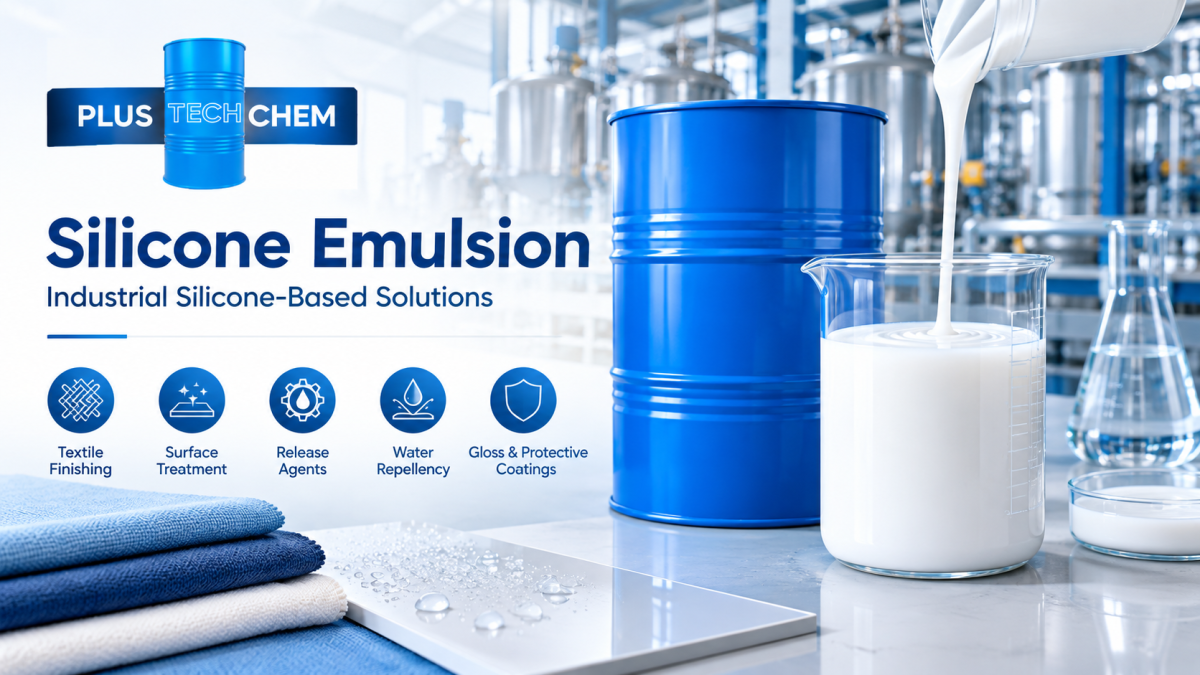
A batch of coated fabric comes off the line with uneven gloss. Somewhere between the formulation sheet and the finishing bath, the silicone emulsion didn't behave the way the technical data sheet promised. Nobody flags it until the client's QC team does. That's the moment most plant managers first take silicone emulsion seriously — not during procurement, but during a rejection.
Silicone emulsion isn't a commodity additive you order once and forget. It's a water-based dispersion of silicone polymer that governs release, lubricity, water repellency, or anti-foam behaviour across a dozen unrelated industries — and its performance depends on particle size, stability, and how well it was matched to your process chemistry in the first place. Get the grade wrong, and you don't find out in the lab. You find out on the shop floor, mid-shift, with a client waiting.
This is where sourcing decisions start mattering more than most procurement teams admit.
Specification
Silicone emulsion isn't one product. It's a category, and the differences between grades are where most buying mistakes happen.
Types by Ionic Charge
-
Non-ionic emulsions — broadly compatible, used where the process bath contains other surfactants that might react with charged particles
-
Cationic emulsions — preferred for textile softening because the positive charge bonds to negatively charged fibre surfaces
-
Anionic emulsions — common in mould release and construction applications, generally more stable under alkaline conditions
Solids Content and Viscosity
Solids typically range from 30% to 60%. A buyer chasing a lower price per kilogram often ends up with a lower-solids emulsion diluted further at the source — meaning more product is needed per batch to hit the same performance, and the "cheaper" drum costs more in application.
The Detail Buyers Skip
Particle size distribution. Most technical data sheets list average particle size and stop there. Two emulsions can share the same average and behave completely differently in your process, because one has a tight distribution and the other has a long tail of oversized particles that will eventually clog your finishing equipment. Ask for the distribution curve, not just the average. Suppliers who can't produce one usually haven't measured it.
Objective
Five questions to ask before you commit to a Silicone Emulsion Manufacturer — and what a bad answer sounds like.
1. Can you provide a Certificate of Analysis for every batch, not just the first order?
Bad answer: "We can arrange that if needed." A policy that exists only when requested isn't a policy.
2. What's your typical lead time from confirmed PO to dispatch?
Bad answer: "It depends." Every manufacturer has a real number. Vague timelines usually mean the plant is running reactive, not scheduled.
3. How do you handle a batch that fails our incoming QC?
Bad answer: "We'll look into it case by case." A supplier who says this doesn't have a returns policy. That's a negotiation you'll lose after the shipment has already gone into your process line.
4. Can you match a competitor's technical data sheet if we're switching suppliers?
Bad answer: An immediate yes with no request for your application details. Matching a TDS on paper and matching performance in your actual bath chemistry are different problems, and a supplier who doesn't ask questions hasn't understood that yet.
5. Do you manufacture domestically or import and repack?
Bad answer: Evasiveness. Repacked imported stock isn't automatically worse, but a supplier who won't say plainly is hiding something — usually inconsistent sourcing between batches.
Benefits
Consistent release performance. Batch-to-batch consistency in silicone emulsion means your mould release or coating process doesn't need re-calibration every time a new drum arrives — that's fewer trial runs eating into production hours.
Reduced rework and rejection rates. A properly matched emulsion grade cuts the defect rate on coated, softened, or lubricated output, which protects margin more directly than almost any other line item in a finishing process.
Water-based formulation. Compared to solvent-based alternatives, silicone emulsions reduce VOC exposure and simplify compliance documentation — relevant across pharmaceutical, food-contact, and personal care applications where regulatory scrutiny is only increasing.
Multi-industry versatility reduces vendor sprawl. One qualified supplier who stocks emulsion grades across textile, cosmetics, and industrial release applications means fewer vendor relationships to manage, fewer separate QC protocols, and fewer points of failure in your supply chain.
Better shelf stability with proper storage guidance. A supplier who tells you the emulsion has a 6-month shelf life and explains that freeze-thaw cycling will break the emulsion prematurely is protecting your inventory, not just selling you a drum.
Lower total cost per unit of output, even at a higher per-kilogram price — because a stable, correctly specified emulsion needs less product per batch and produces less scrap than a cheaper, inconsistent one.
Availability
Sourcing silicone emulsion in India comes with a geography problem most buyers don't think about until a shipment gets delayed. Bulk chemical logistics between manufacturing hubs and processing centres — particularly textile clusters in Gujarat and Tamil Nadu, and pharmaceutical manufacturing zones around Hyderabad and Ahmedabad — depend on road freight that can add three to five days if a supplier isn't positioned near a major transport corridor.
A supplier who stocks across multiple brands under one roof, rather than manufacturing a single proprietary line, generally offers more flexibility here: if one grade is on backorder, there's often a comparable alternative already in stock rather than a wait for a new production run. That flexibility matters more during monsoon months, when transport delays compound.
We ship silicone emulsion across India, with most metro deliveries completing within 3 to 5 working days of dispatch confirmation.
About Us
We started supplying silicone chemicals because we kept watching buyers get locked into single-brand relationships that didn't flex when their formulation needs changed. We're a multi-brand silicone chemical supplier — we don't manufacture one proprietary line and push it regardless of fit. We stock emulsion grades from multiple established producers, which means when a client's application shifts, we're not trying to make one product work for a job it wasn't built for.
We've turned away orders where a client's stated application didn't match the emulsion grade they were asking for, because sending the wrong product out the door costs us the relationship, not just the sale. That's not generosity. That's just what happens when you've seen enough rejected batches to know which conversations are worth having upfront.
Send us your application details — fabric type, coating method, or process chemistry, whichever applies — and your required solids content or viscosity range, and we'll respond within 24 business hours with grade recommendations and a quote. Minimum order quantity starts at 25 kg for trial batches; bulk pricing applies above 200 kg. Attach your current TDS if you're switching suppliers, so we can match specifications precisely rather than guessing.
Conclusion
Silicone Emulsion isn't a line item to order on price alone — it's a process input that determines whether your coating, release, or finishing line runs clean or runs into rework. The manufacturers worth working with are the ones who ask about your application before quoting a price. As more industries move away from solvent-based alternatives, the gap between suppliers who understand formulation chemistry and those who just move drums is only going to get more visible.
FAQs
1. What‘s the difference between silicone emulsion and silicone oil?
Silicone emulsion is the dispersed water emulsion of silicone polymer stabilized with agents surfactants; silicone oil is the pure polymer without any dilution. Although emulsions are easier and safer to manage in water-based process lines, they are limited in storage time, unlike the neat oil.
2. Can silicone emulsion be diluted further after purchase?
Yes, every grade can be diluted to gain desired solids content for your application only with too much diluting, the emulsion becomes unstable and all the styrene-maleic blocks separate. Instead of giving a common dosage, we offer dilution instructions in particular volume ratio for different grade.
3. Do you supply Silicone Emulsion Manufacturers-grade product for pharmaceutical use?
We provide food and pharma compatible grades but the determination of whether a grade is suitable for a specific application and meets regulatory criteria is down to our customer to confirm – we can provide documentation but the final approval is down to their QA team.
4. What‘s a typical MOQ for a first-time buyer?
25 kg for trial quantities, suitable for conducting a good process trial, without having to go for full bulk volume before you‘ve confirmed performance on your own line.
5. How do I determine that I am purchasing from a Silicone Emulsion Suppliers in India and not an importer repacking foreign stock?
Ask directly, and ask for the country of origin on the Certificate of Analysis. An honest supplier will answer straightforwardly; repacked stock isn‘t a black mark by itself, but batch consistency is probably more difficult to assure.









Comments (0)