

What to Do When Water Turns Your Basement Into a Problem Area

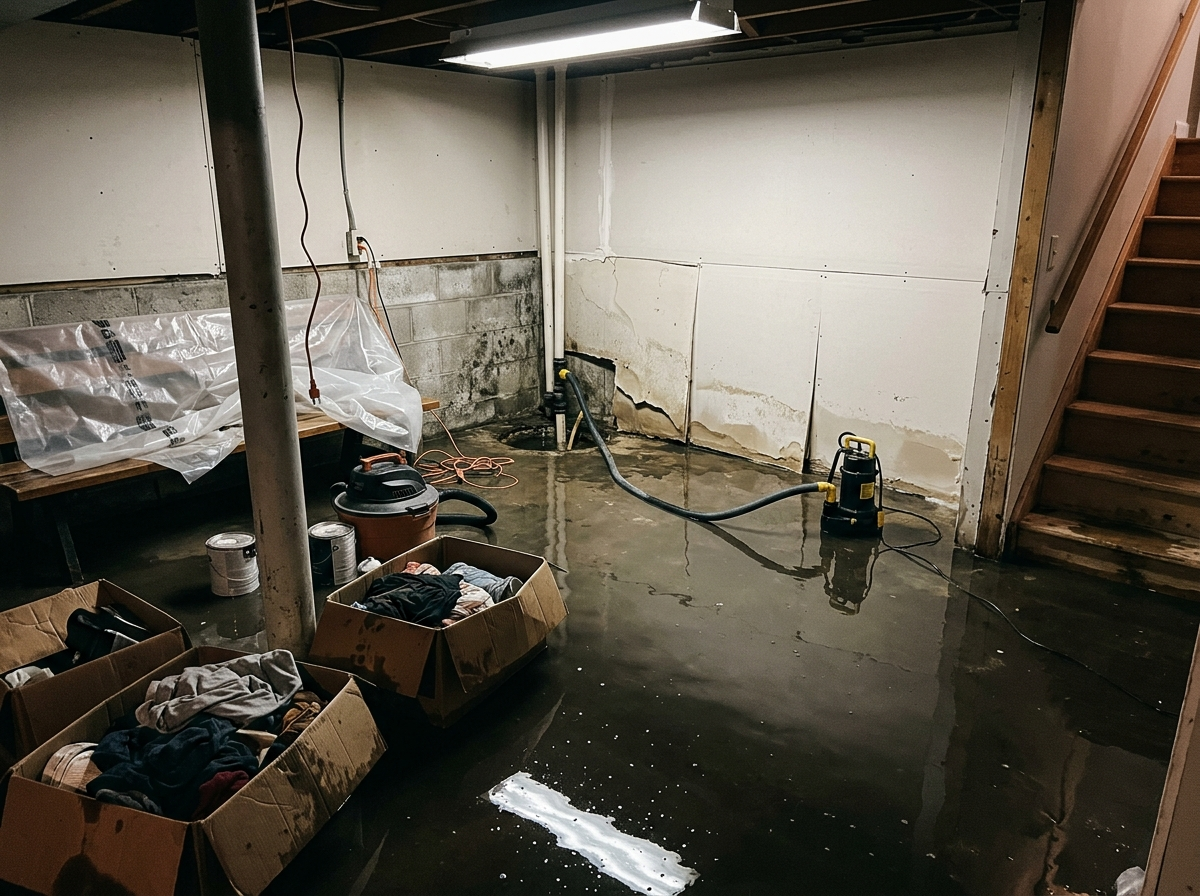
A wet basement can become much more than an inconvenience. Water may enter through foundation cracks, basement walls, floors, windows, bulkheads, or drainage problems around the property. Even a small amount of moisture can create damp conditions that affect stored belongings, flooring, walls, and the overall condition of the space.
The right response depends on where the water came from and how long it has been present. Cleaning up visible water may provide temporary relief, but it does not solve the reason the basement became wet. Homeowners need to identify the source, evaluate the extent of damage, and address the conditions that could allow the problem to happen again.
Start by Finding Where the Water Entered
The first step is determining how water reached the basement. Look closely at the walls, floor joints, windows, bulkhead area, plumbing connections, and places where different building materials meet. Water stains, damp patches, peeling finishes, and mineral deposits can provide clues about the path moisture has taken.
The timing of the water problem can also help. Water that appears after heavy rain may point toward drainage, grading, foundation, or bulkhead issues. Moisture that appears without rainfall may have a different source, such as plumbing or condensation. Understanding the pattern helps separate one type of problem from another.
Do Not Assume All Basement Water Has the Same Cause
Basement water problems can have several causes at the same property. One section of a wall may allow rainwater through a foundation crack, while another area may experience moisture because water is collecting around the exterior of the home.
This matters because each source can require a different solution. Cleaning the basement will not correct poor drainage, and repairing one crack will not necessarily solve water entering through another location. The full basement should be reviewed before deciding what work is necessary.
Watch for Water Around Foundation Cracks
Foundation cracks can vary in appearance and cause. Some are narrow and relatively stable, while others may be wider, changing, or associated with visible water entry. A crack that consistently becomes damp after storms deserves attention because it may provide a path for groundwater to enter the basement.
The surrounding area should also be inspected. Look for staining, efflorescence, damp insulation, damaged wall finishes, or moisture near the floor. These signs can help determine whether the crack is simply visible or actively contributing to a larger basement water problem.
Check the Basement Floor and Wall Joint
The joint where the basement wall meets the floor can sometimes allow water to enter, particularly when outside groundwater pressure increases. Moisture may appear along the perimeter and can be easy to mistake for a simple floor leak.
Pay attention to long, narrow damp areas along the edges of the basement. Repeated moisture in the same location should not be ignored simply because the rest of the floor remains dry. The pattern can provide useful information about how water is moving through or around the foundation.
Inspect Drainage Around the Property
Water management starts outside the basement. Gutters, downspouts, grading, drainage channels, and surrounding soil all influence where rainwater moves after it reaches the property.
Downspouts that discharge too close to the foundation can place additional water against basement walls. Poor grading can also cause rainfall to move toward the home instead of away from it. Outdoor drainage should therefore be considered whenever a basement repeatedly becomes wet after storms.
Look at the Bulkhead Area
Basement bulkheads are exposed directly to rain, snow, leaves, and other outdoor conditions. Damaged doors, deteriorated seals, poor drainage, or water collecting around the entrance can allow moisture to reach the lower level.
If the basement remains dry except during certain storms and water appears near the bulkhead, that location deserves close attention. Existing sitemap resources include several bulkhead-focused articles, including guidance on preventing water around bulkhead doors and identifying leaks, which can provide useful background when evaluating the area.
When Flooded Basement Repair Becomes Necessary
Flooded basement repair may be needed when water has entered the basement in a significant amount or when recurring flooding has already damaged building materials and belongings. The repair process should begin with understanding how the water entered rather than simply removing the visible moisture.
A proper evaluation can help determine whether the problem involves foundation water entry, drainage failure, sump system performance, bulkhead leaks, or another condition. Repairing the source is essential because a clean basement can become flooded again if the underlying water pathway remains unchanged.
Deal With Standing Water Quickly
Standing water should be addressed as soon as conditions allow. Prolonged moisture can affect flooring, drywall, stored materials, wood components, insulation, and other basement features. It can also make cleanup more difficult when water remains in contact with porous materials.
Safety should come first when electrical equipment, outlets, appliances, or wiring may have been exposed to water. Homeowners should avoid entering areas with potential electrical hazards. Once the area is safe, damaged materials can be assessed and the drying process can begin.
Drying Is Part of the Repair Process
Removing visible water does not mean the basement is dry. Moisture can remain inside walls, flooring, insulation, wood framing, and other materials long after the surface appears normal.
Air movement, dehumidification, and controlled drying can help reduce remaining moisture. The exact approach depends on the amount of water and the materials involved. In a larger flooding event, professional drying equipment may be needed to determine whether hidden moisture remains in areas that are difficult to inspect.
Watch for Musty Odors
A persistent musty smell may indicate that moisture remains somewhere in the basement. The source could be damp building materials, stored belongings, hidden moisture, or another area that has not fully dried.
Odor alone does not identify the source, so look for the areas where it becomes strongest. Pay attention to corners, closets, behind stored items, and sections of wall that received water. A thorough inspection is more useful than covering the smell with air fresheners.
Check Stored Belongings After Water Exposure
Basements often contain boxes, furniture, seasonal decorations, books, clothing, and other belongings. Porous items can absorb water quickly and may require separate cleaning or disposal depending on the level of damage.
Move unaffected items away from wet areas and avoid stacking wet materials together. Good airflow around damp belongings can help drying, while heavily damaged materials may need professional assessment. The sooner items are separated and evaluated, the easier it can be to manage the cleanup.
Do Not Ignore Repeated Basement Moisture
A basement that becomes slightly damp after every major storm may still have an ongoing water-management problem. Repeated moisture can gradually damage finishes and create conditions that are more difficult to manage later.
Track when the basement becomes wet, where moisture appears, and how much water enters. This information can help identify patterns and make professional evaluation more productive. Recurring moisture should be viewed as a property maintenance issue rather than an unavoidable part of basement ownership.
Consider a Sump Pump System
A sump system can play an important role in properties where groundwater collects around the foundation. The system can collect incoming water and move it away from the basement through a discharge arrangement.
A sump pump is not the answer to every basement water issue. The system needs to be correctly designed, installed, maintained, and matched to the conditions around the property. When a sump system is already present, its operation should also be checked if basement flooding continues.
Address the Source Instead of Only the Damage
A basement repair project should focus on why the water entered in the first place. Replacing wet drywall without addressing drainage or foundation water entry may restore the room temporarily but leave the same problem waiting for the next storm.
The most useful solution is one that combines cleanup with source control. Depending on the property, that may involve foundation work, drainage improvements, bulkhead repairs, sump system changes, or other measures. The correct approach depends on the actual cause.
Plan for Future Storms
Once a basement has flooded, future prevention becomes especially important. Homeowners should review drainage, sump equipment, gutters, downspouts, and vulnerable entry points to reduce the chance of another event.
The basement should also be checked after major storms rather than waiting for visible water. Early signs such as damp spots, new stains, or unusual odors may appear before a larger problem develops. Regular observation can help homeowners respond earlier.
Final Thoughts
Basement flooding should be treated as more than a cleanup problem. Water entry can reveal issues involving the foundation, drainage, bulkhead, sump system, or surrounding property conditions. Finding the source and correcting it is essential for protecting the basement over the long term.
This relates to hydrostatic pressure, the pressure exerted by water at rest. Understanding how groundwater pressure can act against basement walls helps explain why drainage and water management are such important parts of basement protection.





Comments (0)