

Target Validation and Mechanism of Action in Early Research
Learn how target validation and mechanism of action studies guide early drug discovery, confirm biological targets, and support the development of promising therapies.

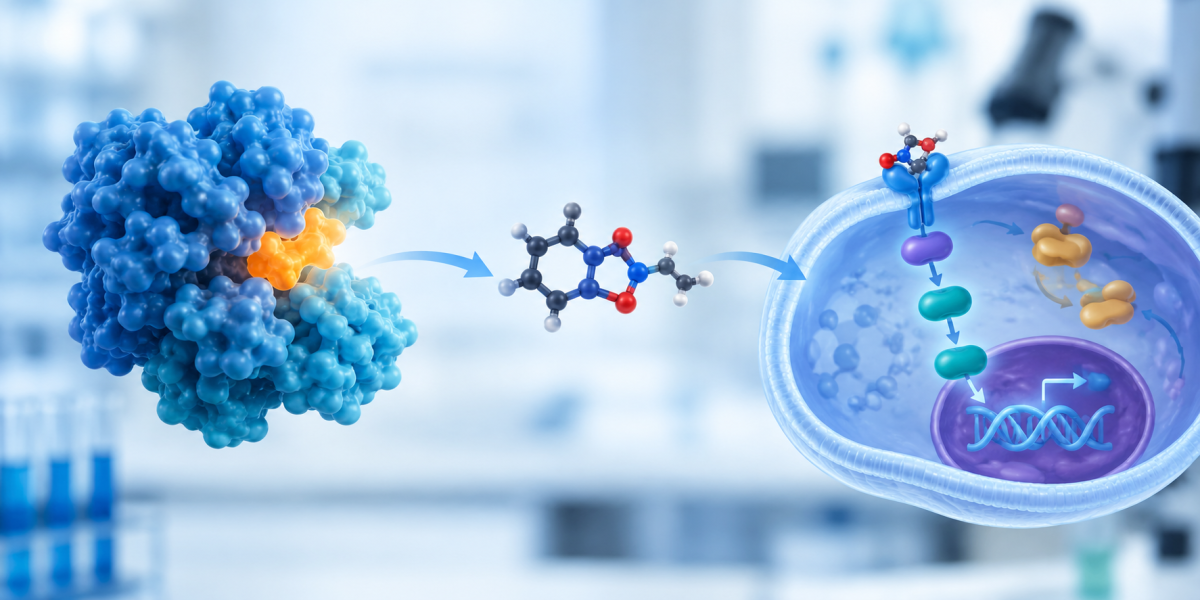
Target Validation and Mechanism of Action in Early Research
A compound changes a disease-related response in cells. The result is encouraging, but two questions remain. Is the proposed target responsible for that response? And does the compound produce its effect by acting on that target?
Target validation and mechanism-of-action research address these connected questions. They help discovery teams judge whether the biological hypothesis and the compound’s behaviour support further investment.
Distinguish identification from validation
Target identification services help identify biological components that may be relevant to a disease or a compound’s effects. Evidence can come from genetics, molecular profiling, functional studies and other approaches.
Finding an association is not the same as demonstrating a useful therapeutic opportunity. A protein may be present at different levels in diseased tissue without being a suitable point of intervention.
Target validation services investigate whether changing the target’s activity or abundance produces effects consistent with the proposed therapeutic hypothesis. The answer depends on the quality of the experiments and the relevance of the models used.
Use more than one way to perturb the target
Researchers may combine genetic and pharmacological approaches. Genetic tools can reduce or alter a target, while compounds can change its activity through a different route.
Agreement between these approaches can strengthen confidence, but disagreement deserves investigation. Removing a protein is not always equivalent to inhibiting one of its functions. Timing, compensation and incomplete target inhibition can also affect the outcome.
The aim is to build converging evidence while understanding where the methods differ.
Determine how the compound produces its effect
Mechanism of action studies investigate the chain of events linking compound exposure to a biological response. The proposed mechanism may involve direct interaction with a target and subsequent changes in cellular signalling or function.
A biochemical assay can support a molecular interaction, but additional evidence may be needed to demonstrate target engagement in cells. Researchers must also consider whether other activities could explain the observed response.
For example, reduced cell growth could result from inhibition of the intended pathway, general toxicity or an unrelated molecular effect. A single endpoint cannot reliably distinguish all these possibilities.
Connect the model with the disease question
A result is most useful when the model captures the biology relevant to the programme. Target expression, pathway dependence and the surrounding cellular context can change how a perturbation behaves.
An effect in one cell line does not establish that the same effect will occur across patient populations. Follow-up work may require additional models or biomarkers that help identify the conditions under which the hypothesis is plausible.
This is also where negative results can be informative. They may reveal that the target matters only in a particular biological context.
Define what evidence would change the decision
Before expanding chemistry around a target, teams should agree which findings would strengthen, weaken or overturn the hypothesis. This avoids treating every experiment as a search for confirmation.
Jubilant Biosys includes target validation and mode-of-action capabilities in its service portfolio. Sponsors evaluating this support should discuss the evidence already available and the main alternative explanations that remain unresolved.
Strong early research makes those alternatives testable. It gives a programme a clearer account of why changing the target should matter and why the selected compounds are suitable tools for pursuing that question.











Comments (0)