

Water Jetters: Choosing the Right Equipment for Professional Cleaning
Water jetters are essential for professional cleaning tasks, from clearing blocked drains to washing heavy machinery and maintaining industrial surfaces. This guide explains how to choose the right water jetting equipment by comparing pressure, water flow, power sources, mobility, hoses, nozzles and operating requirements. Discover the key factors Australian businesses should consider when selecting reliable equipment for commercial and industrial cleaning applications with Jetwave Group.
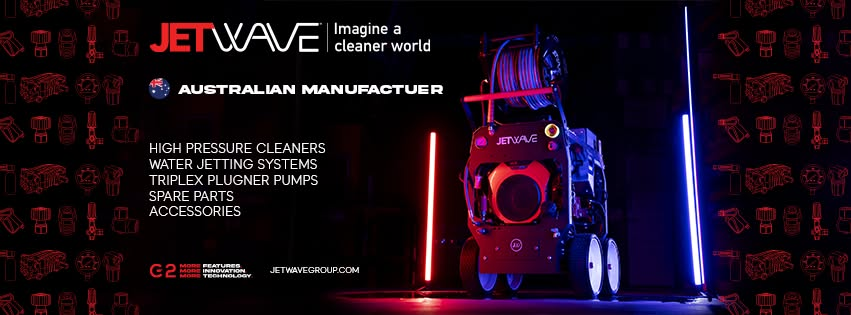
When a cleaning job involves more than ordinary dirt, a standard pressure washer may not always be the most practical option. Built-up deposits, blocked pipes, heavy machinery and industrial surfaces can take considerably more effort to clean. This is where Water Jetters can be useful, giving contractors and businesses a powerful stream of water for jobs that need more than basic washing.
For Australian businesses, the right water jetting equipment can be useful in plumbing, construction, agriculture, transport and industrial work. But buying a machine simply because it has a high pressure rating isn't necessarily the best way to choose. The type of work, operating conditions and frequency of use all need to be considered.
What Are Water Jetters Used For?
Water Jetters use high-pressure water to break up and remove dirt, deposits, blockages and other material. While they are commonly associated with drain and pipe cleaning, they can also be used for machinery, equipment, hard surfaces and various industrial cleaning applications.
The way a water jetter performs depends on more than just the pump. The pressure, water flow, hose, nozzle and power source all have a part to play.
For a business, this means the best machine is usually the one that fits the job rather than the one with the biggest number on its specification sheet.
Choosing a Water Jetter Starts With the Job
Before looking at individual machines, think about what your team will actually be using the equipment for.
A drainage contractor dealing with blocked pipes will have very different requirements from a company cleaning excavators or industrial machinery. Likewise, a machine used for a few jobs each week won't necessarily need the same setup as equipment running for hours every day.
Consider the work you normally handle:
-
Drain and pipe cleaning
-
Machinery and equipment washing
-
Construction site cleaning
-
Agricultural equipment
-
Commercial vehicles
-
Industrial surfaces
-
Heavy-duty maintenance
Once you have a clear idea of the application, it becomes much easier to decide what pressure, flow and configuration you need.
Pressure and Water Flow Both Matter
Pressure is probably the first specification most people notice when comparing water jetters. It is normally shown in BAR or PSI and tells you how much force the water can produce.
But water flow is just as important.
Measured in litres per minute (L/min), flow affects how much water is delivered and how quickly loosened material can be moved away. A machine with high pressure but very low flow won't necessarily be the best option for every cleaning job.
It's better to look at the two specifications together.
For a particular application, you want enough pressure to loosen the material without using unnecessarily high pressure, combined with enough flow to keep the cleaning process moving efficiently.
Tags:









Comments (0)