

RoadQuip Premium Barrier: What Does “Premium” Buy You on a Site That Changes Every Day?
A construction site rarely stays the same for long. One morning, a section of the yard may be closed


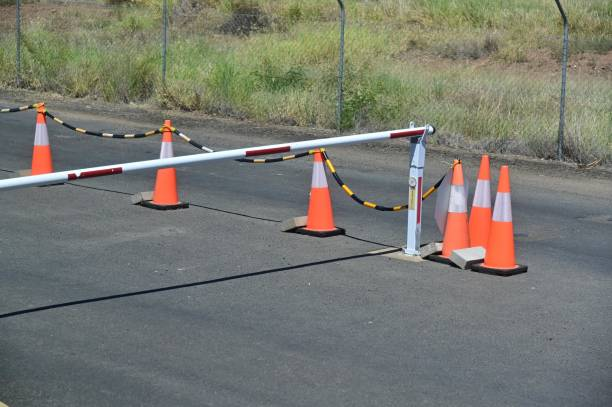
A construction site rarely stays the same for long. One morning, a section of the yard may be closed for excavation. By the afternoon, vehicles could be using a temporary access route while workers move equipment into another area. The following day, the original route may need to be reopened, with barriers repositioned to protect a completely different section of the site.
This constant movement puts practical demands on temporary traffic-control equipment. A barrier needs to be visible, straightforward to position, suitable for the environment and adaptable enough to support changing site layouts. It also needs to provide a clear physical indication of where vehicles and pedestrians should not go.
That is where the RoadQuip Premium Barrier comes into the picture. Its value is not simply that it is called premium. The more useful question is what its construction, dimensions, interlocking design and ballast options offer a site team that needs to change its traffic-control arrangements regularly.
Key Takeaways
-
The RoadQuip Premium Barrier measures 2,000 mm long and 1,000 mm high, providing a substantial visible presence around restricted areas.
-
Its lightweight construction makes it easier to transport and reposition than a permanently installed barrier.
-
Interlocking sections allow teams to create continuous barrier lines and adapt layouts to different site requirements.
-
Water or sand can be used as ballast to add weight when additional stability is needed.
-
High-visibility colour options help identify restricted areas and guide people around temporary hazards.
-
The barrier is intended for channelising, delineation and access control, not as a certified vehicle restraint system.
-
The real benefit comes from combining suitable equipment with proper placement, regular inspections and a well-planned site safety arrangement.
A Site That Changes Every Day Needs More Than a Static Barrier
Temporary traffic management is relatively straightforward when a work area remains unchanged for weeks or months. Once the site starts moving, however, the requirements become more complicated. An access route that was safe yesterday may become unsuitable when a delivery vehicle needs additional turning space or a contractor begins working beside the original route.
This is common across South African construction projects, roadworks, warehouses, mining operations and industrial facilities. Teams may need to close off excavations, separate pedestrians from moving machinery, redirect delivery vehicles or prevent access to areas where maintenance is taking place. The equipment used to manage these changes must be practical enough to move without making every adjustment a major installation exercise.
A fixed barrier can be appropriate where a permanent boundary is required, but it is not always the most convenient option for a changing work environment. Portable barriers provide greater flexibility because they can be arranged around the current site conditions and repositioned when the work progresses. The important thing is to choose a product that offers useful visibility and stability without becoming unnecessarily difficult to handle.
What Makes the RoadQuip Premium Barrier Different?
The RoadQuip Premium Barrier is a modular plastic road barrier designed for traffic channelisation, delineation and restricted-access control. It is manufactured from locally sourced LDPE plastic and has a listed empty weight of approximately 15 kg. Its standard dimensions are 2,000 mm in length and 1,000 mm in height, giving it a substantial profile that can be used to define temporary work areas.
The barrier is designed to be lightweight enough for practical handling while also allowing additional weight to be introduced when the application requires it. Its interlocking ends help connect multiple units into a continuous arrangement, rather than leaving every section as an isolated obstacle. This makes it useful when site teams need to establish a temporary boundary that can be extended, shortened or reshaped.
The product is available in high-visibility colours, including yellow, red, white, blue and orange, subject to availability and ordering requirements. These options provide flexibility when different site areas need to be identified or when a particular colour arrangement is required for a project. Colour selection should still follow the site's traffic-management plan and applicable safety requirements.
1. A Larger Profile That Defines the Restricted Area
The first practical benefit is the barrier's size. At two metres long and one metre high, each unit creates a substantial visible section of boundary. This can make it easier to establish a clear separation around work areas, temporary closures and restricted access points.
Smaller cones and lightweight delineators have an important role in traffic management, but they may not provide the same continuous visual presence. Where a larger area needs to be defined, a barrier of this size can help make the boundary more obvious to drivers, workers and pedestrians. It also reduces the need to create an entire boundary from numerous small individual markers, although additional signs and delineation may still be necessary.
The height can be particularly useful around areas where pedestrians and vehicles operate close to one another. A clearly defined barrier line helps communicate that the space beyond it is restricted, rather than relying on painted lines or small markers alone. However, the barrier's visibility does not replace suitable warning signs or physical protection where a higher level of impact resistance is required.
2. Lightweight Construction for Easier Repositioning
A barrier that needs to be moved regularly should not require excessive effort every time the site layout changes. The RoadQuip Premium Barrier has a listed empty weight of approximately 15 kg, which makes it more manageable for handling and repositioning than many heavier fixed alternatives. This is useful when a work team needs to adjust a temporary boundary as different activities move around the site.
Consider a construction project where an excavation area is extended during the morning shift. The site supervisor may need to move the barrier line to create a larger exclusion zone while keeping a separate route open for vehicles and equipment. A portable modular barrier makes this adjustment more practical, provided the new layout is planned and installed correctly.
Lightweight construction also has a logistical advantage. Empty units can be transported to different sections of a site or stored for later use without requiring the same handling arrangements as heavy permanent structures. Once positioned, the team can decide whether the barriers need additional ballast based on the environment and the intended application.
3. Interlocking Sections for Continuous Boundaries
One of the useful features of the RoadQuip Premium Barrier is its interlocking design. Individual units can be connected to create a longer barrier line, allowing the site team to establish a continuous boundary rather than positioning separate units with large gaps between them. This is particularly useful around temporary road closures, construction zones and restricted pedestrian areas.
The ability to connect sections also gives the arrangement more flexibility. A straight line may be suitable for closing a section of roadway, while an angled or extended layout may be needed to guide traffic around an excavation or protect an irregular work area. The modular design allows teams to adapt the arrangement without needing a completely different type of barrier for every situation.
Interlocking does not mean that the barrier automatically becomes a crash-rated wall or a vehicle restraint system. Its purpose is to create a connected, visible boundary for channelisation and access control. Where a project requires protection against vehicle impact, the site designer must specify an appropriate engineered system rather than relying on the connection between ordinary plastic barrier sections.
Ballast: Why Adding Weight Can Make a Difference
A portable barrier is useful because it can be moved, but its empty weight may not always be sufficient for the conditions in which it is being used. Wind, passing vehicles, uneven ground and accidental contact can all affect the position of temporary equipment. This is why the option to add ballast is an important part of the RoadQuip Premium Barrier's design.
The barrier can be filled with water or sand to increase its weight. The additional ballast can help improve stability and reduce unwanted movement, depending on the ground conditions, barrier arrangement and environmental exposure. It also allows site teams to keep the units relatively easy to transport when empty, then add weight once the barriers have been positioned.
Water or Sand: Which Should You Use?
Water can be convenient where a suitable supply is available and the barrier needs to be filled on site. It avoids the need to transport large quantities of sand and can be practical for temporary arrangements where the units may later need to be emptied and moved. However, teams should consider access to water, drainage and the possibility of freezing or leakage in relevant conditions.
Sand may be more suitable where water is not readily available or where the site prefers a different ballast arrangement. It can also be useful where the barrier needs to remain weighted for an extended period. The practical choice depends on the project, available resources and the manufacturer's instructions for filling and use.
Neither option should be treated as a substitute for proper installation. The required ballast depends on the application and the surrounding conditions, and teams should not assume that filling a barrier makes it suitable for stopping a moving vehicle. The barrier's intended role remains traffic delineation, channelisation and access control unless a separate verified specification establishes otherwise.
Why High Visibility Matters on Busy Sites
A temporary boundary is only useful if people can recognise it in time. On a busy site, drivers may be watching other vehicles, checking for pedestrians or manoeuvring around machinery. Workers may also be moving materials while contractors and visitors unfamiliar with the site are trying to find the correct route.
High-visibility colours help make the barrier more noticeable against the surrounding environment. The RoadQuip Premium Barrier is available in several colour options, giving site managers some flexibility when establishing temporary boundaries. The selected colour should be appropriate for the site's safety arrangements and should not create confusion with other signs, markings or traffic-control equipment.
Visibility also needs to be considered under different lighting conditions. A barrier that is easy to see during daylight may be less noticeable at night, in heavy rain or when viewed against a cluttered background. Where the installation remains in place after dark, suitable reflective delineation, warning signs or other approved visibility measures may be required as part of the overall traffic-management arrangement.
Colour Alone Cannot Explain Every Instruction
It is tempting to assume that a brightly coloured barrier communicates everything a driver or pedestrian needs to know. In reality, colour helps identify an object, but it does not necessarily explain whether a route is closed, where traffic should move or which entrance remains available. That information may need to come from signs, directional indicators and the overall layout.
For example, a yellow barrier line might clearly identify an area that vehicles should avoid, but a driver approaching it may still need to know whether to turn left or follow a diversion. If the barrier is positioned without supporting directional guidance, it can create an obstruction without making the correct route clear. The most effective arrangements combine visibility with clear instructions.
Where the RoadQuip Premium Barrier Makes Practical Sense
The product's combination of size, portability, interlocking sections and ballast options makes it suitable for a range of temporary site applications. It is not limited to public roadworks, although traffic channelisation remains one of its main uses. Its flexibility can also be useful in environments where pedestrian access, vehicle movements and restricted work areas need to be managed.
Construction and Roadworks
Construction projects often require temporary boundaries around excavations, material storage, machinery and active work zones. The layout can change as contractors complete one section and move to another, making portable barriers useful for adapting the restricted area. Connected units can create a clear boundary while allowing the site team to adjust its length as work progresses.
On public roads, however, the barrier must form part of an appropriate traffic-management arrangement. Advance warning signs, directional guidance, suitable spacing and any required reflective devices must be considered. A barrier alone should not be treated as a complete roadworks traffic-control system.
Warehouses and Industrial Yards
In warehouses and industrial yards, temporary restrictions may be needed when loading areas are being repaired, machinery is undergoing maintenance or vehicle routes are being changed. A modular barrier can help separate an active work area from nearby vehicle movements and pedestrian access. Its height and length can make the restricted zone easier to recognise than a small collection of floor markers.
Industrial sites also need to consider the types of vehicles using the area. Forklifts, delivery trucks and other heavy vehicles may operate close to temporary boundaries, so the barrier should be positioned where it will not create an unexpected collision hazard. Where there is a genuine risk of vehicle impact, additional engineered protection may be necessary.
Mining and Heavy Industrial Operations
Mining and heavy industrial environments often involve large equipment, changing access routes and work activities that require temporary exclusion zones. A portable barrier can help identify areas where access is restricted, including maintenance locations, temporary storage areas and pedestrian routes affected by ongoing work. Its ability to be moved and ballasted can be useful when the site arrangement changes.
The operating conditions must still guide the selection process. Dust, uneven surfaces, wind exposure, heavy vehicle movements and the possibility of accidental contact should all be considered. A lightweight plastic barrier may be appropriate for warning and delineation, but it should not be used as a substitute for heavy-duty protection around high-risk machinery or vehicle routes.
Events and Public Areas
Sporting events, road races and public gatherings often involve temporary changes to pedestrian and vehicle movement. Organisers may need to close access points, define pedestrian routes or restrict entry to areas where equipment is being installed. Interlocking barriers can help create temporary boundaries that are adjusted as the event layout develops.
The same considerations apply to emergency cordons and temporary access restrictions. Barriers should make the boundary clear without blocking essential emergency access or creating an unsafe pedestrian route. Organisers should also consider crowd pressure and the specific requirements of the event, as an ordinary plastic road barrier is not automatically suitable for crowd containment.
What Should Site Managers Check Before Using the Barriers?
Even a suitable product can become ineffective when it is installed incorrectly or used outside its intended purpose. Site teams should consider the layout, ground conditions, traffic movements and required level of protection before positioning the barriers. A short inspection before use can help identify problems that might otherwise be overlooked during a busy shift.
The following checks provide a practical starting point:
-
Inspect the barrier: Look for cracks, damage, deformation or other defects that could affect its use.
-
Check the connections: Make sure interlocking sections are properly joined and positioned as intended.
-
Assess the ground: Avoid placing units where uneven, unstable or unsuitable surfaces could affect their position.
-
Consider ballast: Determine whether water or sand should be added based on the site conditions and intended application.
-
Review visibility: Check that the colour and position of the barrier make it easy to recognise from the relevant approach.
-
Provide directional guidance: Add appropriate signs, cones, delineators or markings where drivers and pedestrians need instructions.
-
Allow safe access: Make sure the arrangement does not unintentionally obstruct emergency routes or create unsafe vehicle manoeuvres.
-
Inspect regularly: Recheck the installation after barriers have been moved, weather conditions have changed or site activities have progressed.
These checks should form part of the site's wider safety procedures. The barrier arrangement should be reviewed whenever the work area changes, rather than assuming that an installation remains suitable simply because it was correct when first positioned.
What Does “Premium” Actually Buy You?
The word premium can mean different things depending on the product category. It should not automatically be interpreted as meaning that a barrier is impact-rated, indestructible or suitable for every high-risk application. Those claims require specific testing, certification or manufacturer documentation.
With the RoadQuip Premium Barrier, the practical value comes from a combination of identifiable features. The 2,000 mm by 1,000 mm dimensions provide a substantial visible boundary, while the approximately 15 kg empty weight makes the units manageable for repositioning. Interlocking sections help create continuous layouts, and the option to add water or sand ballast provides additional weight when the application requires it.
For a site that changes every day, these features can make temporary traffic and access arrangements easier to adapt. Instead of treating every new work area as a completely separate installation, teams can use modular sections to build and adjust the required boundary. That flexibility is useful when it is supported by correct positioning, suitable signage and regular inspection.
The important buying decision is not whether the word premium sounds impressive. It is whether the product's actual features match the work the barrier needs to perform. If the requirement is visible, portable and adaptable access control, those are the qualities worth assessing.
Conclusion
A changing site needs traffic-control equipment that can keep up with the work. Barriers may need to be moved as excavations expand, access routes change, machinery is relocated or temporary pedestrian areas are introduced. Equipment that is difficult to handle or unsuitable for repeated repositioning can make these changes more complicated than they need to be.
The RoadQuip Premium Barrier offers a practical combination of size, lightweight handling, interlocking sections, high-visibility colour options and the ability to add water or sand ballast. These features make it useful for channelising traffic, defining work zones and restricting access across construction, industrial, mining and event environments. Its suitability still depends on the site conditions and the level of protection required.
Ultimately, premium should mean that the barrier provides the features the site actually needs. On a project where the layout changes every day, adaptability, visibility and practical handling can make a meaningful difference to how efficiently temporary boundaries are managed.
Frequently Asked Questions
1. What are the dimensions of the RoadQuip Premium Barrier?
The RoadQuip Premium Barrier measures 2,000 mm long and 1,000 mm high. This gives each unit a substantial profile for defining restricted areas and guiding traffic around temporary work zones. Its size makes it suitable for a range of roadworks, construction and industrial applications.
2. How heavy is a RoadQuip Premium Barrier?
The listed empty weight of the RoadQuip Premium Barrier is approximately 15 kg. This makes it easier to handle and reposition than many heavier fixed barriers. Additional weight can be introduced by filling the unit with water or sand when greater stability is required.
3. Can RoadQuip Premium Barriers be connected together?
Yes. The barriers have an interlocking design that allows multiple sections to be connected into longer or customised layouts. This is useful when creating continuous boundaries around work areas, temporary road closures and restricted access points.
4. Can the RoadQuip Premium Barrier be filled with water or sand?
Yes. The barrier can be filled with water or sand to add ballast and improve stability, depending on the application and site conditions. The appropriate filling method should follow the manufacturer's instructions, and added weight does not make the barrier a certified vehicle restraint system.
5. Where can RoadQuip Premium Barriers be used?
They are suitable for applications such as roadworks, construction zones, industrial sites, pedestrian separation, restricted access areas, sporting events and public gatherings. They can also be used for temporary cordons and emergency access control. The specific layout should always reflect the risks and requirements of the environment.
6. Can a RoadQuip Premium Barrier stop a moving vehicle?
It should not be assumed to stop or safely redirect a moving vehicle. The product is intended primarily for traffic channelisation, delineation and access control, rather than functioning as a certified crash barrier. Where vehicle impact protection is required, an appropriately engineered and specified vehicle restraint system must be used.












Comments (0)