

How Can the Pilz 774056 Safety Relay Improve Machinery Protection and Operational Safety?
Explore how the Pilz 774056 Safety Relay supports emergency stop and gate monitoring, with practical guidance on system design, installation and safety checks.

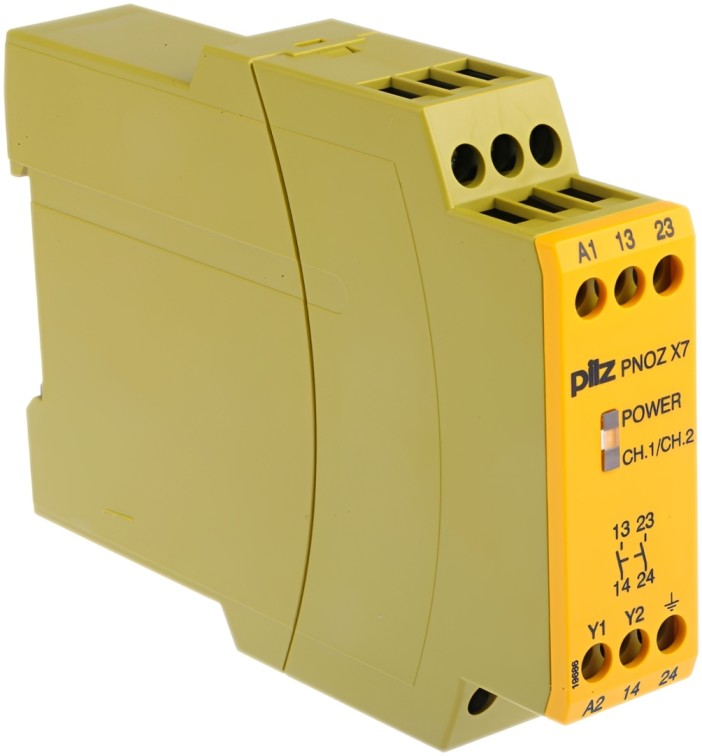
Modern industrial environments depend on automated machinery to maintain productivity, precision and consistent manufacturing performance. However, moving equipment also introduces potential hazards that require effective protective measures. The Pilz 774056 Safety Relay is designed to support machine safety by monitoring emergency stop circuits and safety gates, helping ensure that equipment responds appropriately when protective devices are activated.
Reliable machine safety is not simply about stopping equipment. It involves creating a coordinated control system that responds predictably to hazardous conditions. Understanding the role of safety relays allows engineers to develop safer operating environments while supporting efficient industrial processes.
Why Are Safety Relays Important in Industrial Automation?
Industrial machines frequently operate at high speeds, handle heavy materials and perform repetitive mechanical movements. Without suitable protective systems, unexpected operation can place workers and equipment at risk.
Safety relays form part of the electrical control architecture responsible for monitoring selected protective devices. When a monitored condition changes, the relay switches its safety contacts to initiate the intended protective function.
Their importance extends beyond routine equipment control because safety-related circuits must be designed to achieve a defined level of risk reduction.
Common benefits include:
- Supporting controlled responses to emergency stop commands.
- Monitoring suitable machine guard interlocks.
- Helping interrupt hazardous machine functions.
- Supporting structured safety system design.
- Providing dedicated switching for safety-related control circuits.
What Makes the Pilz 774056 Safety Relay Suitable for Machine Control?
The Pilz 774056 belongs to the PNOZ X7 range of standalone safety relays. It uses a single-channel input arrangement and provides two normally open safety contacts.
Its technical characteristics include:
- Rated supply voltage of 230 V AC.
- Two normally open safety outputs.
- Automatic and manual start options.
- Compact 22.5 mm housing width.
- Integrated screw terminals.
- Suitability for appropriate emergency stop and safety gate monitoring applications.
These characteristics allow the relay to be incorporated into compatible industrial control systems without requiring a programmable safety controller.
However, the complete safety function must be evaluated before installation.
How Does the Relay Respond to an Emergency Stop?
An emergency stop function provides a means of initiating a protective response when an operator identifies an immediate hazard.
When integrated correctly, the safety relay monitors the associated input circuit and controls its safety outputs according to the monitored conditions.
What Happens During a Protective Stop?
A typical arrangement follows these principles:
- The monitored emergency stop circuit remains in its permitted operating state.
- The relay enables its safety contacts when the required conditions are satisfied.
- Operating the emergency stop device interrupts the monitored circuit.
- The relay opens its safety outputs.
- Connected control equipment initiates the intended stopping function.
The actual stopping behaviour depends on the machine design and associated components.
Releasing an emergency stop actuator must not, by itself, create an unsafe machine restart. Appropriate restart prevention must therefore be addressed during system design.
How Does Safety Gate Monitoring Protect Machine Operators?
Many industrial machines contain rotating parts, cutting tools or automated mechanisms that require physical guarding.
Safety gate monitoring helps ensure that access to these hazardous areas is controlled through suitable protective devices.
For example, a packaging machine may include an interlocked access guard. Opening the guard can interrupt the monitored safety circuit, causing the relay to change its output state.
This arrangement can help prevent continued hazardous operation while access is available.
Nevertheless, the effectiveness of the protection depends on factors such as guard construction, interlock selection, machine stopping time and the required safety performance.
Why Is Risk Assessment Essential Before Selecting a Safety Relay?
Not every industrial application requires the same safety architecture. The appropriate solution depends on the severity of potential injury, exposure to hazards and the possibility of avoiding harm.
A machinery risk assessment helps establish the protective measures required.
Which Factors Should Engineers Evaluate?
Important considerations include:
- The type and severity of potential hazards.
- The required Performance Level under relevant machinery safety standards.
- Whether single-channel monitoring is sufficient.
- The need for fault detection or redundant monitoring.
- Compatibility with external contactors and control equipment.
- The possibility of unexpected machine restart.
- Environmental conditions affecting electrical components.
The Pilz 774056 uses single-channel input wiring, which may not satisfy applications requiring more extensive diagnostic coverage.
What Should Be Checked During Installation and Commissioning?
Correct installation is essential because even a properly selected safety relay cannot compensate for unsafe wiring or an unsuitable control architecture.
Installation should be performed by qualified personnel using the manufacturer's operating instructions.
Essential checks include:
- Verifying the 230 V AC supply requirements.
- Confirming the correct terminal connections.
- Checking output contact ratings against connected loads.
- Ensuring suitable protection against electrical faults.
- Inspecting the control enclosure and mounting arrangement.
- Testing emergency stop and guard interlock responses.
- Verifying restart behaviour under foreseeable operating conditions.
Commissioning should also include documenting functional tests and validating the safety function against the machine's risk assessment.
How Can Maintenance Teams Identify Potential Safety Relay Problems?
Regular inspection helps maintain dependable operation and identify developing faults.
Unexpected relay behaviour may result from damaged wiring, loose terminals, supply problems or deterioration of associated switching components.
Maintenance personnel should investigate intermittent operation, unusual switching behaviour and failure to respond correctly to protective devices.
Functional testing should confirm that the machine achieves its intended safe response. A defective relay or associated safety component must be addressed before normal operation resumes.
Safety devices should never be bypassed simply to restore production.
When Should a Different Safety Relay Be Considered?
Although the Pilz 774056 offers straightforward safety monitoring, more demanding machinery may require additional capabilities.
Alternative safety controllers may be necessary when an application needs:
- Dual-channel input monitoring.
- More extensive fault diagnostics.
- Multiple independent safety functions.
- Additional safety outputs.
- Configurable safety logic.
- A higher level of system-level diagnostic coverage.
Choosing the correct architecture ensures that protective measures align with the actual machinery hazards rather than relying on component specifications alone.
Why Does Effective Machine Safety Require More Than One Component?
The Pilz 774056 Safety Relay can serve an important role in suitably designed industrial safety circuits. Its compact construction, dedicated safety contacts and straightforward monitoring functions make it relevant to conventional machinery protection systems.
However, dependable safety relies on a complete approach combining appropriate risk assessment, component selection, installation, commissioning and maintenance.
By understanding the relay's capabilities and limitations, engineers can make informed decisions that support safer machinery, consistent industrial operations and long-term equipment reliability.










Comments (0)