

How AI-Powered Continuous Testing Tools Improve DevOps
AI-powered continuous testing tools in DevOps automate testing, detect defects earlier, prioritize test cases, reduce maintenance, improve CI/CD feedback, and help teams deliver reliable software faster.

Modern software development depends on speed, reliability, and frequent releases. DevOps practices help development and operations teams collaborate efficiently, but faster delivery also creates greater testing demands. Applications must be tested continuously as new code is developed, integrated, and deployed. This is where AI-powered continuous testing tools in devops can make a meaningful difference. By combining automation, machine learning, analytics, and intelligent test management, these tools help teams identify defects earlier and improve software quality throughout the development lifecycle.
What Makes AI-Powered Testing Different?
Traditional automated testing follows predefined scripts and rules. Although automation reduces manual effort, maintaining large test suites can become difficult when applications change frequently. AI-powered testing introduces intelligent capabilities that can analyze application behavior, testing patterns, and historical results.
Modern continuous testing tools in devops can use AI to identify test cases that are more likely to detect defects, recognize patterns in failed tests, and reduce unnecessary test execution. This allows teams to spend more time addressing important issues instead of repeatedly investigating low-value failures.
Faster Feedback During Development
One of the main goals of DevOps is to provide rapid feedback. Developers need to know quickly whether a code change has introduced a problem. Waiting until the final stage of development to perform extensive testing can increase correction costs and delay releases.
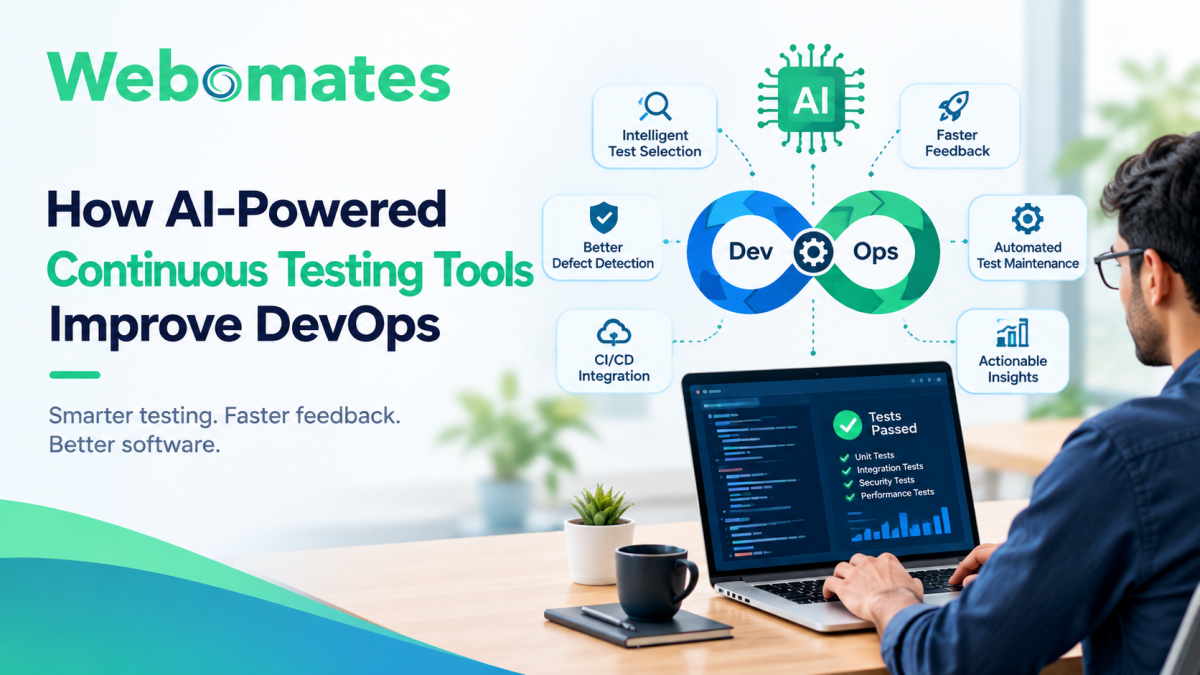
AI-powered continuous testing tools in devops integrate testing into CI/CD pipelines, allowing automated tests to run as part of regular development activities. Intelligent prioritization can help execute critical tests earlier, while automated analysis can highlight failures that require immediate attention.
This faster feedback loop supports a more proactive approach. Developers can identify problems while changes are still fresh, making debugging and remediation easier.
Intelligent Test Case Selection
Large software projects can contain thousands of automated test cases. Running the entire test suite after every code change may consume considerable time and infrastructure resources.
AI can analyze previous test outcomes, code changes, application dependencies, and historical defect patterns to help determine which tests should run first. Continuous testing tools in devops with intelligent test selection can help teams focus testing resources on areas that have a higher probability of being affected by recent changes.
This approach does not necessarily eliminate comprehensive testing. Instead, it can make testing more efficient by improving the order and relevance of test execution.
Better Defect Detection
Finding bugs early is essential for maintaining application quality. AI-powered testing systems can analyze large amounts of test data and identify patterns that may not be immediately obvious to human testers.
For example, an AI-enabled platform can detect recurring failures associated with specific components or environments. When combined with historical test results, continuous testing tools in devops can provide additional context around potential defects.
Teams can use these insights to investigate root causes more efficiently and reduce the time spent manually reviewing repetitive test information.
Reducing Test Maintenance
Test maintenance is a common challenge in automation. Changes to user interfaces, APIs, workflows, and application architecture can cause existing test scripts to fail even when the application is functioning correctly.
AI-based tools can help identify changes in application behavior and, depending on the platform, assist with updating or adapting tests. This capability can make automated testing more resilient as applications evolve.
By reducing unnecessary maintenance effort, continuous testing tools in devops allow QA and development teams to focus more on improving coverage, validating business requirements, and investigating genuine defects.
Supporting CI/CD Pipelines
Continuous integration and continuous delivery require testing to happen consistently throughout the software delivery process. Testing should not become a separate activity that takes place only before production deployment.
AI-powered continuous testing tools in devops can connect with CI/CD workflows and test applications at different stages, including code integration, functional validation, security checks, performance testing, and deployment verification.
This integrated approach helps organizations establish quality checks throughout the pipeline. When tests are automated and results are delivered quickly, teams can make more informed decisions about whether a build is ready to progress.
Improving Test Insights and Reporting
Testing generates large volumes of information, including execution results, error logs, screenshots, performance measurements, and historical trends. Manually reviewing all this information can be time-consuming.
AI can help organize these results and identify meaningful patterns. Continuous testing tools in devops can provide dashboards, analytics, failure categorization, and trend analysis that make test results easier to understand.
Clear reporting also improves collaboration because developers, testers, and operations professionals can work from the same quality information. Instead of simply reporting that a test failed, intelligent systems can provide additional context that helps teams investigate the problem.
Challenges to Consider
Despite their advantages, AI-powered testing solutions should be implemented carefully. Teams still need well-designed test strategies, clear requirements, reliable automation, and appropriate test data. AI does not replace skilled developers or testers.
Organizations should also evaluate integration capabilities, scalability, reporting features, security requirements, and maintenance needs before adopting a solution. The effectiveness of any tool depends on how well it fits the application's architecture and the team's DevOps workflow.
The Future of AI-Driven DevOps Testing
As software delivery becomes increasingly automated, intelligent testing is likely to become an important part of modern engineering practices. AI can help teams analyze risks, prioritize testing, detect unusual behavior, and continuously improve test strategies.
For organizations seeking faster and more reliable releases, continuous testing tools in devops offer a way to bring intelligence into automated quality processes. When implemented alongside strong development, testing, and deployment practices, these solutions can help create a more efficient feedback loop and support consistent software quality.
Conclusion
AI-powered testing is changing how DevOps teams approach software quality. From intelligent test selection and faster feedback to improved defect analysis and reduced maintenance, these capabilities can make continuous testing more efficient. The goal is not simply to run more tests, but to run smarter tests and generate useful insights throughout the delivery pipeline.
By adopting the right continuous testing tools in devops, organizations can strengthen their CI/CD processes, respond to defects earlier, and build greater confidence in frequent software releases.









Comments (0)