

Foreign Worker Permits in Malaysia: How to Get Them Right and Renew Them on Time
Learn how Malaysian employers can secure foreign worker permits, plan yearly VP(TE) renewals, avoid costly mistakes, and decide when outside help makes sense.

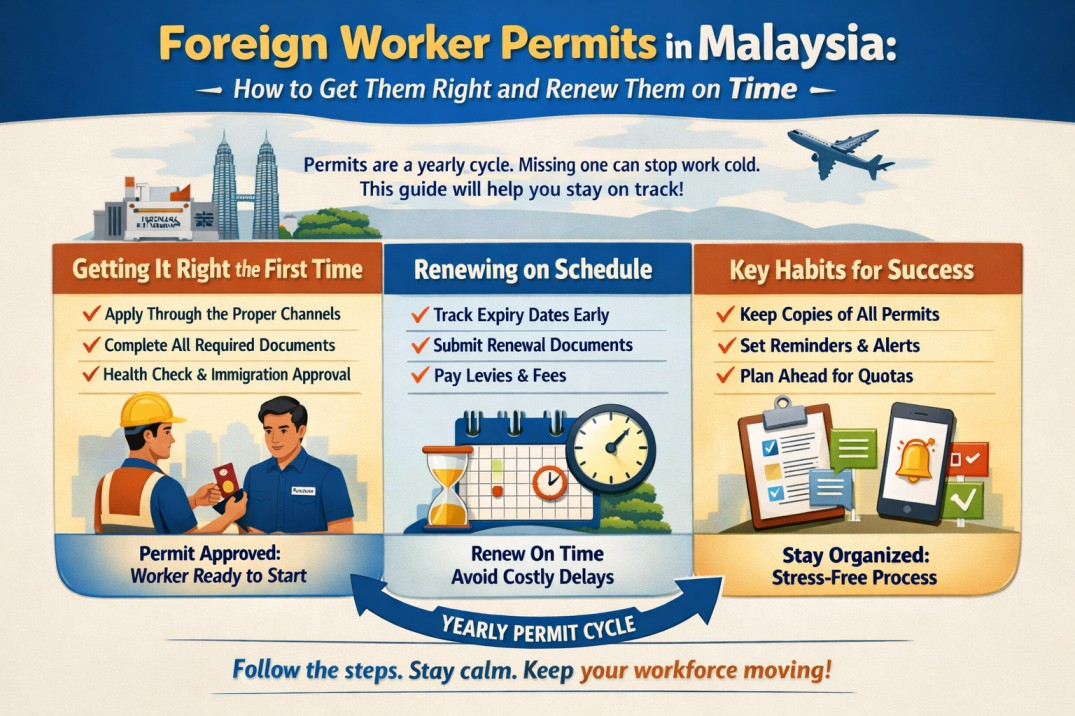
A foreign worker can be hired, trained, and ready to start, yet still sit at home because one permit is missing. A permit that expires by mistake can stop a production line just as fast. For many Malaysian employers, permits are not a one-time task. They are a cycle that repeats every year.
This guide explains that cycle in plain language. It covers how to get a work permit right the first time, how to renew it on schedule, and which habits keep the whole process calm.
Know Which Permit You Need
Malaysia uses different permits for different kinds of workers. Two of them come up most often for employers:
-
Visit Pass (Temporary Employment), or VP(TE). Many people still call it PLKS. It is a work permit for semi-skilled and unskilled foreign workers. It is limited to approved sectors such as manufacturing, plantation, agriculture, construction, and services.
-
Employment Pass. This permit is designed for skilled foreign professionals who take up jobs in Malaysia.
The category decides the rules, the paperwork, and the timeline. Picking the wrong one wastes weeks. Before you start, write down the worker’s role, the sector, and the expected length of employment. Then match them to the correct permit.
Getting the First Permit Right
The first application sets the tone for every later year. Errors made here follow you into each renewal.
Check the basics early
Start with the worker’s passport. Check the name, the number, and the expiry date. A passport that is close to expiry can block both the first permit and later renewals. Make sure the details match every other document, including the offer letter and the quota approval.
Keep company records ready
Immigration officers look at the employer as well as the worker. Your company registration papers, your approved quota, and your records for existing workers should be easy to find. Scattered files cause most of the last-minute panic.
Use one person as the owner
Name one person in your company who owns the permit file. That person tracks dates, collects documents, and talks to the agent or the authorities. When three people each assume someone else is watching a deadline, nobody is.
Some employers prefer to hand this work to a specialist. If your team has little time for paperwork, a service that handles corporate work permits in Malaysia can take over the forms, the follow-ups, and the status checks. Ask any provider to explain, in writing, which steps it covers and which stay with you.
The Renewal Cycle Employers Often Forget
A VP(TE) normally lasts one year. Employers renew it each year, and the pass can be renewed for up to ten years under the usual rules. Employers can start the renewal application three months before the pass expires, and the application must reach Immigration before the expiry date.
Think of the renewal window as a countdown that starts quietly. Nobody sends a loud alarm, so the date arrives sooner than expected, especially in busy months. Three months sounds like plenty. In practice, it passes quickly because renewal depends on several smaller tasks that must finish first.
What Renewal Usually Needs
Exact requirements can change, so check the current rules before you apply. In general, employers should expect to deal with these items:
-
A valid passport. Guidance for employers says it should stay valid for at least twelve months beyond the renewal.
-
A medical check, when required. FOMEMA decides the schedule for each worker’s later years, and its rules have changed before. Confirm the requirement for the worker’s exact renewal year.
-
Insurance and levy. These must be settled before the application goes through.
-
Accurate employer and worker details. A small spelling mistake can slow down a whole batch.
Some employers can use the online renewal system, which speeds up the application. It does not remove the other requirements. You still need the medical, insurance, and levy items in place first.
A Renewal Calendar That Works
A simple calendar prevents most problems. Build one for the whole company, not for each worker in your head. Here is a practical outline you can adapt:
-
Four months before expiry: List every permit that expires soon. Check each passport date and confirm whether a medical check is due.
-
Three months before expiry: Start the paperwork. Book medical appointments if needed.
-
Two months before expiry: Settle insurance and levy. Fix any document errors.
-
One month before expiry: Confirm that the application is submitted and approved, or escalate it now.
This calendar is only a planning tool. It does not replace official guidance, and your own situation may need extra steps.
Mistakes That Cost Employers Money
Late or messy renewals create real costs. These are the problems that show up most often:
-
Waiting until the last month. One small error then leaves no time to fix it.
-
Ignoring passport validity. A worker may need a new passport before the permit can be renewed.
-
Assuming the medical rules stay the same. They have changed before, and they can change again.
-
Tracking dates in many places. Chat messages, paper files, and personal notes all drift apart.
-
Letting a worker go beyond the expiry date. Special procedures may apply, and Immigration Enforcement may need to be contacted.
The last point deserves extra care. A worker who stays on after the pass expires creates legal risk for the worker and the company. If this happens, contact the authorities quickly instead of hoping it goes away.
When Outside Help Makes Sense
Not every company needs an agent. A small team with only a few workers can often manage with a good calendar. Larger employers, or those with workers in many sectors, often find a calendar is not enough. Many consider a dedicated foreign worker permit renewal in Malaysia service when they have many expiry dates to watch.
Whoever you choose, ask a few direct questions. Who submits the application? How will you receive updates? What happens if an application meets a problem? A clear provider answers without hesitation.
Companies such as UMR Malaysia work in this area, so their service pages can show what a support package may look like. Compare them with other options before you decide.
Frequently Asked Questions
How early can I start a work permit renewal?
For a VP(TE), employers can apply during the three months before expiry. The application must be submitted before the pass expires, so do not wait for the final weeks.
Does a foreign worker renew the permit personally?
The usual process is employer-led. The worker supports it by providing a valid passport, correct details, and a medical check when one is required.
How long does a VP(TE) last?
A VP(TE) normally lasts one year and can be renewed each year, up to ten years under the standard rules. Check the latest policy before planning beyond that period.
What if a worker’s passport expires soon?
Deal with it early. Guidance for employers says the passport should have at least twelve months of validity, so a worker may need a new passport before renewal.
Do I need an agent to manage permits?
No, it is not compulsory. A small employer can manage with a clear calendar and careful records. An agent helps most when you have many workers, many deadlines, or little time.












Comments (0)