

What Does an Ecommerce Google Ads Audit Check?
An Ecommerce Google Ads audit reviews your account structure, campaigns, targeting, ad performance, tracking, product feeds, and budget allocation to identify wasted spend and opportunities to improve conversions and profitability.
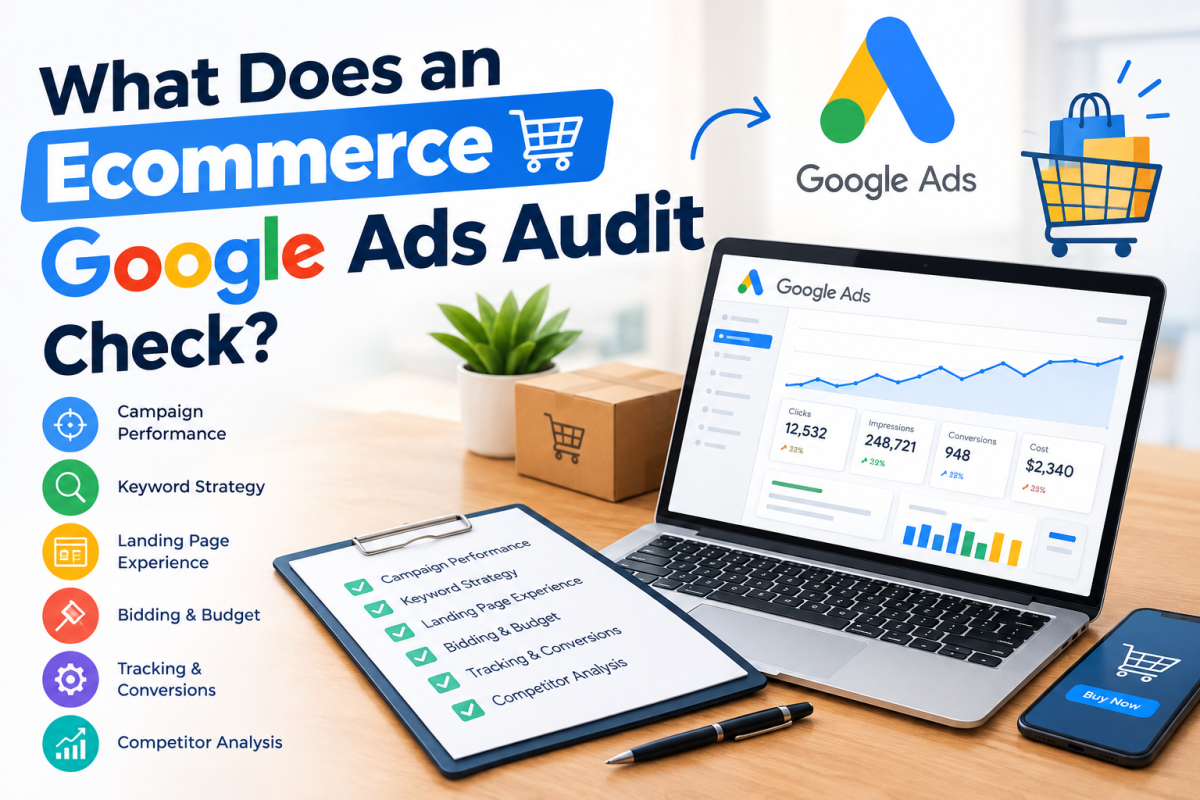
Ecommerce brands require frequent audits to maintain the smooth operation of their Ad Accounts. A paid search audit helps to find if there's anything wrong with campaigns or keywords. Budgets and conversions are also tracked to tell you where your money is being spent. A Google Ads Agency for Ecommerce can provide audits and also explains ways how you can improve.
Why Is a Google Ads Audit Important?
If your ecommerce account probably has many campaigns and products in that case a simple mistake can skew the results and incur expenditure without returns. It is better to decrease such mistakes so that your account stay up to par.
An audit can help brands:
-
Find wasted ad spending
-
Identify weak campaigns
-
Improve keyword targeting
-
Check conversion tracking
-
Review product feed quality
-
Improve landing pages
What Should an Ecommerce Google Ads Audit Check?
Well for that an Ecommerce Google Ads Audit should start with the overall account structure. Whenever campaigns have a clear purpose and suitable targeting it works in favour of a business.
Brands should check:
-
Campaign settings
-
Daily budgets
-
Location targeting
-
Ad schedules
-
Bidding strategies
-
Audience settings
These checks can reveal settings that may affect campaign performance.
How Should Keywords Be Reviewed?
Keywords play an important role in Search campaigns. Brands should review the search terms that trigger their advertisements.
Important checks include:
-
High-spending keywords
-
Low-converting keywords
-
Irrelevant search terms
-
Match types
-
Negative keywords
-
Keyword-level conversion data
Adding relevant negative keywords can help reduce unwanted traffic.
Why Should Product Feeds Be Checked?
Shopping and Performance Max campaigns depend on accurate product information. Incorrect details can affect product visibility.
Brands should review:
-
Product titles
-
Descriptions
-
Prices
-
Images
-
Availability
-
Product categories
-
Landing page links
Product information should remain updated.
Is Conversion Tracking Working Correctly?
Well, correct tracking can help brands measure advertising results. An audit should check whether important actions are recorded properly.
These may include:
-
Purchases
-
Add-to-cart actions
-
Checkout events
-
Sign-ups
-
Revenue values
And offcourse incorrect tracking can lead to poor campaign decisions that can impact your business growth.
What About Landing Pages?
The advertisement starts the customer journey. The landing page must support the next step.
Brands should check:
-
Mobile experience
-
Page speed
-
Product information
-
Pricing
-
Calls to action
-
Checkout process
Obviously a simple landing page can support better conversions.
How Should Budgets Be Analysed?
Well, for that a brand should compare spending with conversions and revenue. And yes, high spending does not always mean strong performance.
They should identify:
-
Profitable campaigns
-
High-cost campaigns
-
Low-converting products
-
Strong-performing keywords
-
Budget opportunities
This can help improve budget allocation.
Conclusion
An audit of your Google Ads account helps ecommerce businesses understand their advertising account more clearly than earlier.
NexaPMG is a professional e-commerce Google Ads agency that is dedicated to driving qualified traffic, increasing conversions, and maximizing ad spend efficiency for ambitious e-commerce brands.










Comments (0)