

Can Facial Similarity Help Identify Family Resemblance?
Explore how a facial similarity test compares facial features, identifies visible family resemblances, and explains why facial comparisons cannot confirm biological relationships.

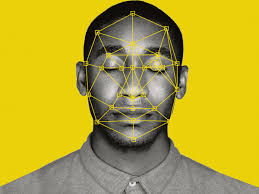
Did you ever see an old photo of your family and wonder if two people have common family characteristics? Having similar eye shapes, smiles, or chin shapes makes family members very similar in looks. This is where a facial similarity test will help identify the visible similarities of faces from the photos. But one should understand what these comparisons mean and what they do not prove first.
Here you will find detailed information on how facial comparison works, which elements are significant in this process, how to interpret the results, and when it is better to do a DNA test instead.
What Is a Facial Similarity Test?
A facial similarity test refers to the technique that involves comparing two or more faces to establish visual similarities between them. In some cases, the similarity test involves the use of artificial intelligence (AI) technology to compare facial features.
Some of the similarities that could be observed with the aid of a face comparison tool include similar shapes of eyes, the same width of the nose, or similarity in the chin. However, having a similar appearance does not imply a biological connection.
In some cases, unrelated persons may have visual similarities, whereas in some other cases closely related persons may have dissimilar faces.
Which Facial Features Reveal Family Resemblance?
Some individuals within families share facial features that enable them to recognize each other. Several features can be used in the comparison:
Eyes and Eyebrows
The shape of eyes, their position in relation to each other, eyelids, and the way eyebrows grow might make relatives look alike. For example, the same distance between eyes is possible for a mother and her son, although there might be differences in other facial features.
Nose and Lips
The width of the nose and the shape of its bridge and nostrils, as well as the lips' proportions and the shape of the upper lip, might serve as a basis for comparison.
Face Outline and Jawline
In addition, it might be possible to notice certain similarities in the face outline, jawline, and cheekbones. All these features may change as people get older or gain or lose weight; therefore, comparisons should take into account the differences in age and physical appearance of individuals.
None of these features alone can prove the fact that people are relatives.
How Does a Face-Based DNA Matching Tool Work?
A face-based DNA matching tool using computer vision might analyze facial features and compare facial proportions or facial shapes. Such tools either provide scores of similarity between two faces or present side-by-side images.
For better results, use high-quality photos where two faces can be seen. A similar camera angle and neutral facial expression can minimize any confusion that might arise because of lighting, the angle of the camera, and facial expressions.
Moreover, you need to know what a similarity score means. It does not mean that there is an 80% chance that two people are related if the score is 80%. The meaning of such a score will depend on the tool's algorithms.
AI algorithms can have differences according to the age, skin tone, image quality, and other factors. Their result should be considered an indicator of visual similarity, but not of kinship.
Can a Family Face Comparison Test Confirm Biological Relationships?
A family face comparison test can help identify visible similarities between parents, children, siblings, or extended family members. It may be useful when exploring family photographs, researching family history, or satisfying curiosity about inherited facial traits.
Nevertheless, facial resemblance cannot reliably determine whether someone is a biological parent, sibling, or other relative. Genetics involves far more than outward appearance, and many inherited characteristics are influenced by multiple genes.
When confirmation of biological relationships is important, DNA testing is the appropriate next step. Depending on the relationship being investigated, an accredited laboratory can explain the available testing options and their limitations.
People should also consider consent and privacy before uploading photographs to online comparison services. Review how images are stored, whether they are shared, and whether they can be deleted. Online face-matching tools, such as Face DNA Test, offer one example of how people can explore visual similarities between photographs. Before submitting images, users should review a service’s current features, privacy practices, and explanation of its results.
Conclusion
A facial similarity test can be an effective method for recognizing facial features in common, including shapes of eyes, proportions of noses, jaws, and face as a whole. However, all this information may provide you with some fascinating facts about family resemblance, but it is still not enough to prove a biological connection between two people.
In order to get more accurate results, you should use high-quality photos of faces, pay attention to several facial features, and analyze results obtained by AI carefully. In case of the need to prove the biological connection of two people, you should turn to a professional DNA testing service.









Comments (0)