

Why Do Garage Ceiling Storage Racks Use Open Corners, T-Braces, and Multiple Trusses?
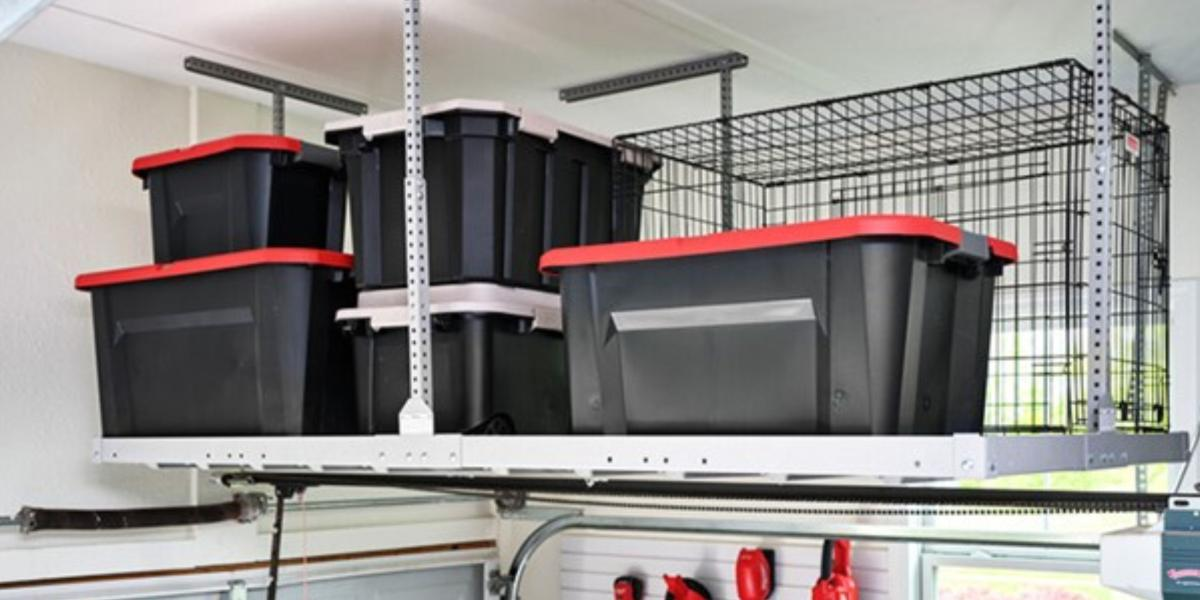
For East Bay homeowners dealing with seasonal bins, camping gear, luggage, and bulky sports equipment, ceiling space can become valuable storage space. Garage ceiling storage racks are built to use that upper area while keeping the garage floor open. Their design features are also practical. Open corners improve access, T-braces add stability, and multiple trusses spread the load across several mounting points.
Understanding Garage Ceiling Storage Racks
A 4 × 8 overhead rack can provide up to 120 cubic feet of storage when fully utilized. The system is designed for belongings that can stay above the main activity area of the garage.
Key construction features include:
-
Open-corner design
-
T-brace support
-
Four-truss mounting
-
Adjustable features
-
Modular configurations
-
2-inch safety lip
These parts give the storage platform a clear structure for holding and organizing bulky belongings above the garage floor.
How Open Corners Make Loading Easier
Large storage containers can be awkward to move around tight corners. The open-corner design gives more room around the platform when items are placed on or removed from the rack.
This is useful for homeowners storing:
-
Holiday decorations
-
Camping equipment
-
Luggage
-
Storage bins
-
Seasonal sports equipment
The open corners make the platform more practical for larger containers that need to be lifted onto the rack and taken down later.
What T-Braces Add to the Rack Design
A T-brace is a support component that adds stability to an overhead storage structure.
The T-brace works with the rack's multi-truss mounting system to keep the platform from swinging or swaying. This creates a more controlled setup for storing boxes, bins, and other belongings above the garage.
For a garage that still needs room for vehicles, walking paths, or a workspace, stability becomes an important part of the storage design.
Why Multiple Trusses Matter
The rack uses four trusses to connect the platform across multiple load-bearing points. Instead of concentrating the load at one attachment point, the mounting system distributes it across the supporting structure.
For the 4 × 8 configuration, the rated capacities are:
-
750 pounds when suspended from the ceiling
-
1,000 pounds when mounted on one side to a wall
The mounting arrangement therefore plays a direct role in how the rack is supported and loaded.
How the 2-Inch Safety Lip Secures Stored Items
A 2-inch safety lip runs around the edge of the storage platform. This raised edge helps keep containers and belongings from sliding off the platform. It is a small design detail with a practical purpose, especially when storage bins are placed near the outer edge of the rack.
How 750-Pound Capacity Supports Heavy Storage
The 750-pound rating applies to the ceiling-suspended 4 × 8 rack configuration. A wall-supported installation has a 1,000-pound rating.
This capacity makes the system suitable for storing substantial household belongings above the garage. Proper installation and attention to the rack's specific mounting configuration remain central to using its rated capacity correctly.
When Overhead Garage Storage Racks Make Sense
Overhead garage storage racks are well suited to belongings that are brought out during certain seasons or stored for longer periods.
Good examples include:
-
Holiday decorations
-
Camping gear
-
Off-season clothing
-
Luggage
-
Keepsakes
-
Sports equipment
-
Bulky items
Frequently used belongings can stay in lower cabinets, shelving, slatwall storage, or hanging storage where they are easier to reach.
Choosing a Rack Around Your Garage Space
Garage layouts differ in ceiling space, vehicle placement, walking areas, and storage needs. Adjustable features and modular configurations allow the rack arrangement to be planned around the available area.
A custom design can consider the homeowner's:
-
Storage requirements
-
Available garage space
-
Preferred configuration
-
Budget
-
Access needs
This approach makes the ceiling part of a larger storage plan rather than treating it as an isolated rack location.
Designing Storage Around What You Actually Store
The best placement starts with the belongings that need a home. A consultation can identify what needs to go overhead, what needs frequent access, and how the available garage space can be divided.
The design can combine overhead storage with cabinets, wall shelving, slatwall, hooks, and other systems. This creates different storage zones for seasonal belongings, bulky equipment, and everyday items.
Professional installation then puts the planned configuration into place, with components securely mounted and aligned.
Ending Thoughts
The design behind garage ceiling storage racks has a clear purpose. Open corners create better loading access, T-braces support stability, four trusses distribute the load, and the 2-inch safety lip adds an edge around the platform. Together, these features make overhead space a practical location for bulky and seasonal garage storage.

Bay Garage provides high-quality custom cabinets, shelving, overhead racks, and other unique storage solutions for your garage and home. We take pride in our craftsmanship and use only the highest quality materials to ensure our products are built to last.













Comments (0)