

Why Do Engineers Choose Thyristor Modules for Heavy-Duty Power Switching?
Thyristor Modules are high-power semiconductor devices designed for reliable switching and precise electrical control in demanding applications. They are widely used in industrial heating, motor soft starters, rectifiers, power controllers, and automated equipment. With strong current-handling capability, efficient conduction, compact construction, and dependable performance, Thyristor Modules provide an effective solution for controlling high-voltage and high-current loads. Proper selection, cooling, gate control, and circuit protection are essential to achieve long service life, stable operation, and improved system efficiency.

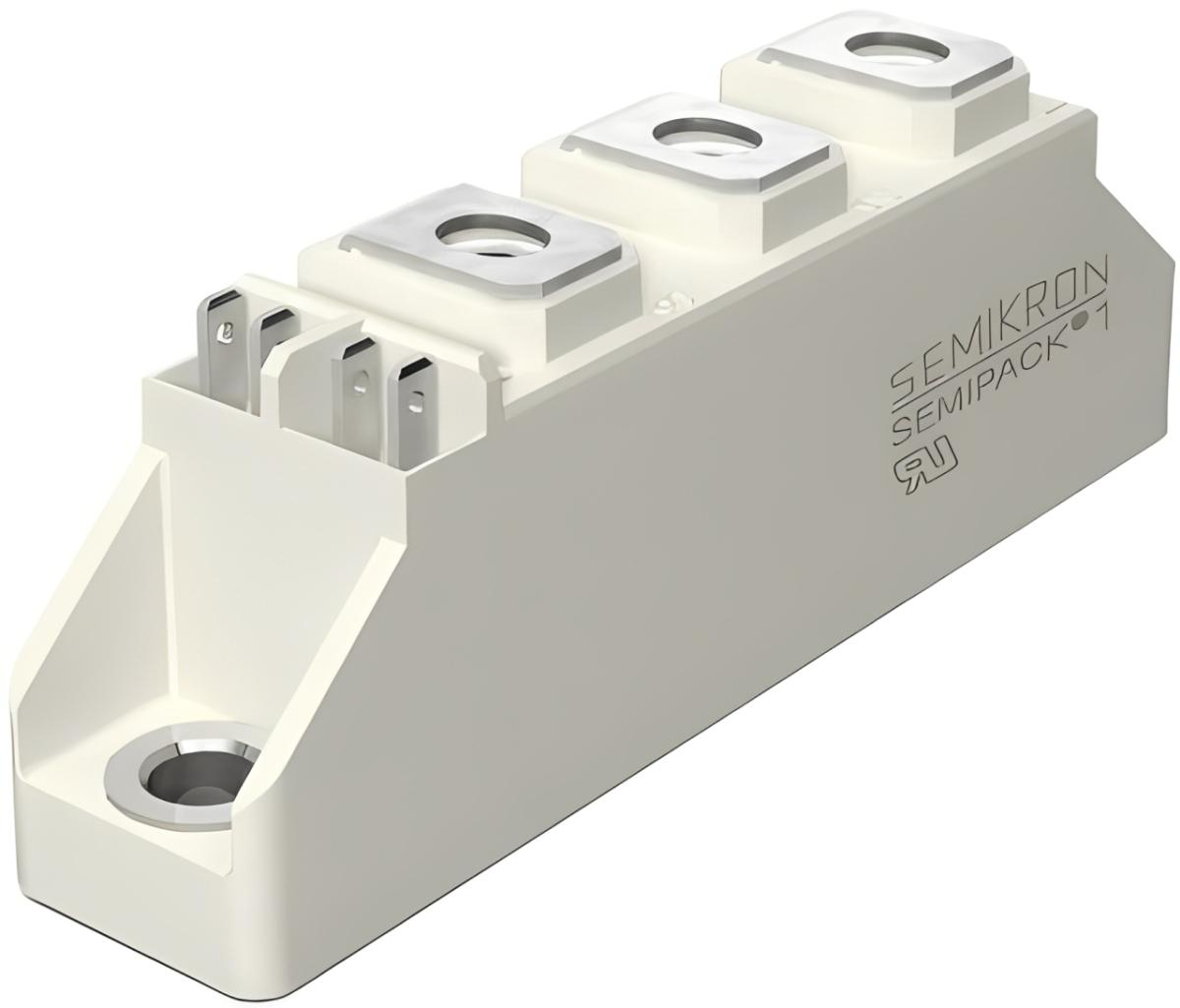
Industrial power systems often operate under conditions that demand much more than simple electrical switching. High currents, elevated voltages, continuous operation, heat generation, and rapid load changes all place pressure on the components inside a control system. Thyristor Modules are widely used in these environments because they provide a compact and dependable method of controlling large amounts of electrical power.
A Thyristor Module combines one or more power semiconductor devices inside a robust package designed for high-energy applications. Instead of relying on individual discrete components, designers can use a module that simplifies installation, supports effective heat dissipation, and reduces the number of external power connections.
For engineers working with industrial machinery, power regulation, heating, rectification, and heavy electrical loads, Thyristor Modules offer a proven solution that balances reliability, efficiency, and control.
What Makes Thyristor Modules Suitable for Heavy Loads?
The defining strength of a thyristor is its ability to control substantial current after receiving a relatively small gate signal.
This allows low-power control circuitry to manage high-power equipment without directly carrying the main load current.
Once triggered, the thyristor switches into a conducting state. In many AC applications, it remains active until the current naturally drops below the holding level.
This operating principle is useful because it allows precise timing of power delivery while maintaining a relatively simple control arrangement.
Thyristor Modules are especially useful where systems require:
- High current handling
- Strong voltage blocking
- Reliable repetitive switching
- Compact power assemblies
- Reduced mechanical wear
- Stable performance under industrial conditions
These qualities explain why they continue to appear in both traditional machinery and modern automated systems.
How Are Thyristor Modules Constructed?
A Thyristor Module is more than a semiconductor enclosed in a plastic case.
Its construction is designed to handle electrical, mechanical, and thermal stress simultaneously.
Typical internal and external features may include:
- Power semiconductor chips
- Copper conductive paths
- Electrically isolated base plates
- High-current screw terminals
- Gate and cathode control connections
- Thermally conductive mounting surfaces
- Protective insulated housings
The base of the module is normally designed to transfer heat efficiently into a heat sink.
This is critical because even a low voltage drop across a power semiconductor can generate significant thermal energy when hundreds of amperes are flowing.
Why Is Controlled Switching Better Than Simple On-Off Operation?
Many industrial loads do not need full power continuously.
A heating system, for example, may require maximum energy during startup but only partial power after reaching its target temperature.
Thyristor Modules allow controllers to vary power delivery instead of simply switching between full output and zero output.
This can improve:
- Process stability
- Energy usage
- Temperature consistency
- Equipment control
- Mechanical performance
- Overall system efficiency
The exact benefit depends on the control method and the type of electrical load.
How Are Thyristor Modules Used in Power Regulation?
One of the most common functions of Thyristor Modules is regulating AC power.
By controlling the point in the AC waveform at which the thyristor begins conducting, the system can change the average amount of energy delivered to the load.
Earlier triggering provides more power.
Later triggering reduces the conduction period and therefore decreases the average output.
This principle is frequently used in industrial controllers for:
- Resistive heaters
- Furnaces
- Infrared heating equipment
- AC motor control
- Power supplies
- High-power lighting
- Industrial processing machinery
This form of regulation can provide smoother control than repeatedly switching large loads with mechanical contactors.
Where Do Thyristor Modules Add the Most Value?
Their strongest applications are usually those involving high electrical power and relatively moderate switching frequencies.
Industrial Heating
Heating systems are one of the clearest examples.
Manufacturing processes often require precise control over thermal energy. If temperature varies too much, product quality can suffer.
Thyristor Modules can regulate power to heating elements in equipment such as:
- Kilns
- Ovens
- Injection-moulding machinery
- Dryers
- Heat-treatment lines
- Extruders
- Industrial furnaces
Electronic switching also avoids repeated mechanical contact wear.
Motor Soft Starting
Large motors can draw substantial current at startup.
A soft starter can use thyristors to gradually increase the voltage applied to the motor.
This helps limit the electrical and mechanical shock associated with direct starting.
Applications may include:
- Pumps
- Conveyor systems
- Fans
- Compressors
- Crushers
- Industrial mixers
Reduced starting stress can help protect connected equipment and mechanical transmission components.
High-Current Rectifiers
Thyristors can also be used in controlled rectifier circuits.
Unlike ordinary diode rectifiers, controlled rectifiers allow the DC output level to be adjusted electronically.
This can be valuable in:
- Battery charging equipment
- Electroplating systems
- DC drives
- Industrial power supplies
- Electrochemical processing
The ability to regulate output gives system designers greater control over the connected process.
What Is the Difference Between Phase Control and Zero-Cross Control?
Thyristor-based power systems can use different switching strategies.
Phase control adjusts the firing angle within each AC cycle. This provides highly responsive power regulation but can introduce more electrical harmonics.
Zero-cross control switches complete cycles on and off near the zero-voltage point.
This method is often preferred for resistive heating because it can reduce electrical interference.
Each approach has advantages.
Phase control is useful where fast and continuous adjustment is required, while zero-cross control is often better suited to slower thermal loads.
The choice depends on:
- Load type
- Response requirements
- Electrical noise limits
- Power level
- Control precision
- System design
Why Is the Heat Sink as Important as the Module?
A Thyristor Module cannot perform reliably if heat is not removed properly.
Electrical losses inside the semiconductor generate thermal energy during operation.
If the junction temperature becomes too high, performance can deteriorate and service life may be shortened.
A good thermal design may use:
- Extruded aluminium heat sinks
- Forced-air fans
- Thermal interface paste
- Insulating thermal pads
- Liquid-cooled plates
- Temperature sensors
Mounting technique also matters.
Uneven pressure, damaged thermal surfaces, or excessive thermal compound can reduce heat transfer.
Engineers must therefore consider the full thermal path from the semiconductor junction to ambient air.
Which Ratings Should Be Checked Before Installation?
Selecting a Thyristor Module requires careful comparison between the application and the device datasheet.
Important electrical ratings include:
- Maximum repetitive off-state voltage
- Average on-state current
- RMS current
- Non-repetitive surge current
- Gate trigger current
- Gate trigger voltage
- Holding current
- On-state voltage drop
- Maximum junction temperature
- Isolation voltage
Mechanical and environmental properties are also important.
These may include:
- Module dimensions
- Terminal layout
- Mounting hole positions
- Recommended torque
- Baseplate design
- Cooling requirements
- Operating temperature range
A technically powerful module can still be unsuitable if it does not match the physical or thermal conditions of the equipment.
How Can Designers Protect Thyristor Modules from Damage?
Industrial electrical systems can produce conditions that exceed normal operating limits.
Protection is therefore essential.
Common protective measures include:
- High-speed semiconductor fuses
- Surge suppressors
- RC snubber circuits
- Temperature monitoring
- Overcurrent detection
- Gate-drive isolation
- Adequate ventilation
A snubber circuit is especially useful in applications involving rapid voltage changes.
It helps limit the rate of voltage rise across the device and may reduce the risk of unintended triggering.
Good protection does not simply defend the semiconductor. It can also protect surrounding equipment from secondary damage.
What Are the Signs of an Incorrectly Designed Thyristor System?
Problems are not always caused by the thyristor itself.
Poor system design may reveal itself through several symptoms.
These can include:
- Excessive heat-sink temperature
- Unstable load control
- Repeated fuse failures
- Uneven heating
- Unwanted triggering
- Discoloured terminals
- Frequent module failure
- Electrical noise
These warning signs should be investigated before replacing components repeatedly.
The underlying cause may involve cooling, wiring, control signals, or insufficient protection.
How Do Thyristor Modules Fit into Automated Production?
Modern factories increasingly use programmable logic controllers, digital sensors, and automated process systems.
Thyristor Modules can act as the high-power switching stage controlled by these digital systems.
For example, a temperature sensor may send data to a controller. The controller determines the required heater output and sends a command to the thyristor firing circuit.
The Thyristor Module then regulates the actual power delivered to the load.
This creates a link between intelligent digital control and heavy electrical equipment.
The result can be more accurate manufacturing, better repeatability, and reduced operator intervention.
Why Are Thyristor Modules Still Competitive Against Newer Devices?
Power electronics has advanced significantly, with MOSFETs, IGBTs, silicon carbide devices, and other technologies now available.
However, no single semiconductor technology is ideal for every application.
Thyristors remain attractive where systems need:
- Very high current capability
- High blocking voltage
- Low conduction losses
- Rugged operation
- Moderate switching speed
- Proven industrial reliability
This makes them particularly well suited to high-power mains-frequency control.
In such environments, newer and faster switching devices may not always offer a meaningful advantage.
What Should Maintenance Teams Check Regularly?
Routine inspection can help extend the life of Thyristor Modules and reduce unexpected downtime.
Maintenance teams should periodically check:
- Terminal tightness
- Heat-sink cleanliness
- Cooling fan operation
- Thermal interface condition
- Wiring integrity
- Fuse condition
- Control signal quality
- Signs of overheating
Dust accumulation can be especially problematic because it may reduce airflow and insulate heat sinks.
Preventive maintenance is often more cost-effective than replacing power modules after a serious failure.
Why Thyristor Modules Remain Important in Industrial Power Electronics
Thyristor Modules continue to play a valuable role in heavy-duty electrical control because they combine strong power-handling capability with proven semiconductor performance.
They are well suited to industrial environments where current levels are high, switching must be dependable, and thermal performance matters.
From heaters and rectifiers to soft starters and automated manufacturing equipment, these modules provide engineers with a practical way to regulate large electrical loads.
Their long-term performance depends on more than selecting a suitable current rating. Successful operation also requires proper gate control, voltage margin, thermal management, circuit protection, and installation practices.
When all of these factors are considered together, Thyristor Modules can provide efficient, durable, and precise power control across a wide range of demanding industrial systems.














Comments (0)