

Earning United Premier 1K Without Chasing Every Mile
Introduction
Frequent flyers who spend enough time on United eventually ask the same question: how to get premier 1k united without turning life into a never-ending airport run. The top tier of the MileagePlus program promises complimentary upgrades, priority service, and a level of recognition that makes long travel days far more comfortable. It also demands real commitment. The good news is that status is a numbers game, and numbers can be planned. This guide explains how qualification works, how to build a strategy around your own travel habits, and what you can expect once you arrive.
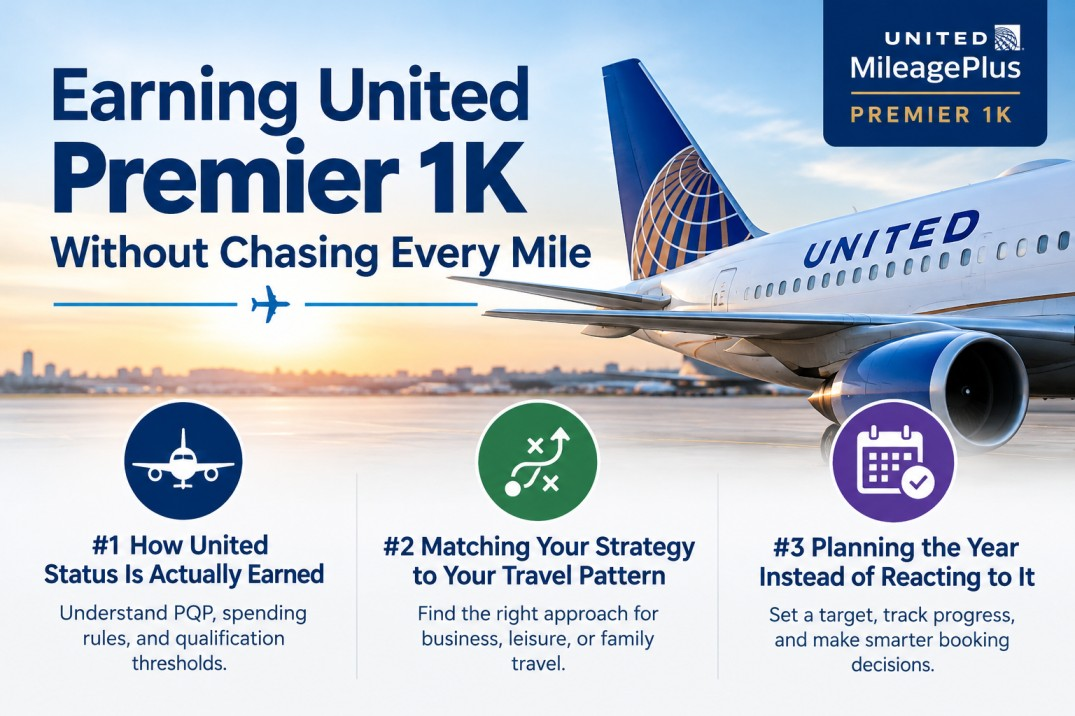
How United Status Is Actually Earned
United’s elite program is built around Premier Qualifying Points, usually shortened to PQP. Throughout the calendar year you collect points mainly by flying United and its partner airlines, and your total decides where you land: Silver, Gold, Platinum, or 1K. Premier 1K sits at the top of the standard ladder and has recently required a threshold in the neighborhood of 28,000 PQP. United adjusts thresholds and earning rules from time to time, so always confirm the current numbers on United’s official website before building a plan.
What matters most is how points are calculated. Earning follows the money you spend on fares rather than the distance you fly. A flexible ticket on a short domestic trip can out-earn a cheap fare on a much longer route. Taxes and many add-on fees generally do not count, while the base fare and premium-cabin upgrades do. Understanding this one principle changes how you shop for tickets, because the cheapest fare is not always the best fare for your status goals.
Key Points to Remember
-
United Premier status is based on Premier Qualifying Points (PQP) and applicable qualification rules.
-
Premier 1K is the highest standard MileagePlus elite tier.
-
Eligible spending generally matters more than flight distance.
-
Qualification thresholds and earning rules can change, so verify current requirements with United.
Matching Your Strategy to Your Travel Pattern
There is no single correct route to the top tier. The right approach depends on how often you fly, who pays for your tickets, and how much flexibility you have.
Business Travelers
Business travelers have the simplest path. If your employer covers airfare, then how to get premier 1k united is largely a matter of consolidating every trip on United and its partners. Corporate fares tend to be higher, and higher fares mean faster point accumulation. The key habit is loyalty: booking a slightly cheaper ticket on a competitor can quietly cost you hundreds of points over the year.
Leisure Travelers
Leisure travelers face a steeper climb, but it is far from impossible. A few well-chosen long-haul trips in premium cabins can generate a large share of the required points in a single booking. Combining a transatlantic or transpacific journey with regular domestic flying often does more than a dozen short hops. Travelers who do not fly often enough to reach the threshold on tickets alone can also look at co-branded United credit cards, which have offered additional qualifying points based on everyday spending, up to a yearly limit. Used responsibly, and only if you would be spending that money anyway, card spend can close a gap that flying alone cannot.
Families and Couples
Families and couples should think about which traveler is best positioned to carry the status. Concentrating bookings under one account is usually more effective than splitting points across several accounts, because status only benefits the person who earns it, although a few perks extend to companions on the same reservation.
Planning the Year Instead of Reacting to It
The travelers who reach the top tier most comfortably are the ones who plan early. Setting a target at the start of the year and tracking progress monthly prevents the stressful scramble in December that leads to expensive, unnecessary trips.
Steps to Plan Your Qualification
-
Begin by estimating how many points your known trips will generate.
-
Subtract that figure from the threshold and see what gap remains.
-
Decide how to fill it: an extra premium-cabin booking, a few additional business trips, or a planned vacation routed through a United hub.
-
Book directly with United when practical to make point crediting cleaner and customer service easier if something goes wrong.
-
Track your progress monthly to avoid last-minute spending.
Resources like the jersey flights can help you compare routes and fare options, so you can find itineraries that deliver strong earning potential without wrecking your budget. Combining research with a monthly progress check keeps the goal manageable and removes the temptation to make panic purchases late in the year.
Timing matters as well. Flights taken early in the year give you a longer stretch to enjoy partial benefits at lower tiers, and they leave room to adjust if your plans change. Waiting until the final quarter leaves very little margin for delays, cancellations, or schedule changes.
Weighing the Cost Against the Reward
Before committing, ask whether the top tier is worth what it will cost you. Any honest discussion of how to get premier 1k united has to include this question, because chasing status for its own sake can lead to overspending. The benefits are valuable only if you will use them.
Premier 1K members typically enjoy complimentary domestic upgrades on a priority basis, additional upgrade certificates for longer international journeys, generous bonus mileage earning on every flight, free checked bags, preferred seating, and priority check-in, security, boarding, and customer service. For someone who flies often for work, these perks can save both money and energy. For a traveler who only takes a handful of trips a year, a lower tier may deliver most of the benefit at a fraction of the cost.
How to Evaluate the Value of Premier 1K
-
Estimate the baggage fees you would avoid.
-
Calculate the value of seat upgrades you would otherwise purchase.
-
Consider the additional miles you would earn at the elevated rate.
-
Compare the estimated value of benefits with the extra spending required to qualify.
-
Consider Gold or Platinum if Premier 1K does not provide enough value for your travel habits.
A useful exercise is to put a rough dollar value on what you would actually use. Add up the baggage fees you would avoid, the seat upgrades you would otherwise buy, and the miles you would earn at the elevated rate. If that total is close to or greater than the extra spending needed to qualify, the goal makes financial sense. If it is not, a Gold or Platinum level may be the smarter target.
Mistakes That Slow Travelers Down
Several common errors derail otherwise solid plans.
Common Mistakes to Avoid
-
Ignoring fare types: Some discounted fares earn fewer points, which can leave you short after a year of travel.
-
Overlooking partner-airline rules: Check how flights on partner airlines credit to your account.
-
Relying on last-minute mileage runs: These trips are tiring, expensive, and rarely worth the effort compared with simple planning.
-
Forgetting that status resets: Qualification applies to a specific period, and benefits last for a limited time after you earn them.
That means the effort must be repeated each year if you want to keep the privileges, so it helps to choose a pace you can realistically sustain.
Conclusion
Reaching United’s highest tier is less about heroic effort and more about informed, consistent choices. Understand how Premier Qualifying Points work, match your strategy to the way you actually travel, and track your progress throughout the year rather than waiting for the last moment. Most importantly, make sure the rewards justify the cost for your situation. For anyone asking how to get premier 1k united, the answer is a mix of smart booking, loyalty, and careful planning. Keep researching routes and fare options with trusted travel resources such as the Jersey Flights, and you can turn a demanding goal into a practical, rewarding journey.

The Jersey Flights Travel Expert ✈️ Making travel simple with budget-friendly flights, reliable booking assistance, and personalized travel solutions worldwide & 24/7 support for domestic and international trips. https://thejerseyflights.com/















Comments (0)