

Transforming Stock Control with Inventory Management Software
PlanIT helps businesses bring inventory processes into a more organized digital environment, supporting better control.

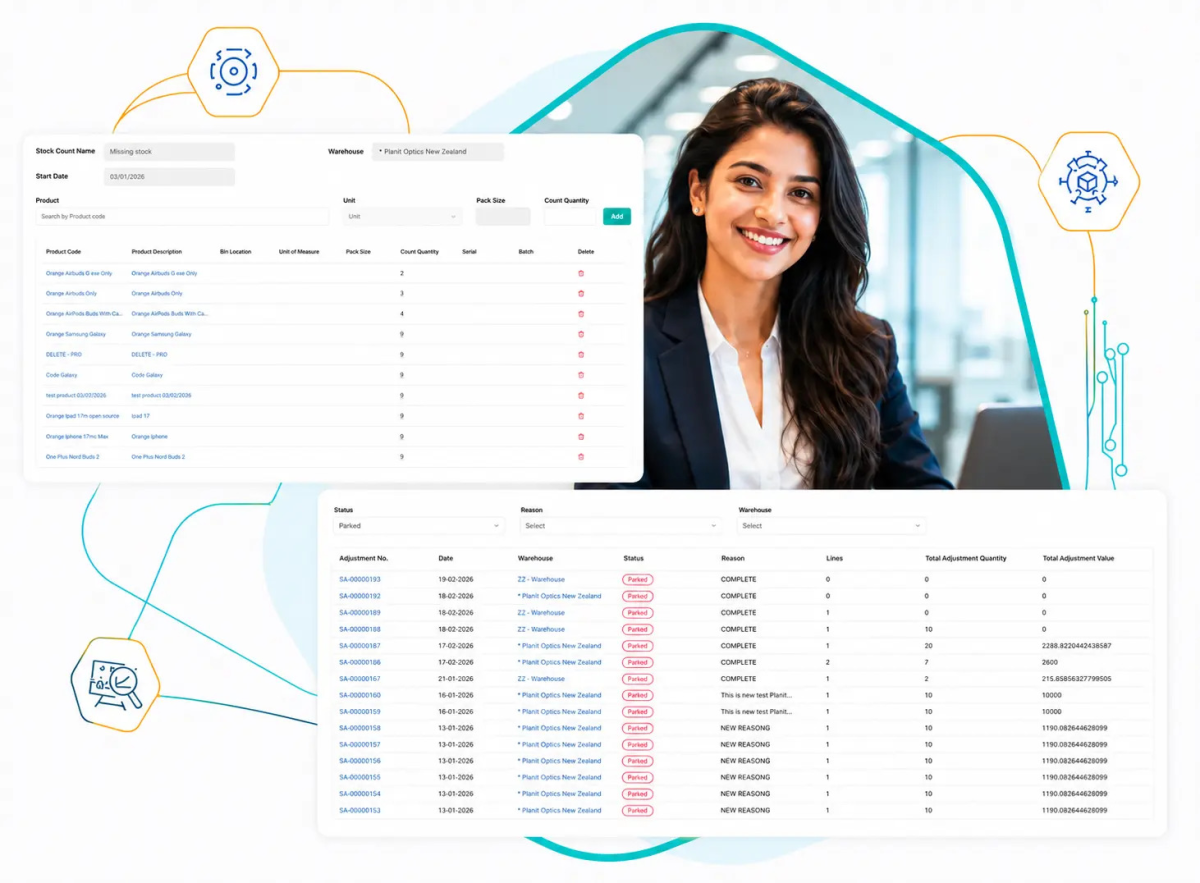
In a fast-moving business environment, stock control is no longer simply about counting products on shelves. Businesses today manage multiple warehouses, suppliers, sales channels, product variations, purchase orders, returns, and changing customer demand. When these activities depend heavily on spreadsheets or manual records, even a small data-entry mistake can create discrepancies, delayed orders, excess stock, or unexpected shortages.
Modern Inventory Management Software provides a more connected approach. It brings purchasing, stock tracking, sales, warehouse operations, and reporting into a central system, helping businesses build greater visibility and control over inventory. IBM describes inventory management as the process of tracking inventory through the supply chain while maintaining the right products in the right place at the right time.
Why Traditional Stock Control Is Becoming Difficult
Manual inventory processes may work for a small operation with limited products, but complexity increases as a business grows. Teams may have to update spreadsheets, check physical stock, confirm purchase orders, reconcile sales records, and communicate warehouse movements separately.
This can lead to several operational challenges:
- Inconsistent stock records across departments
- Delayed identification of low-stock items
- Excess inventory caused by inaccurate planning
- Difficulty tracking stock across multiple locations
- Manual errors during receiving and dispatch
- Limited visibility into slow-moving products
- Time-consuming inventory reconciliation
- Delays in preparing accurate reports
Inventory optimization is particularly important because both excess and insufficient stock can affect business performance. IBM notes that businesses need to balance the costs of carrying inventory against the potential consequences of stockouts.
How Inventory Management Software Transforms Stock Control
The biggest change comes from moving inventory information into a connected digital environment. Instead of maintaining separate records for purchases, sales, warehouses, and stock adjustments, businesses can manage these activities through one structured system.
1. Real-Time Inventory Visibility
Knowing how much stock is available is only part of effective inventory control. Businesses also need to know where that stock is located, whether it is reserved for an order, in transit, or available for sale.
A centralized inventory platform can provide a clearer view of stock across locations and channels. Real-time visibility can help teams identify potential shortages sooner and make replenishment decisions based on current information rather than outdated spreadsheets.
For businesses operating across multiple locations, this visibility becomes particularly valuable because inventory can be distributed across warehouses, stores, production areas, or fulfillment centers.
2. Better Purchase Planning
Purchasing too early can tie up working capital, while purchasing too late can contribute to stockouts. Inventory software can connect stock levels with purchasing information to help procurement teams understand when replenishment may be required.
Businesses can monitor:
- Current stock levels
- Reorder points
- Purchase orders
- Supplier information
- Product demand
- Incoming inventory
- Historical movement
This creates a more structured purchasing workflow and helps purchasing teams make decisions using organized inventory data.
3. Improved Warehouse Accuracy
Warehouse teams deal with receiving, picking, transfers, adjustments, and dispatches every day. Manual recording across these processes can make it difficult to maintain accurate stock information.
Barcode-based inventory processes can simplify data capture and reduce repetitive manual entry. IBM highlights barcoding as a technology that can improve data accuracy, worker efficiency, inventory tracking, and warehouse visibility.
With digital tracking, warehouse employees can record inventory movements more consistently, helping managers understand what has moved, where it moved, and when the transaction occurred.
Supporting Better Inventory Decisions With Data
Inventory control is not only an operational activity. It is also a decision-making process.
A modern system can turn everyday transactions into useful reports and performance indicators. Instead of asking employees to manually combine information from different spreadsheets, managers can review structured inventory data.
Important Inventory Metrics to Monitor
Businesses can track metrics such as:
- Inventory turnover
- Days of inventory on hand
- Stockout rate
- Fill rate
- Carrying costs
- Forecast accuracy
- Product movement
- Slow-moving inventory
These indicators can help managers identify patterns and determine where improvements may be required. IBM identifies inventory turnover, days of inventory on hand, carrying cost, stockout rate, fill rate, and forecast accuracy among useful inventory optimization metrics.
Reducing Overstock and Stockouts
Two common stock-control problems are having too much inventory and not having enough inventory.
Overstock can increase storage requirements and tie up capital in products that may move slowly. Stockouts can create fulfillment problems and potentially result in missed sales.
Inventory Management Software can help businesses establish clearer stock thresholds and monitor inventory movement. When combined with historical demand data and appropriate replenishment rules, these capabilities can support more informed stock planning.
The objective is not simply to keep inventory levels as low as possible. Instead, businesses should aim to maintain inventory levels that support customer demand while avoiding unnecessary accumulation.
Managing Inventory Across Multiple Locations
As companies expand, inventory may be distributed across several warehouses, branches, production units, or fulfillment centers. Managing these locations independently can make stock balancing more difficult.
A centralized system can provide visibility into inventory across locations and support stock transfers when required.
For example, if one warehouse has excess stock while another location is approaching a shortage, management can identify the difference and plan an appropriate transfer. This creates a more coordinated inventory network rather than treating each warehouse as an isolated operation.
Connecting Inventory With Sales and Orders
Stock control becomes more effective when inventory data is connected with sales activity.
When an order is placed, teams need to know whether the required products are actually available. A connected inventory system can help businesses maintain a clearer relationship between orders and stock availability.
This is particularly important for businesses selling through multiple channels. A centralized view can reduce the risk of promising products that are unavailable and can help teams coordinate fulfillment more efficiently. IBM notes that real-time inventory visibility can provide a single view of stock across channels and help reduce overpromising and stockouts.
The Growing Role of Automation and AI
Automation is becoming an increasingly important part of inventory management. Repetitive tasks such as stock updates, replenishment monitoring, reporting, and transaction recording can be supported through digital workflows.
AI can take this further by analyzing large amounts of inventory and demand data. According to IBM, AI applications in inventory management can support demand forecasting, automated replenishment, anomaly detection, supplier management, and warehouse operations.
However, technology should support business decisions rather than replace thoughtful inventory planning. Businesses still need appropriate stock policies, reliable product data, supplier coordination, and clearly defined processes.
Making Stock Control More Scalable
A major advantage of digital inventory management is scalability. As product catalogs, order volumes, suppliers, and locations increase, manual processes can become increasingly difficult to maintain.
A well-designed inventory platform provides a structured foundation for growth by helping businesses organize:
- Product information
- Stock transactions
- Warehouse locations
- Purchase orders
- Sales orders
- Supplier records
- Inventory adjustments
- Reporting and analytics
This can allow teams to spend less time searching for inventory information and more time acting on it.
Building a Smarter Inventory Management Strategy
Implementing software is only one part of improving stock control. Businesses should also review the processes surrounding the technology.
A practical approach includes:
- Audit existing inventory processes to identify repetitive tasks and common errors.
- Standardize product data so product names, SKUs, units, and categories remain consistent.
- Define stock policies for reorder points, safety stock, and slow-moving items.
- Train employees on inventory workflows and transaction accuracy.
- Monitor performance metrics regularly rather than relying only on year-end reviews.
- Use reporting insights to improve purchasing, warehousing, and replenishment decisions.
When technology and processes work together, inventory management becomes more proactive and measurable.
The Future of Stock Control
Inventory management is moving toward greater automation, connected data, and predictive decision-making. Cloud systems, barcode technology, AI, and real-time analytics are increasingly influencing how businesses monitor and optimize stock.
The long-term goal is not simply to digitize stock counts. It is to create a connected inventory environment where businesses can understand stock movement, respond to demand changes, coordinate supply activities, and make decisions using reliable information.
For growing businesses, this shift can turn inventory from a reactive administrative responsibility into a strategic operational function.
Transform Stock Control With PlanIT
Effective stock control requires visibility, accuracy, and timely decisions. PlanIT helps businesses bring inventory processes into a more organized digital environment, supporting better control over stock, purchasing, sales, and operational workflows. For businesses looking to modernize their inventory processes, PlanIT can be explored as a practical solution for creating greater inventory visibility and improving day-to-day stock management.
To learn more about PlanIT and its inventory management capabilities, contact PlanIT at [email protected] or call +91-9958474631.









Comments (0)