

Local SEO Strategies for Small Businesses in 2026

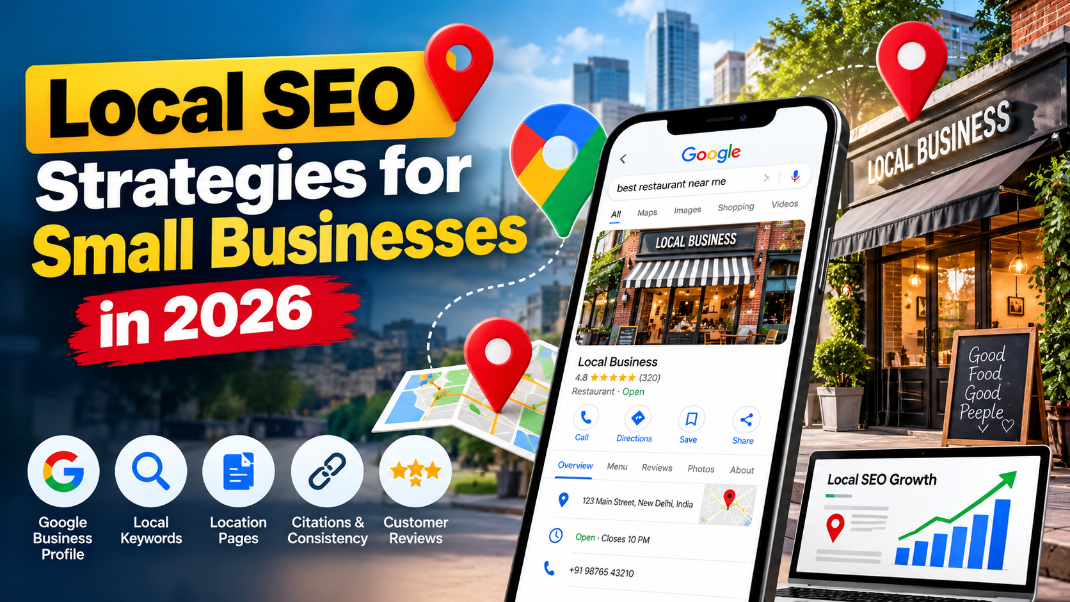
For a small business, attracting customers from nearby areas can be just as important as building a strong online presence. A person searching for a dentist, restaurant, electrician, boutique, or digital marketing agency often wants a solution close to their location. If your business does not appear when these customers search online, they may choose a competitor instead.
This is where local search engine optimization becomes important.
Local SEO helps businesses improve their visibility in location-based searches on Google Search and Google Maps. It focuses on making business information accurate, helping search engines understand the services offered, building customer trust, and creating a website that answers local customers' questions.
In 2026, small businesses do not necessarily need a huge marketing budget to improve their local presence. They need a clear strategy, consistent effort, and an understanding of what potential customers are searching for.
Here are practical local SEO strategies that small businesses can use to strengthen their online visibility and attract more relevant enquiries.
1. Optimize Your Google Business Profile
One of the first steps in local SEO is creating or improving your Google Business Profile. This profile helps customers discover important details about your business, including your location, opening hours, contact information, services, and customer reviews.
For example, if someone searches for a bakery near their home, Google may show nearby businesses with their locations, ratings, opening hours, and directions. An accurate and complete profile helps customers understand whether your business meets their needs.
To improve your profile:
-
Claim and verify your business listing.
-
Select the most relevant primary business category.
-
Add accurate contact details, opening hours, and service information.
-
Upload genuine photographs of your premises, products, team, or completed work.
-
Keep holiday hours and other important details updated.
-
Respond to customer reviews professionally.
Businesses should also follow Google's guidelines when creating and maintaining their profiles. Using extra keywords in the business name or creating multiple profiles for the same location can cause problems. Your profile should accurately represent the business as customers know it in the real world.
Google identifies relevance, distance, and prominence as the main factors influencing local rankings. Completing your profile can help Google understand your business, but it does not guarantee a particular position. Google's official local ranking guidance explains these factors in more detail.
2. Target Local Keywords That Match Customer Intent
Keyword research helps small businesses understand how people search for their products and services. Instead of targeting only broad terms, businesses should identify phrases that reflect local needs and purchasing intent.
For example, a plumbing company may target searches such as:
-
Plumber in Faridabad
-
Emergency plumbing services in Faridabad
-
Bathroom repair services near me
-
Affordable plumbing services for homes
These searches indicate different needs. Someone looking for emergency plumbing may want immediate assistance, while someone searching for bathroom repairs may be comparing service providers.
A useful local SEO strategy considers these differences when planning website pages and content.
Start by listing your main services, the locations you genuinely serve, and the questions customers regularly ask. Use keyword research tools and search suggestions to identify relevant phrases. Then include them naturally in page titles, headings, service descriptions, and useful blog content.
For example, a business offering local SEO services for small businesses should explain the services, process, expected benefits, and suitability for different business types. Repeating the same keyword in every paragraph will not make the content more useful.
The objective is to create pages that match what local customers actually need.
3. Create Useful Location-Specific Website Pages
A business website should clearly explain what the company does and where it operates. This becomes particularly important when a business serves multiple towns, neighbourhoods, or cities.
Suppose a home renovation company works in Delhi, Noida, and Gurugram. A single service page may not answer every location-specific question. Dedicated pages can help explain which services are available in each area, provided the business genuinely serves those locations.
A useful location page may include:
-
Services available in that area.
-
Details about the company's actual service coverage.
-
Relevant local project examples or customer experiences.
-
Common questions about pricing, availability, and timelines.
-
Accurate contact information and a clear enquiry option.
Avoid creating dozens of pages that differ only by city name. Pages with nearly identical content offer little value to visitors and may create a poor experience.
Instead, give each page a clear purpose and include information that genuinely helps people in that location.
For a small business, a few high-quality service and location pages are often a more practical starting point than a large collection of thin pages.
4. Keep Business Information Consistent Across the Web
Customers may discover a business through Google Maps, its website, local directories, social media, or industry-specific platforms. If the business name, address, and phone number differ across these sources, customers may become confused.
Consistent business information also helps search engines connect references to the same company.
Review your important listings and make sure that:
-
The business name matches its real-world identity.
-
The address is correct wherever it is publicly displayed.
-
The phone number connects customers to the right business.
-
Website links work properly.
-
Business hours reflect the current schedule.
-
Outdated or duplicate listings are addressed where possible.
This process is often called citation management in local SEO.
Businesses in India may find relevant listing opportunities through established local directories and industry platforms. However, directory submissions should be selective. A listing on a relevant, trustworthy website is generally more useful than submitting business details to hundreds of unrelated directories.
Google's guidelines for representing a business explain how to maintain accurate profiles and avoid common listing issues.
5. Build a Consistent Customer Review Strategy
Customer reviews influence how people evaluate local businesses. Before visiting a clinic, booking a service, or ordering from a nearby store, potential customers may compare ratings and read experiences shared by others.
Reviews also help businesses understand what customers appreciate and which problems need attention.
A practical review management process should include three activities: requesting genuine feedback, responding to reviews, and learning from recurring comments.
Ask customers for honest feedback after a completed transaction or service. Make the process straightforward by sharing a direct review link when appropriate. Do not pressure customers to leave positive ratings or purchase fake reviews.
Respond to positive reviews with genuine appreciation. When negative feedback appears, acknowledge the concern and offer a reasonable next step. If several customers mention the same issue, investigate the underlying cause rather than simply posting more replies.
For example, a local salon may receive repeated complaints about appointment delays. Reviewing booking schedules and staff availability may solve the problem more effectively than responding to every complaint individually.
A strong review strategy supports customer trust and helps businesses maintain a more credible online presence.
6. Make Your Website Mobile-Friendly and Easy to Use
Many local searches happen when people are looking for a nearby service or trying to contact a business quickly. If your website is slow, difficult to navigate, or confusing on a mobile phone, visitors may leave before making an enquiry.
A mobile-friendly website should allow customers to find important information without unnecessary effort.
Check whether visitors can:
-
Understand your main services quickly.
-
Find your phone number and contact details.
-
Navigate the website on a small screen.
-
Read text without zooming in.
-
Complete enquiry forms easily.
-
Access important pages without long loading delays.
Technical improvements should also address broken links, crawlability, indexing problems, and confusing site navigation.
For a local service provider, a prominent call button and a short enquiry form may be more useful than elaborate animations or complicated page layouts.
Good website usability does not guarantee higher local rankings, but it helps visitors access information and take the next step once they arrive.
7. Publish Content That Answers Local Customers' Questions
A useful content strategy can help small businesses demonstrate their expertise and attract people searching for information before making a purchase.
Rather than publishing generic articles just to add more pages to a website, focus on questions customers regularly ask.
A local accountant might publish a guide to common GST filing mistakes for small businesses. A dentist could explain how to prepare for a routine dental appointment. A home improvement company might compare flooring materials based on maintenance, cost, and durability.
This type of content provides practical information while naturally connecting readers with relevant services.
For stronger local relevance, businesses can also cover genuine projects, local events, seasonal needs, and service considerations specific to the areas they serve.
Each article should have a clear purpose and answer the reader's question thoroughly. Include relevant internal links to service pages when they help visitors find additional information.
As search experiences increasingly include AI-generated answers, clear and trustworthy content remains useful. Businesses should explain their expertise accurately, use descriptive headings, and provide direct answers to common questions rather than writing solely to repeat keywords.
8. Earn Relevant Local Links and Mentions
Links from other websites can help people discover a business and provide useful context about its reputation and activities. For local SEO, the focus should be on relevant relationships rather than collecting as many backlinks as possible.
A small business can explore legitimate opportunities such as:
-
Local business associations.
-
Community events and sponsorships.
-
Partnerships with complementary businesses.
-
Local news coverage of genuine company activities.
-
Industry publications and professional organisations.
-
Useful resources that other local websites may want to reference.
For example, a local fitness studio could partner with a community organisation for a health event. If the event receives coverage on a relevant local website, that mention may help residents discover the studio and understand its community involvement.
Avoid buying large volumes of low-quality links or participating in schemes designed only to manipulate search rankings.
A smaller number of relevant, editorially earned links can be more meaningful than hundreds of unrelated backlinks.
9. Track Local SEO Performance Beyond Rankings
A business may appear in search results without receiving many enquiries. It may also attract website visitors who are not suitable customers. This is why tracking only keyword rankings can give an incomplete picture of local SEO performance.
Small businesses should monitor a combination of visibility and business outcomes.
Useful indicators include:
-
Organic website visits from relevant locations.
-
Calls and enquiries generated through digital channels.
-
Requests for directions and other available Business Profile interactions.
-
Search queries that lead people to the website.
-
Review volume, feedback themes, and response activity.
-
Form submissions, bookings, and qualified leads.
-
Performance of individual service and location pages.
Google Search Console can help businesses understand website search performance, while Google Analytics can provide insight into visitor behaviour and conversions. Google Business Profile performance reports can also help eligible businesses assess interactions with their listings.
Where possible, record a baseline before making significant changes. Review performance regularly and investigate what may have caused improvements or declines.
For example, if a service page attracts more traffic but enquiries remain unchanged, the page may need clearer pricing information, stronger service explanations, or an easier contact process.
The purpose of reporting is to understand whether local SEO is helping the business reach the right audience and generate meaningful opportunities.
10. When Should a Small Business Consider Professional Local SEO Support?
Some local SEO tasks can be managed internally, particularly when a business has one location and a relatively simple website. However, the work can become more complex when the company operates across multiple locations, faces strong local competition, or struggles with technical website issues.
A professional local SEO agency can help identify priorities, improve website structure, optimise business listings, develop location-specific content, and measure performance.
Before choosing a local SEO company in India, businesses should understand what the agency will actually do. Ask for a clear scope of work, reporting schedule, and explanation of how progress will be evaluated.
Be cautious of providers promising guaranteed first-place rankings or claiming they can control Google's results. Local rankings depend on several factors, including distance and the competitiveness of the search.
For businesses seeking help with local search visibility, Value4Brand is one provider worth evaluating. Its local SEO services can be considered alongside other agencies based on the business's requirements, budget, experience, and reporting expectations.
The right partner should explain its approach clearly and focus on sustainable improvements rather than shortcuts.
Conclusion
Local SEO in 2026 is about helping the right customers discover accurate, useful information about your business when they need it.
Small businesses can begin by improving their Google Business Profile, researching relevant local keywords, creating useful service pages, maintaining consistent business information, and responding to genuine customer reviews. Mobile usability, helpful content, relevant local mentions, and regular performance tracking can strengthen these efforts over time.
You do not need to implement every strategy at once. Start with the most important gaps, measure the results, and build on what works.
A consistent approach to local SEO services can help small businesses improve their online presence, connect with nearby customers, and create more opportunities for long-term growth.












Comments (0)