

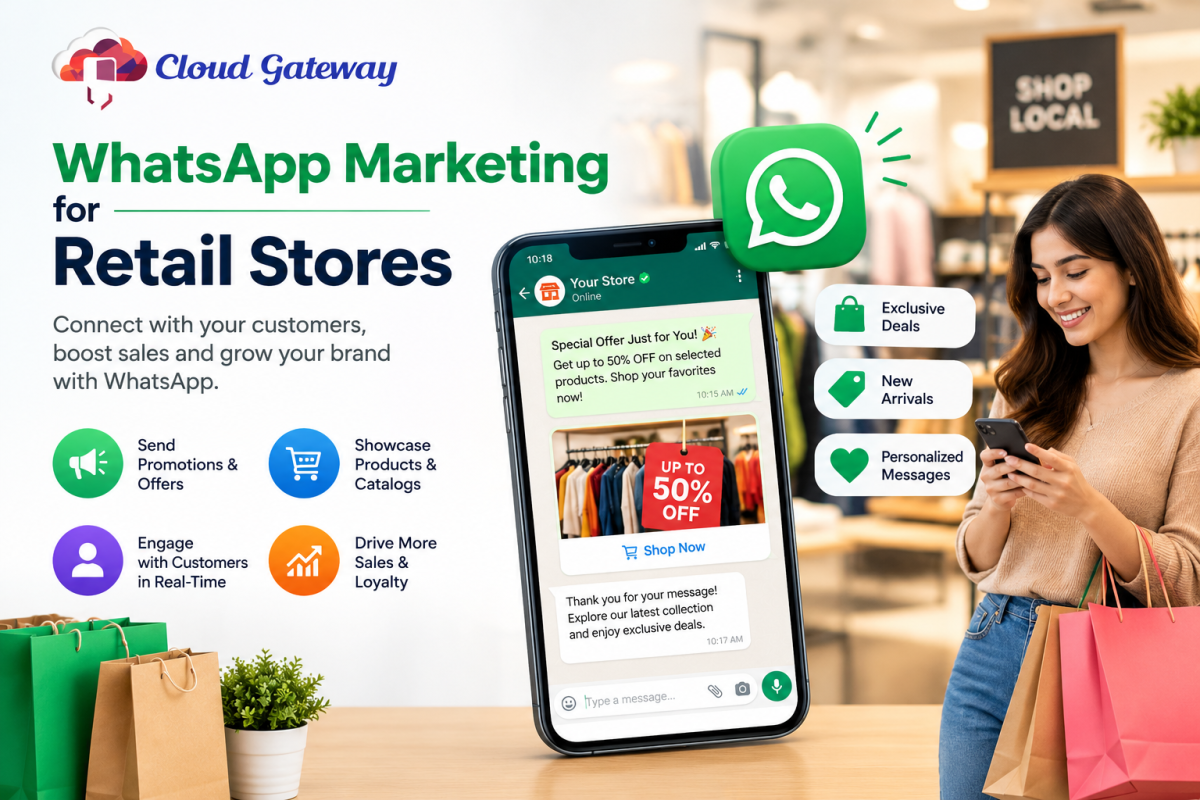
WhatsApp Marketing for Retail Stores How to Convert Product Questions into Paying Customers
Retail customers often contact businesses before making a purchase. They may ask whether an item is available, request additional photographs, compare product features, or enquire about discounts.

Introduction
Retail customers often contact businesses before making a purchase. They may ask whether an item is available, request additional photographs, compare product features, or enquire about discounts. Although these conversations may seem simple, they can influence the customer's final buying decision.
WhatsApp Marketing for Retail Stores helps businesses turn these everyday interactions into opportunities for meaningful customer engagement. By responding promptly, recommending relevant products, and making purchasing information easy to access, retailers can improve the shopping experience and encourage customers to take the next step.
Sequence Cloud Gateway offers a brand reference for retailers exploring messaging solutions to improve communication and support their marketing efforts.
Identify the Buying Intent Behind Each Message
Not every enquiry represents the same level of purchase intent. A customer asking about a product's price may simply be researching options, while someone checking stock availability may be ready to buy.
Retailers can identify buying intent by paying attention to the customer's questions. Questions about available sizes, delivery dates, payment methods, and product comparisons often indicate that the shopper needs specific information before deciding.
Sales representatives should respond naturally and ask relevant follow-up questions when necessary. For example, a customer looking for a laptop may need guidance about storage, memory, and intended use. Recommending suitable options can be more helpful than sending a general promotional catalogue.
Understanding buying intent makes WhatsApp Marketing for Retail Stores more customer-focused and helps businesses provide assistance that supports purchasing decisions.
Make Product Recommendations More Relevant
Customers appreciate recommendations that match their needs, budget, and preferences. Retailers can use the information shared during a conversation to suggest suitable alternatives or complementary products.
For example, a clothing store can recommend matching accessories for an outfit, while an electronics retailer may suggest compatible accessories for a device. Recommendations should be genuinely relevant rather than designed only to increase the order value.
Businesses can also share product comparisons that explain differences in features, quality, materials, or functionality. Clear information helps shoppers evaluate their options and feel more confident about their choices.
Personalized recommendations can strengthen customer relationships and make the sales conversation more useful.
Improve Customer Service with WhatsApp Business API for Retail Stores
As customer enquiries increase, retail teams may find it difficult to maintain consistent response times. A structured messaging system can help businesses manage conversations and improve coordination between sales and customer service teams.
WhatsApp Business API for Retail Stores can enable messaging integrations with compatible business tools. Depending on the implementation, these integrations may support shared inboxes, conversation assignment, approved message templates, and connections with customer management systems.
A customer asking about a product's availability could be directed to the appropriate store representative. If the item is temporarily unavailable, the team can explain the situation and provide an update when reliable stock information becomes available.
These workflows can reduce communication gaps and make customer enquiries easier to manage. Retailers should verify which capabilities their selected provider supports and ensure all messaging practices comply with applicable policies.
Use Promotional Messages to Support Customer Decisions
Promotional communication can encourage customers to explore relevant products, especially when offers match their interests. However, sending frequent discounts without considering customer preferences can reduce engagement.
WhatsApp Promotional Messages for Retail Stores should explain the offer clearly, including relevant conditions, validity dates, and product eligibility. A retailer introducing a new collection might share selected products and direct interested shoppers to a catalogue or landing page.
Seasonal offers, new arrivals, loyalty benefits, and product restock announcements can also help customers discover items they may want to purchase.
Businesses should send promotional messages only to appropriate audiences who have consented to receive them. Customers should be able to opt out easily, and retailers should honour those requests.
Build a Consistent WhatsApp Marketing Strategy for Retail Stores
Retail businesses need a clear plan for deciding what to communicate, when to send it, and how to measure the results. A WhatsApp Marketing Strategy for Retail Stores should align messaging campaigns with business objectives and customer expectations.
For example, a fashion retailer may focus on new arrivals, while a grocery store may communicate weekly offers and product availability. A furniture showroom may prioritize product enquiries and appointment bookings.
Businesses should organize their messaging calendar to avoid overwhelming customers with repeated promotions. Campaigns can be planned around relevant events, seasonal shopping periods, and genuine product updates.
Every message should provide a clear benefit and an appropriate next step. This helps maintain relevance while supporting sales opportunities.
Reduce Friction in the Buying Process
Even interested shoppers may abandon a purchase if the process becomes confusing. Unclear prices, missing product information, uncertain availability, and complicated ordering instructions can create unnecessary obstacles.
Retailers can use WhatsApp conversations to clarify these details before customers make a decision. They can explain accepted payment methods, provide delivery information, confirm store locations, and direct shoppers to secure checkout pages where available.
For physical stores, staff can confirm whether a product is available for inspection or collection. For online retailers, direct links to accurate product pages can make it easier to complete the purchase.
Businesses should never request unnecessary sensitive payment details through ordinary chat conversations. Secure and appropriate payment channels should be used for transactions.
Follow Up Without Creating Pressure
Some customers need more time before buying. A thoughtful follow-up can help answer outstanding questions and remind interested shoppers about a product they previously discussed.
For instance, a customer who asked about a particular appliance may appreciate a relevant clarification about its features. A shopper interested in a new collection may want to know whether the preferred size is available.
Follow-ups should reflect the previous conversation and respect the customer's preferences. Repeated unsolicited messages can damage trust and should be avoided.
Monitor Conversion Performance
Retailers should measure whether customer conversations result in meaningful business outcomes. Tracking enquiries, response times, product link clicks, completed orders, and repeat purchases can reveal where the sales process works well and where improvements are needed.
If customers frequently ask for information that is missing from product pages, the retailer can update its catalogue. If many enquiries remain unresolved, the business may need clearer responsibility assignments or better staff training.
These improvements can help retailers provide better service while using their messaging resources more efficiently.
Conclusion
Turning product enquiries into paying customers depends on understanding customer needs, providing accurate information, and simplifying the buying process. WhatsApp Marketing for Retail Stores allows businesses to combine personal assistance with convenient product communication.
By using relevant recommendations, organized messaging workflows, and thoughtful follow-ups, retailers can improve customer experiences and support sales growth. Sequence Cloud Gateway can help businesses explore messaging solutions that align with their communication and marketing requirements.













Comments (0)