

How Can You Compare Backlink Prices in Bulk for Better SEO Planning?
Compare backlink prices in bulk to review multiple link building opportunities without manually checking each website separately. Bulk evaluation can save valuable time while helping marketers understand pricing differences and select relevant opportunities for their SEO campaigns.
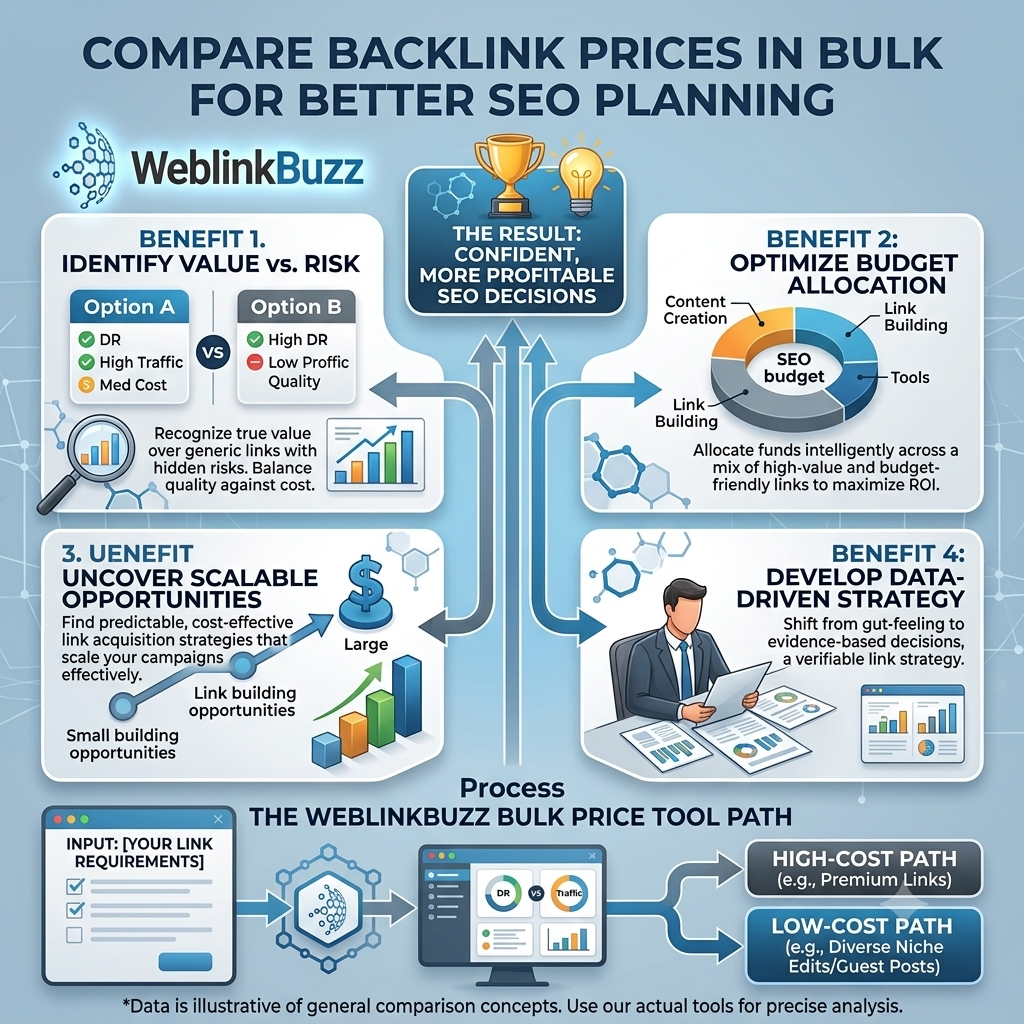
Managing backlink research for multiple websites can become difficult when every domain requires a separate price check. SEO freelancers and agencies often need to compare many potential publishers while keeping campaign budgets under control. The ability to compare backlink prices in bulk helps organize this research and review available prices in one workflow. With clear records and suitable selection criteria, you can spend less time repeating manual tasks and more time evaluating relevant opportunities.
Why Does Bulk Backlink Research Matter?
When you work with a short list of websites, checking prices manually may be manageable. However, the process becomes more demanding when you have dozens or hundreds of domains. You may need to visit multiple marketplaces, check website details, record prices, and compare the available services.
Repeating these tasks can take time and increase the chance of missing important information. Bulk research helps you organize several domains together, making it easier to review available prices and prepare a shortlist for further evaluation.
What Should You Check Before Comparing Prices?
Before collecting prices, decide which types of websites are suitable for your campaign. This helps you avoid comparing unrelated domains and spending time on opportunities that do not match your goals.
Website Relevance
Check whether each website publishes content related to your industry or audience. A relevant website may help introduce your business to readers who are interested in your subject. Topic relevance should be one of the first checks in your research process.
Traffic and Domain Metrics
Review available organic traffic estimates, referring domains, and metrics such as DR and DA. These measurements can provide additional context when evaluating websites. However, third-party scores are not direct measures of business value and cannot guarantee better search performance.
Price and Placement Details
Check the listed price, type of placement, content requirements, and publishing terms. One marketplace may include article writing, while another may charge for writing separately. Comparing similar services helps you understand the actual cost more accurately.
How Can You Compare Prices for Multiple Domains?
Start by preparing a clean list of domains. Remove duplicates, correct spelling errors, and group websites by industry or campaign. For example, you could maintain separate lists for technology, travel, finance, and business websites if these topics match your projects.
Next, collect the available pricing information and relevant website details. Record the domain, marketplace, listed cost, traffic estimate, domain metrics, and service type. Keeping these details together makes it easier to review the results and identify which options need additional research.
Can a Bulk Checker Reduce Manual Work?
A bulk checker can simplify the process by allowing you to submit several domains through one workflow. Instead of opening multiple websites and recording every detail separately, you can review the available information in a more organized format.
WeblinkBuzz offers bulk domain research for comparing available backlink and guest post prices across multiple marketplaces. Users can enter domain lists, review available prices alongside SEO metrics, and use supported filtering and export features to organize their findings. This can be useful for agencies and SEO professionals working with large prospect lists.
How Can You Select the Best Opportunities?
After collecting the prices, review each domain against your campaign requirements. Do not shortlist websites based on cost alone. Consider their topic, content quality, audience relevance, available traffic data, and publishing terms.
It can be useful to divide your list into three groups: websites that meet your requirements, websites that need further checking, and websites that are unsuitable. This simple process makes it easier to focus on promising options without reviewing the entire list repeatedly.
Is the Cheapest Option Always Better?
No. A cheap placement may not provide good value if the website has unrelated content or questionable quality. Likewise, a high-priced placement does not automatically offer better results. Review the complete listing and understand what you will receive before making a decision.
Compare the total cost, including any additional writing or publishing fees. Check the current listing and make sure you understand the marketplace's terms. Remember that purchasing backlinks does not guarantee higher rankings, and paid link placements should be handled in accordance with applicable search engine policies.
How Can Agencies Use Bulk Price Research?
Agencies often manage different budgets and goals for different clients. A structured bulk research process can help them keep domain lists separate and compare options using consistent criteria. Team members can use shared records to review costs, track shortlisted publishers, and discuss potential choices.
For example, an agency can create a separate spreadsheet for each client, including the website name, price, topic, and review notes. This helps prevent duplicate research and makes it easier to explain why a website was considered suitable for a campaign.
What Common Mistakes Should You Avoid?
One mistake is comparing unrelated websites as though they provide the same value. Another is using outdated prices or forgetting to check whether content writing is included. Duplicate domains and incomplete records can also make the comparison less useful.
To avoid these issues, clean your domain list before checking prices and record when the information was collected. Review website quality before focusing on cost, and confirm the final price with the marketplace. Use available metrics as supporting information rather than the only reason for selecting a domain.
Frequently Asked Questions
What Does Bulk Backlink Price Comparison Mean?
It means reviewing available backlink prices for multiple domains within one organized research process instead of checking each domain separately.
Who Can Use Bulk Backlink Price Checking?
SEO agencies, freelancers, website owners, and marketing teams can use bulk research when they need to evaluate many potential publishers or plan multiple campaigns.
Can Bulk Research Save Time?
It can reduce repeated manual checking and make information easier to organize. The time saved depends on the number of domains, available data, and the research process.
Should I Buy a Backlink Based Only on Its Price?
No. Check website relevance, content quality, available traffic information, and placement terms alongside the listed price before making a decision.
How Can You Improve Your Backlink Research Workflow?
Create a repeatable process for every campaign. Start with relevant domains, organize them by topic, compare similar listings, and record the information needed for a final review. Check current prices before purchasing and keep your research records updated.
Using backlink price comparison as part of your workflow can help you understand price differences across available marketplace listings. Combine bulk checking with careful website reviews and realistic budget planning. This gives you a clearer basis for selecting opportunities while avoiding the assumption that the lowest price will always provide the best value.
Conclusion
Bulk backlink price research can make large domain lists easier to manage and help SEO professionals organize campaign budgets. By reviewing website relevance, traffic estimates, domain metrics, placement details, and costs together, you can make more informed decisions. Keep records accurate, verify current marketplace prices, and focus on quality rather than link quantity alone. A structured approach supports efficient research without guaranteeing specific SEO results.

Check backlink price across different websites to understand how much potential link placements may cost. Comparing prices with website quality, relevance, traffic, and authority can help businesses choose opportunities that align with their SEO goals and available budget. visit us:- https://www.weblinkbuzz.com/











Comments (0)