

How Upholstery Fabrics and Curtains Can Work Together in Home Décor
Learn how coordinating upholstery fabrics and curtains can create visual harmony, balanced textures, and a cohesive look across your home décor.

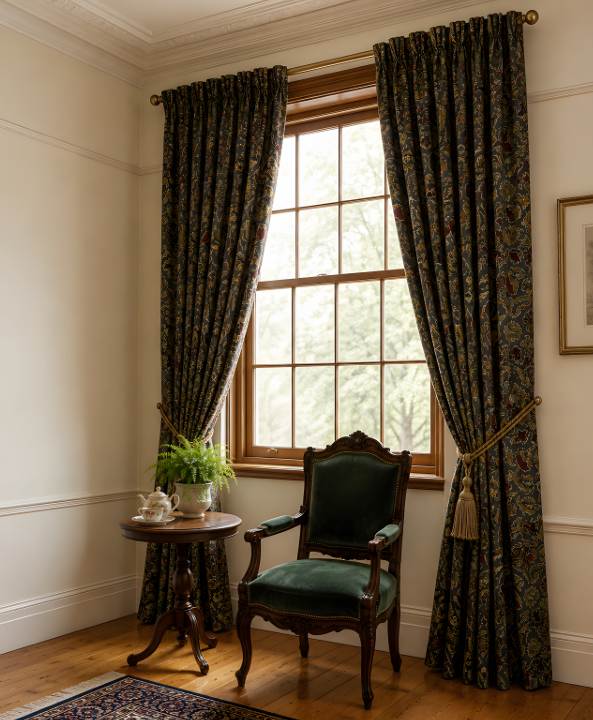
Upholstery fabrics and curtains work together best when they share a connecting element — tone, texture, or weight — rather than matching exactly, since an exact match can feel flat while a considered relationship between the two ties a room together naturally. The goal is coordination, not duplication, letting furniture and window curtains complement rather than compete with each other.
Many rooms treat upholstery and curtains as entirely separate decisions, chosen at different times without much thought to how they'll read together. Since both take up significant visual space in most rooms, this disconnect is often more noticeable than people expect once everything is actually in place.
Upholstery: Setting the Foundation for Curtain Choices
Upholstery — a sofa, armchair, or other significant furniture piece — often occupies more visual space in a room than curtains do, which makes it a sensible starting point for coordination. Once the upholstery fabric, colour, and texture are established, curtain choices can be made in relation to what's already there, rather than the reverse.
A heavily patterned or textured upholstery fabric generally calls for a simpler, more solid curtain to avoid two competing busy elements in the same room. Plainer, more neutral upholstery leaves more room for a bolder or more textured curtain fabric to introduce visual interest without overwhelming the space.
Window Curtains: Completing the Coordination
Window curtains should pick up on upholstery's undertone, weight, or texture rather than introducing an entirely unrelated fabric direction. This doesn't mean choosing an identical fabric — it means finding a genuine relationship between the two, whether through shared colour family, similar formality level, or complementary texture.
Practical Ways Upholstery and Curtains Can Coordinate
- Shared undertone, different shade: A warm beige sofa paired with curtains in a deeper or lighter warm tone, rather than matching exactly.
- Complementary texture: A smooth, plain upholstery fabric paired with a subtly textured linen curtain, or vice versa, for balanced visual interest.
- Consistent formality level: Formal, structured upholstery generally pairs with more tailored curtain header styles, while casual furniture suits simpler curtain treatments.
- Weight balance: Heavier, more substantial upholstery can handle heavier curtain fabrics like velvet, while lighter furniture often suits lighter curtain weights.
- Colour bridging: Using cushions or accent pieces to bridge upholstery and curtain colours that don't naturally relate on their own.
Curtain Textures for Different Interior Styles
Once the upholstery-curtain relationship is established, overall interior style further shapes texture choices.
Modern Interiors
What curtain texture is best for a modern home? Smooth, matte-finish fabrics generally suit modern interiors best, particularly when paired with equally clean, unfussy upholstery, keeping the overall room feeling cohesive and uncluttered.
Luxury Interiors
Which curtain fabric is best for a luxury interior? Velvet and heavier silk-blend fabrics suit luxury interiors well, and these curtains pair naturally with similarly substantial, richly textured upholstery like a velvet or boucle sofa.
Minimalist Interiors
Minimalist spaces generally suit lightweight, plain-weave fabrics, coordinating well with simple, understated upholstery that avoids heavy pattern or texture.
Traditional Interiors
Traditional interiors often pair well with medium-to-heavy textured fabrics like jacquard, complementing classic upholstery styles with carved wood frames and structured silhouettes.
Scandinavian Interiors
Scandinavian-style rooms generally suit light linen or cotton-blend curtains, pairing naturally with simple, light-toned upholstery common in this aesthetic.
Contemporary Interiors
Contemporary interiors work well with mid-weight fabrics, coordinating with upholstery that balances comfort and clean lines without leaning too formal or too casual.
Comparing Curtain Textures by Interior Style
| Interior Theme | Recommended Curtain Texture | Best Fabric Options | Main Benefit |
|---|---|---|---|
| Modern | Smooth, matte finish | Cotton-linen blends, matte polyester | Coordinates with clean upholstery |
| Luxury | Rich, heavy-weight | Velvet, silk blends | Matches substantial upholstery |
| Minimalist | Light, plain weave | Cotton, lightweight linen | Suits simple, understated furniture |
| Traditional | Textured, formal weave | Jacquard, heavier cotton | Complements classic upholstery |
| Scandinavian | Light, natural texture | Linen, cotton blends | Pairs with light-toned furniture |
| Contemporary | Mid-weight, tailored | Cotton-poly blends | Balances comfort and cleanliness |
How to Choose Curtains Based on Room Conditions
- Room size: In smaller rooms, keeping upholstery and curtain colours closely related helps avoid visual clutter; larger rooms can support more contrast between the two.
- Natural light: Rooms with strong daylight showcase upholstery and curtain colour relationships more vividly, worth considering when choosing tone intensity.
- Privacy: Fabric weight for privacy — sheer or blackout — can still be chosen within a colour family that relates to your upholstery.
- Furniture: Curtain choice should always reference existing upholstery rather than being selected independently.
- Wall colour: Wall colour acts as the backdrop connecting upholstery and curtains, so it's worth considering all three together rather than in isolation.
- Maintenance: Match maintenance expectations between upholstery and curtain fabric, particularly in high-traffic rooms where both may need regular cleaning.
Curtains vs Blinds for Windows: Which Is Better?
Are curtains or blinds better for windows? Curtains generally offer more opportunity to coordinate with upholstery through fabric, colour, and texture than blinds for windows, which typically come in a more limited, functional colour range. The better choice depends on whether upholstery-curtain coordination is a priority for the room.
Curtains work particularly well when a room's upholstery and window treatment need to relate closely, since fabric options allow for genuine colour and texture matching. Blinds for windows suit rooms where this level of coordination matters less, or where a clean, neutral treatment is preferred instead. Many homes combine both, using blinds for function and coordinated curtains for the room's overall aesthetic relationship with furniture.
How to Choose Curtains for Different Rooms
How do I choose curtains for my living room? Living room curtains carry the most coordination responsibility with upholstery, since this room typically features the most significant furniture pieces and the most visible window treatment in a home.
Bedrooms can coordinate curtains with bedding and any upholstered headboard rather than a separate seating piece. Dining rooms often coordinate curtain fabric with dining chair upholstery if present, while kitchens and bathrooms generally prioritise practicality over close upholstery coordination given their functional demands.
How to Choose a Curtain and Upholstery Shop in Gurgaon
How do I choose a curtain shop in Gurgaon? Look for a provider offering both curtain fabrics and upholstery options in one consultation, since seeing the two together makes coordination decisions considerably easier than comparing separate swatches from different sources.
When comparing an upholstery shop in Gurgaon for both curtains and furniture fabric, it helps to check whether the provider can view your existing furniture alongside curtain samples, or coordinate both from scratch for a new project. Local considerations worth keeping in mind include Gurgaon's strong daylight in many south- and west-facing apartments, which can make upholstery-curtain colour relationships read more vividly than expected, and the regular dust that comes with the region's climate, which makes washable fabrics practical for both curtains and upholstery in daily-use rooms.
Before finalising a provider, it's worth checking whether they offer:
- Both curtain fabrics and upholstery options in one consultation
- Physical samples to compare curtain and upholstery fabric together
- Design guidance on coordinating tone, texture, and weight
- Accurate on-site measurement for curtains and furniture reupholstery if needed
- Transparent, itemised pricing
- Installation support for hardware and hanging
Key Takeaways
- Upholstery and curtains coordinate best through shared undertone, texture, or weight rather than an exact fabric match.
- Heavily patterned upholstery generally suits a simpler curtain; plainer upholstery leaves room for a bolder curtain choice.
- Curtain fabric weight should relate to upholstery's substantiality — heavier furniture suits heavier curtains, and vice versa.
- Living rooms typically carry the most upholstery-curtain coordination responsibility, given their prominent furniture and window treatments.
- An upholstery shop in Gurgaon offering both curtains and furniture fabric in one consultation makes coordination considerably easier.
FAQs
How can upholstery fabrics and curtains work together in home décor?
They work together best through a shared undertone, texture, or weight rather than an exact match. A curtain that references upholstery's colour family or fabric weight creates cohesion without the flatness of matching fabrics exactly.
What curtain texture is best for a modern home?
Smooth, matte-finish fabrics generally suit modern interiors, particularly when paired with equally clean, unfussy upholstery, keeping the room feeling cohesive and uncluttered.
Which curtain fabric is best for a luxury interior?
Velvet and heavier silk-blend fabrics suit luxury interiors well, pairing naturally with similarly substantial, richly textured upholstery like a velvet or boucle sofa.
Are curtains or blinds better for windows?
Curtains generally offer more opportunity to coordinate with upholstery through fabric and colour than blinds for windows, which typically come in a more limited, functional range.
How do I choose curtains for my living room?
Living room curtains should reference existing upholstery's colour, texture, and weight, since this room typically features the most significant furniture pieces and the most visible window treatment.
How do I choose a curtain shop in Gurgaon?
Look for a provider offering both curtain fabrics and upholstery options in one consultation, along with physical samples to compare together and guidance on coordinating tone and texture.
Should curtains match upholstery exactly?
No, an exact match can look flat. It's generally better to find a genuine relationship — shared undertone, complementary texture, or similar formality — rather than choosing identical fabrics for both.
What if my upholstery and curtains don't naturally relate in colour?
Cushions or accent pieces can help bridge upholstery and curtain colours that don't naturally connect on their own, introducing a shared tone that ties the two together without replacing either fabric.
A Practical Next Step
If your room's upholstery and curtains feel slightly disconnected despite both being attractive individually, it's worth looking at whether they share any genuine relationship in tone or texture. Comparing window curtains and upholstery fabric options together from a local provider makes it easier to find a combination that actually works as one considered room.











Comments (0)