

How Does LED Mobile Billboard Advertising Work in North Carolina?
See how LED mobile billboard advertising in NC works: routes, ad design, NC parking rules and where trucks pull the most attention in the Triangle.
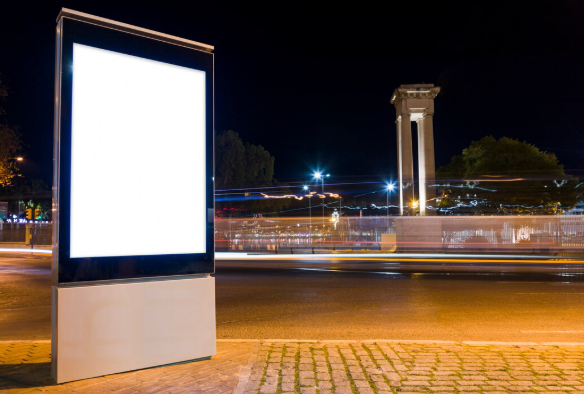
An LED mobile billboard is a truck fitted with large, bright digital screens. You book it, supply the ad (or have it designed), pick a route and a schedule, and the truck either drives or parks your message in front of the people you want to reach. That's LED mobile billboard advertising in NC in a nutshell.
The idea is simple. The results aren't automatic, though. Most of the difference between a campaign that fills a store and one that just looks nice comes down to route planning and how readable the ad is at 35 mph.
How an LED billboard truck campaign actually runs
A typical campaign moves through five stages, and the first two matter more than the screen itself.
-
Set one goal. A grand opening, a hiring push, a product launch or a weekend festival. Trying to do all four in one ad usually means none of them land.
-
Map the route around your audience. Commuters on Capital Boulevard, families around Cary and Apex, students near Franklin Street. The route follows the people, not the other way round.
-
Build creative for a five-second glance. Big logo, one short headline, one action. Our graphic design and copywriting team writes truck ads with far fewer words than a print flyer would carry.
-
Run it. The truck either drives set loops or parks at a high-traffic spot, like outside a venue before kickoff.
-
Adjust between runs. Because the screens are digital, you can swap the offer, add a video clip or change the route for the next day.
One habit worth copying: ask for a GPS log of where the truck went and when. It's the simplest way to check that the hours you paid for were spent in the right neighborhoods.
LED mobile billboard vs. a static billboard in North Carolina
The short version: a static billboard rents you one stretch of road, while a truck rents you an audience wherever it happens to be that day.
|
Factor |
LED mobile billboard truck |
Static roadside billboard |
|
Location |
Moves to neighborhoods, venues and events |
Fixed to one spot |
|
Creative |
Video or rotating images, changeable between runs |
Vinyl print or a shared rotation slot on a digital board |
|
Booking length |
A single day, a weekend or one event |
Usually sold in multi-week periods |
|
Targeting |
By area, event and time of day |
Whoever drives past |
|
Best fit |
Launches, events, game days, hiring, real estate |
Steady awareness on one corridor |
On GO Media's Raleigh routes, an LED ad truck campaign typically produces 25,000 to 75,000 ad impressions a day, depending on the route and schedule.
Where mobile billboard trucks work best in the Triangle
Raleigh is the core of most campaigns, but the Triangle's spread-out layout is exactly why a moving screen makes sense here. Your customers aren't all on one highway.
|
Area |
Why it works |
Good fit for |
|
Downtown Raleigh |
Office lunch crowds, weekend foot traffic |
Restaurants, events, recruiting |
|
North Hills |
Shoppers and residents in a compact area |
Retail, real estate, medical practices |
|
Around PNC Arena and Carter-Finley Stadium |
Thousands of fans arriving in a short window |
Game-day offers, brand awareness |
|
Durham and Chapel Hill |
Students, university staff, downtown nightlife |
Apartments, food, local services |
|
Cary, Apex, Wake Forest |
Fast-growing family suburbs |
Home services, schools, dental and ortho offices |
|
Garner, Knightdale, Clayton |
Newer neighborhoods along commuter routes |
Grand openings, builders, hiring |
If you're planning something bigger, the truck works well alongside our events work, where the screen can show sponsor loops, live feeds or a countdown.
Are LED billboard trucks allowed in North Carolina?
Yes, a truck driving a route with a lit ad is generally treated like any other commercial vehicle on NC roads. Parking is where rules come in. Several Triangle towns have sign ordinances that limit vehicles parked mainly to advertise, and stadiums, campuses and private lots set their own policies.
That's why a good operator checks the stopping points before the campaign starts, not on the day. Screen brightness gets dialed down after dark too, both for safety and to keep the ad readable instead of glaring.
What makes a truck ad work (and how to tell if it did)
The most common mistake we see is a business uploading its Facebook ad straight to the truck. Six lines of text, a small logo, a web address nobody can type while driving. It gets ignored.
What works better:
-
A headline of seven words or fewer
-
A logo large enough to read from across an intersection
-
One action, such as a short phone number, a memorable URL or "Open Saturday on Glenwood Ave"
-
Motion used sparingly. A short clip from our video and photography shoots grabs attention, but the brand name still needs to sit on screen long enough to register.
Honestly, QR codes on a moving truck rarely get scanned. They do better when the truck is parked at an event.
For tracking, give the campaign its own phone number, landing page or promo code. Then run geo-targeted social media ads in the same ZIP codes the same week. People who saw the truck tend to recognize the brand when it shows up in their feed, and you can compare calls and site visits against a normal week.
Should you book a truck?
If you have a date-specific reason to be seen (an opening, a game day, a hiring week, a new listing), a truck usually earns its keep. If you just want people to remember your name all year, it works best as a recurring burst alongside your other channels.
GO Media plans routes, designs the creative and runs the truck across Raleigh and the Triangle from our office on Leesville Road. Call (919) 443-5405 or send us your dates, and we'll map a route around where your customers really are.
FAQs
GO Media is a Raleigh, North Carolina-based digital marketing agency specializing in SEO, web design, social media management, branding, PPC advertising, content marketing, and influencer management. The agency helps businesses increase online visibility, generate leads, and strengthen brand awareness through customized marketing strategies. With a focus on creativity, innovation, and measurable results, GO Media delivers effective digital solutions that support business growth and long-term success.




Comments (0)