

Choosing a Lamination Machine for Photo Studios and Cold Lamination Work
For a photo studio, getting a print out of the printer is often only the beginning. The final finishing can have a noticeable effect on how the photograph looks and how well it handles regular use. Lamination is one of the options studios can consider when they want to add an extra protective layer to suitable prints.

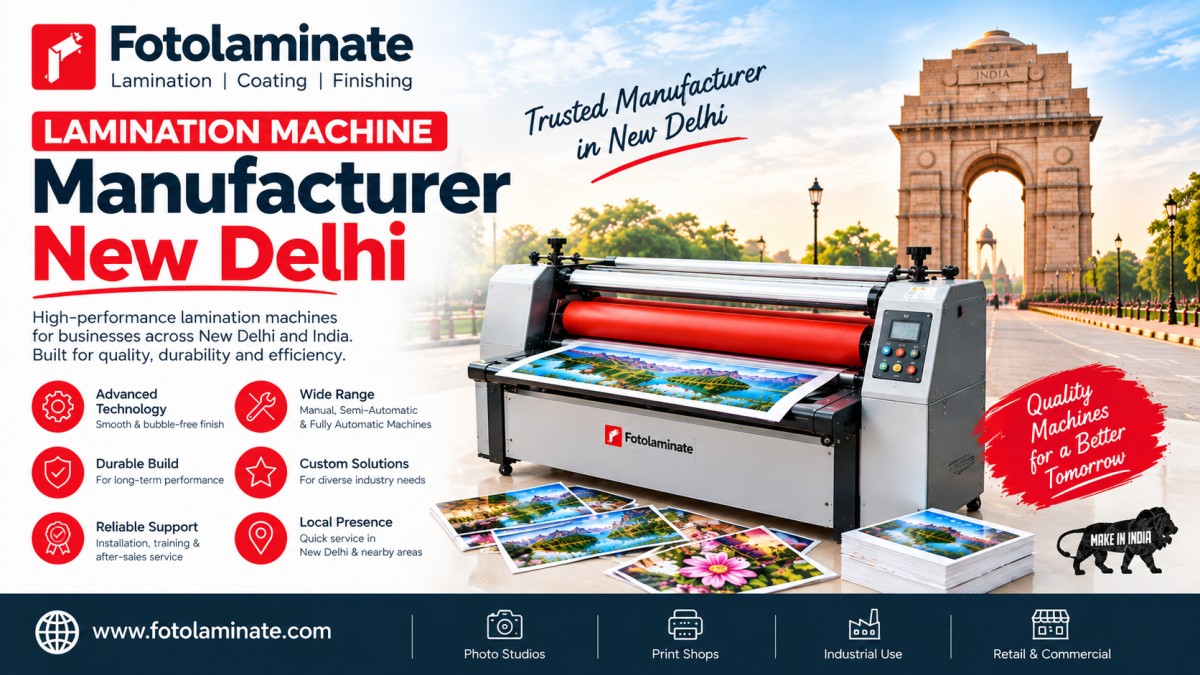
For a photo studio, getting a print out of the printer is often only the beginning. The final finishing can have a noticeable effect on how the photograph looks and how well it handles regular use. Lamination is one of the options studios can consider when they want to add an extra protective layer to suitable prints.
If you are searching for the best lamination machine for photo studio India, it is worth spending some time understanding the different machine types and the work your studio actually handles. One option that often comes up is a cold laminating machine, particularly for applications where a pressure-sensitive film is preferred.
Why Do Photo Studios Use Lamination?
Photographs can be handled frequently, especially when they are being delivered to customers, placed in albums, displayed, or used for promotional purposes.
A suitable laminating film can provide an additional surface layer that may help protect the print from:
- Dust and everyday dirt
- Minor scratches
- Moisture exposure
- Frequent handling
- General surface wear
The film can also change the appearance of the photograph. Depending on the product, studios may choose different surface finishes to achieve the desired look.
What Should a Photo Studio Look For?
There is no single laminator that is ideal for every photography business. A small portrait studio and a busy commercial photo lab can have completely different requirements.
Before choosing equipment, consider the following:
- The largest photograph size you regularly process
- Number of prints laminated each day
- Type of photographic paper being used
- Suitable laminating films
- Available workspace
- Ease of operation
- Maintenance requirements
Starting with these basics can make it easier to narrow down the available machines.
Understanding Cold Laminating Machines
A cold laminating machine uses pressure-sensitive adhesive film rather than relying on heat to activate the adhesive.
The print and film pass through rollers, and pressure helps bond the film to the surface. This makes cold lamination a useful option for certain photographs, digital prints, graphics, and other compatible materials.
The process can be particularly useful when a business wants to avoid heat during film application.
However, the machine and film must still be compatible with the material being laminated.
Cold Lamination for Photo Studios
Cold lamination can be considered by studios working with photographs and digital prints that are suitable for pressure-sensitive films.
For example, a studio may use it for:
- Portrait photographs
- Wedding prints
- Event photography
- Promotional photographs
- Display prints
- Customized photo products
The exact result depends on the film, photograph, roller pressure, and operating technique.
It is therefore sensible to test the selected film and print combination before using it for large customer orders.
Working Width Is More Important Than It Looks
When choosing the best lamination machine for photo studio India, working width should be one of the first specifications you check.
A studio that mainly produces standard-size photographs may not need a very wide machine. A business that also handles posters, larger photographs, or promotional graphics may need more capacity.
Think about the largest size you regularly process rather than choosing a machine based on an occasional oversized job.
A suitable working width can make material handling much easier during everyday production.
Production Volume Changes the Requirement
Consider two different studios.
The first processes a few dozen photographs every week. The second handles wedding and event orders throughout the week and may need to finish hundreds of prints.
Both are photo studios, but their equipment requirements are not necessarily the same.
For a higher-volume workflow, look more closely at:
- Machine operating speed
- Material handling
- Roller configuration
- Ease of operation
- Continuous-use requirements
- Maintenance and servicing
A machine should be selected around realistic production needs rather than simply choosing the most powerful model available.
How to Compare Different Machines
Once you understand your requirements, compare machines using their actual specifications.
| Factor | What to Consider |
|---|---|
| Working width | Largest regular print size |
| Film compatibility | Suitable laminating films |
| Material compatibility | Types of prints and substrates |
| Production volume | Daily or weekly workload |
| Operation | Ease of use |
| Maintenance | Routine service requirements |
| Workspace | Room needed for operation |
| Support | Technical and after-sales assistance |
This kind of comparison can be more useful than simply looking at a list of features.
Don't Forget About the Film
The laminating film is just as important as the machine.
A machine may be perfectly capable of handling a particular application, but the wrong film can affect the final result.
Before buying, check:
- Film adhesive type
- Thickness
- Surface finish
- Compatibility with the printed material
- Recommended application
- Storage requirements
If possible, test the combination of print, film, and machine settings before moving into regular production.
Finding Equipment in India
Businesses looking for the best lamination machine for photo studio India can compare professional manufacturers and suppliers based on their actual requirements.
Instead of asking only for a machine price, provide details about your work. Tell the supplier the usual photograph sizes, approximate production volume, film type, and whether you need cold or hot lamination.
This gives the manufacturer a much better idea of which machines may be suitable.
Is a Cold Laminating Machine Suitable for Every Studio?
Not necessarily.
Cold lamination is useful for many compatible applications, but some studios may have requirements better suited to another lamination process.
The decision should be based on:
- Type of print
- Film being used
- Desired finish
- Production volume
- Machine specifications
- Working environment
There is no need to choose a particular process simply because it is popular. The material and workflow should determine the choice.
A Simple Buying Checklist
Before purchasing a laminator for your studio, keep these points in mind:
- Measure your common print sizes.
- Estimate your normal production volume.
- Identify the films you intend to use.
- Check material compatibility.
- Decide whether cold lamination fits your application.
- Check the machine's working width.
- Make sure you have sufficient workspace.
- Ask about maintenance and technical support.
- Compare machines with similar specifications.
This makes the buying process much more straightforward.
Final Thoughts
Choosing the best lamination machine for photo studio India is less about finding one machine that works for everyone and more about finding equipment that matches your particular studio.
A cold laminating machine can be a practical option for photographs and other compatible printed materials where pressure-sensitive film is appropriate. But the final decision should take into account print size, film, production volume, workspace, and the machine's specifications.
For a photo studio, the most useful equipment is usually the machine that fits smoothly into the existing workflow and can handle the work consistently without adding unnecessary complexity.












Comments (0)