

What Happens When Decay Reaches the Inside of a Baby Tooth
Learn the difference between pulpotomy and pulpectomy, when each may be needed for baby teeth, and how pediatric dentists treat deep tooth decay in children.


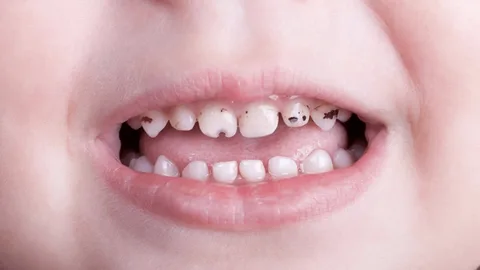
A cavity can start small, but if it continues progressing, it may eventually reach the soft tissue inside a child’s tooth. Once that happens, a simple filling may no longer be enough to treat the problem properly.
Understanding the difference between pulpotomy and pulpectomy can help parents make sense of what happens next. Both procedures are used when tooth decay or infection reaches the pulp, but the right treatment depends on how much tissue has been affected and whether healthy pulp can still be preserved.
A tooth has several layers.
The enamel is the hard outer surface, while dentin sits underneath it. At the center is the pulp, which contains nerves, blood vessels, and connective tissue.
When a cavity is caught early, the damaged area may be removed and restored with a filling.
If decay continues deeper, however, it can reach the pulp and cause inflammation or infection.
At that point, the dentist needs to determine how far the damage has spread.
That decision influences whether part of the pulp can be preserved or whether all of it needs to be removed.
When Healthy Tissue Can Still Be Preserved
If the damage is mainly limited to the pulp inside the crown of the tooth, a less extensive treatment may be appropriate.
In this situation, the dentist removes the affected pulp from the crown while leaving healthy tissue inside the roots.
This approach is designed to preserve as much of the natural tooth as possible.
The tooth is then restored, often with a crown, so the child can continue using it normally.
This treatment can be especially useful when the baby tooth still needs to remain in place for several more years.
When the Infection Has Spread Into the Roots
Sometimes the problem is more advanced.
If the pulp inside the roots is also infected or severely damaged, preserving that tissue may no longer be appropriate.
A more complete treatment removes all of the pulp from both the crown and root canals.
The inside of the tooth is then cleaned and filled before the tooth is restored.
This is where the comparison of pulpotomy versus pulpectomy becomes important.
One procedure preserves healthy root pulp, while the other removes all of the pulp when the damage has spread farther.
Why the Amount of Damage Matters
Parents may assume that the less extensive treatment is always better.
That is not necessarily true.
The treatment has to match the condition of the tooth.
If healthy tissue remains, preserving it may be the right approach.
If infection has already reached the root canals, leaving damaged tissue behind could allow the problem to continue.
The dentist uses a clinical examination and X-rays to determine how far the decay has progressed and whether healthy tissue remains.
The goal is not to choose the smallest procedure. The goal is to choose the treatment that properly addresses the problem.
Can Parents Choose the Less Extensive Option?
A common question is can you just get a pulpotomy instead of choosing a more involved procedure.
Sometimes the answer is yes.
If the damage is limited to the pulp inside the crown and the roots remain healthy, removing only the affected portion may be enough.
However, when infection has moved into the roots, the less extensive option may not fully treat the tooth.
Parents should think of these procedures as two different treatments for two different levels of damage, not as interchangeable options.
The dentist determines which one is appropriate based on the actual condition of the tooth.
Why Baby Teeth Are Often Worth Preserving
Baby teeth eventually fall out, but they still serve important functions while they are present.
They help children chew, speak, and maintain proper space for permanent teeth.
A baby tooth that is lost too early may affect the space available for the permanent tooth developing underneath it.
That is why a pediatric dentist may recommend treatment instead of extraction when the tooth can still be restored successfully.
Preserving the tooth until it is naturally ready to fall out can support normal dental development.
When a Tooth May Be Too Damaged to Save
Not every tooth can or should be preserved.
If the tooth is severely damaged, infection has spread significantly, or the tooth is already close to falling out naturally, extraction may sometimes be more appropriate.
The dentist will consider:
-
The amount of healthy tooth structure remaining
-
How far the infection has spread
-
Whether the tooth can be restored
-
The child’s age
-
The stage of dental development
-
How close the tooth is to natural loss
These factors help determine whether treatment or extraction is the better approach for that specific tooth.
How Root Canal Treatment Compares
Parents may also wonder about the difference between root canal and pulpectomy.
The two procedures are very similar because both involve removing pulp from the crown and root canals.
The main difference is usually the type of tooth being treated.
Pulpectomy is commonly associated with baby teeth, while traditional root canal treatment is generally performed on permanent teeth.
The filling materials used inside the canals may also differ because baby teeth are eventually replaced by permanent teeth.
The dentist considers the tooth type and the child’s stage of development before recommending treatment.
Are There Other Treatment Options?
Parents often ask about alternative treatments for pulpectomy when they want to understand whether a more conservative approach is possible.
Sometimes it is.
If decay is caught earlier, treatment may include options such as:
-
Minimally invasive dentistry
-
Dental fillings
-
Dental crowns
-
Remineralization therapy
-
Silver diamine fluoride
-
Tooth extraction when appropriate
The available options depend on how deeply the decay has progressed.
Once infection reaches the pulp and root canals, some conservative treatments may no longer be appropriate.
This is why early dental visits matter.
Why Early Diagnosis Can Change the Treatment Plan
The earlier a cavity is found, the more treatment options may be available.
A small cavity may only need a filling.
A larger cavity may require a crown.
If decay reaches the pulp, pulp treatment may become necessary.
If the infection progresses even farther, the tooth may no longer be restorable.
Regular dental checkups help identify cavities before they become advanced.
Parents should also schedule an evaluation if a child develops persistent tooth pain, sensitivity, difficulty chewing, or visible tooth damage.
Signs a Child May Need a Dental Evaluation
Children do not always describe dental discomfort clearly.
Parents should watch for changes such as:
-
Ongoing tooth pain
-
Sensitivity to hot or cold foods
-
Avoiding chewing on one side
-
Visible cavities or damaged teeth
-
Swelling around the tooth
-
Changes in eating habits
These symptoms do not automatically mean pulp treatment is needed, but they are reasons to have the tooth examined.
Early evaluation can help prevent the problem from becoming more serious.
Why Crowns Are Common After Pulp Treatment
A tooth affected by deep decay often loses a significant amount of healthy structure.
After treatment, the remaining tooth may need extra support.
A dental crown can protect the restored tooth and help it continue functioning properly.
Crowns are especially common on back baby teeth because those teeth experience considerable chewing pressure.
The dentist will determine whether a crown is needed based on the location and condition of the tooth.
What Parents Should Expect After Treatment
Most children can return to normal activities relatively quickly.
Temporary numbness or mild soreness may occur after treatment.
Parents should follow the dentist’s recommendations about eating, brushing, pain relief, and caring for the restored tooth.
It is usually best to wait until numbness has worn off before allowing the child to eat normally.
This helps reduce the risk of accidentally biting the cheek, lip, or tongue.
Parents should contact the dental office if persistent pain, swelling, or unusual symptoms develop afterward.
Can Treatment Change Later?
Yes.
A tooth that initially receives a less extensive pulp treatment may sometimes require additional care later if the remaining tissue becomes damaged or infected.
That is one reason follow-up visits are important.
The dentist can monitor the tooth and make sure it continues to heal and function properly.
Needing additional treatment later does not automatically mean the first procedure was inappropriate.
Dental conditions can change over time, especially when a tooth has already been affected by deep decay.
How Pediatric Dentists Make the Final Decision
Choosing between treatments is based on a combination of examination findings, symptoms, and X-rays.
The dentist looks at how far the damage has spread and whether healthy pulp remains.
At Grin Gallery Kids, Dr. Donielle Williams provides pediatric dental care based on each child’s individual needs.
Rather than assuming every deep cavity should be treated the same way, the condition of the specific tooth is evaluated first.
This helps determine whether the child needs a filling, crown, pulp treatment, extraction, or another option.
Common Questions Parents Ask
Which treatment is more extensive?
A pulpectomy is generally more extensive because all of the pulp from both the crown and roots is removed.
Can a tooth be saved if the pulp is infected?
Sometimes, yes. The answer depends on how much of the pulp is affected and whether the tooth can still be restored successfully.
Does every treated tooth need a crown?
Not every tooth does, but crowns are commonly used after pulp treatment, especially when a back baby tooth has lost significant structure.
Is extraction always easier?
Not necessarily. Extraction may be appropriate in certain cases, but preserving a baby tooth can help maintain chewing function and space for permanent teeth.
How does the dentist decide what treatment is needed?
The dentist evaluates the depth of decay, the health of the pulp, the amount of remaining tooth structure, and the child’s stage of dental development.
Choosing the Right Care for a Deeply Decayed Tooth
The difference between pulpotomy and pulpectomy comes down to how much of the pulp is damaged and whether healthy tissue can still be preserved.
A pulpotomy may be appropriate when the damage is limited to the crown, while a pulpectomy may be needed when infection extends into the roots.
The right treatment depends on what is actually happening inside the tooth.
At Grin Gallery Kids, Dr. Donielle Williams evaluates deep cavities and other pediatric dental concerns to determine which treatment option best fits the child’s needs.
Book Appointment
If your child has a deep cavity, ongoing tooth pain, sensitivity, or another dental concern, schedule an evaluation to find out what treatment may be needed.
Early evaluation may provide more treatment options and help preserve your child’s natural tooth when possible.









Comments (0)