

Understanding the Mobile App Development Process: How Dubai Businesses Can Build Apps That Improve Customer Engagement
However, creating a successful mobile application involves much more than writing code. Businesses need to understand their audience, define their objectives, design an intuitive experience, select appropriate technologies, test the product, and continuously improve it after launch. Understanding the complete mobile app development process can help Dubai businesses make informed decisions and create applications that provide genuine value to users.
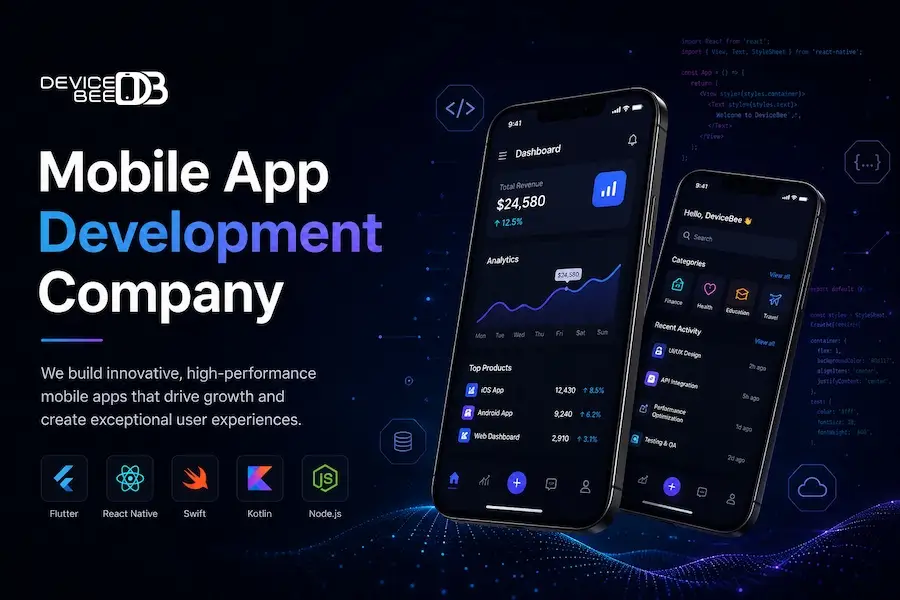
Dubai has developed into a highly competitive business and technology hub, where companies across retail, hospitality, healthcare, real estate, finance, logistics, education, and professional services are adopting digital solutions to meet changing customer expectations. Mobile applications have become an important part of this transformation because they provide businesses with a direct channel for interacting with customers. For organizations planning a new digital product, working with experienced app development companies in Dubai can provide access to professional expertise in mobile app strategy, UI/UX design, development, testing, deployment, and ongoing maintenance.
Why Mobile Apps Matter for Customer Engagement
Customer engagement refers to the ways a business interacts with its customers and builds ongoing relationships with them. A mobile application can make these interactions more convenient by bringing products, services, information, and support directly to a customer's smartphone.
For example, a retail business can use an app to provide personalized product recommendations, promotions, order tracking, and loyalty rewards. A restaurant can allow customers to browse menus, place orders, make reservations, and receive updates. Similarly, a real estate business can provide property searches, appointment scheduling, virtual tours, and direct communication.
The key is to create features that solve customer problems rather than adding unnecessary functionality. An application becomes more valuable when customers have a clear reason to return to it.
Step 1: Define the Business Objectives
The first stage of app development is establishing what the application is expected to accomplish. A business should identify the primary problem it wants to solve and determine how the application will contribute to its broader goals.
Common objectives may include:
· Increasing online sales
· Improving customer service
· Simplifying bookings or reservations
· Creating a loyalty program
· Automating business processes
· Providing personalized experiences
· Increasing customer retention
· Offering convenient access to services
Clear objectives help guide later decisions about design, features, technology, and budget.
Step 2: Understand the Target Audience
A successful application should be designed around its intended users. Businesses need to understand who their customers are, what they need, what problems they experience, and how they currently interact with the company.
User research can involve customer feedback, surveys, interviews, competitor research, analytics, and market analysis. Businesses can use this information to develop user personas and identify important customer journeys.
For example, if an application is designed for busy professionals, users may value fast navigation, simple checkout processes, digital payments, and personalized notifications. Understanding these expectations allows developers and designers to prioritize features that improve the overall experience.
Step 3: Plan the App's Features
Once the audience and objectives are clear, the next step is deciding which features the application needs.
A basic business application might require user registration, profiles, search, contact forms, notifications, and account management. More advanced applications may need payment gateways, location services, booking systems, chat functionality, artificial intelligence, third-party integrations, or cloud-based databases.
Businesses should prioritize essential features instead of trying to include everything in the first version. Developing a minimum viable product can allow a company to launch important functionality, collect feedback, and gradually introduce additional features.
Step 4: Focus on UI/UX Design
User interface and user experience are central to customer engagement. Even an application with powerful functionality can struggle if users find it confusing or difficult to navigate.
UI design focuses on visual elements such as typography, colors, icons, buttons, layouts, and screen structure. UX design focuses more broadly on how users move through the application and complete tasks.
The design process may begin with wireframes that show the basic structure of each screen. These can then be developed into interactive prototypes before the final interface is created.
For Dubai businesses serving diverse audiences, accessibility, clear language, intuitive navigation, and responsive design can be particularly important. Applications should provide users with a consistent experience across supported devices.
Step 5: Choose the Right Development Approach
Businesses typically need to decide whether their application should be developed natively or using a cross-platform approach.
Native development involves creating applications specifically for platforms such as iOS or Android. This approach can provide strong platform-specific performance and access to native device capabilities.
Cross-platform development allows developers to build applications for multiple platforms using technologies such as Flutter or React Native. This can be useful for businesses that want to support both major mobile platforms while sharing a significant portion of the codebase.
The appropriate approach depends on factors such as application complexity, performance requirements, target users, available resources, development timeline, and long-term maintenance plans.
Step 6: Develop the Backend and Integrations
The visible mobile application is only one part of a complete digital product. Many applications require backend systems that process information, manage accounts, store data, and connect the app with other services.
For example, an eCommerce application may need connections to inventory systems, payment gateways, shipping services, customer relationship management platforms, and analytics tools.
APIs can allow the mobile application to communicate securely with these external systems. A well-planned backend architecture can also make it easier to scale the application as the number of users and transactions increases.
Step 7: Include Security From the Beginning
Security should be considered throughout the development process. Mobile applications may handle personal information, login credentials, payment information, business data, and other sensitive content.
Developers can implement measures such as secure authentication, encrypted communication, appropriate access controls, secure API practices, and regular security testing.
Businesses should also consider data protection requirements relevant to their industry and operating markets. Building security into the application's architecture from the beginning is generally more effective than trying to address major security issues after launch.
Step 8: Test the Application Thoroughly
Testing helps identify problems before users encounter them. A professional development process can involve functional testing, usability testing, performance testing, security testing, compatibility testing, and device testing.
The application should be evaluated across different screen sizes, operating systems, network conditions, and realistic user scenarios.
For customer-facing applications, small usability problems can have a significant impact. Slow loading, broken links, confusing navigation, failed payments, or unexpected crashes can discourage users from returning. Comprehensive testing helps reduce these issues before release.
Step 9: Launch and Monitor User Behavior
Launching an application is not the end of development. After release, businesses should monitor how customers use the application and identify areas for improvement.
Analytics can provide information about metrics such as downloads, active users, retention, conversion rates, feature usage, and customer journeys. Businesses can combine this information with reviews and direct customer feedback to understand what is working and what needs improvement.
For example, if analytics show that many users leave the application during checkout, the business can investigate whether the process is too complicated or whether technical problems are affecting transactions.
Step 10: Improve the App Continuously
Customer expectations and technology continue to evolve. Mobile operating systems receive regular updates, new devices enter the market, security threats change, and customers develop new digital habits.
Ongoing application maintenance can include bug fixes, performance optimization, security updates, compatibility improvements, and new functionality.
Businesses can also use customer feedback to introduce features that have practical value. Continuous improvement allows an application to remain useful rather than becoming outdated after its initial launch.
How Mobile Apps Can Strengthen Customer Engagement
A well-developed application can support customer engagement in several ways.
Personalized Experiences
Applications can use customer preferences and appropriate behavioral data to provide more relevant content, recommendations, and offers.
Push Notifications
Notifications can keep customers informed about orders, appointments, promotions, new products, or important account information. However, notifications should be relevant and appropriately timed to avoid overwhelming users.
Loyalty Programs
Digital loyalty features can encourage repeat interactions by allowing customers to collect points, access rewards, or receive personalized offers directly through the application.
Convenient Customer Support
In-app chat, FAQs, support forms, and other communication tools can make it easier for customers to obtain assistance.
Faster Transactions
Features such as saved preferences, digital payments, booking systems, and one-click actions can reduce friction and make common tasks faster.
Choosing an App Development Partner in Dubai
Businesses planning a mobile application should evaluate potential development partners based on technical expertise, relevant experience, design capabilities, development methodology, communication, testing practices, security knowledge, and post-launch support.
A development partner should also take time to understand the company's customers and business objectives. The goal should be to develop a digital product that addresses real customer needs rather than simply delivering a collection of technical features.
Companies such as DeviceBee provide mobile app development and related digital services, including iOS and Android development, Flutter and React Native development, UI/UX design, AI-powered solutions, backend and API development, quality assurance, and DevOps. These services can support businesses through different stages of developing and maintaining a digital product.
Conclusion
The mobile app development process involves several interconnected stages, from defining business objectives and researching customers to designing, developing, testing, launching, and continuously improving the application. Each stage can influence the final customer experience.
For businesses in Dubai, a mobile application can provide a convenient digital channel for communication, transactions, customer support, personalization, and loyalty. However, long-term success depends on creating an application that is useful, secure, easy to navigate, reliable, and responsive to changing customer needs.
By combining thoughtful planning, user-focused design, appropriate technology, thorough testing, and ongoing optimization, Dubai businesses can develop mobile applications that support meaningful customer engagement and contribute to their wider digital strategy.

DeviceBee Technologies is a Dubai-based digital transformation and mobile app development company established in 2013. The company specializes in creating custom digital solutions for startups, SMEs, enterprises, and government organizations across Dubai, the UAE, and international markets. Its services cover the complete product development lifecycle, from business strategy and UI/UX design to application development, testing, deployment, and ongoing support. DeviceBee develops AI-powered mobile applications, iOS and Android apps, cross-platform applications, web solutions, enterprise platforms, and custom software. Its technology services include native iPhone and Android development as well as Flutter and React Native development. The company also provides backend and API development, quality assurance, cloud hosting, DevOps, and application maintenance to help businesses build and manage scalable digital products. The company works across industries including real estate, healthcare, insurance, FinTech, eCommerce, retail, hospitality, logistics, education, and government services. Its portfolio includes solutions for food delivery, digital loyalty programs, marketplaces, job platforms, healthcare, enterprise management, and other business applications. DeviceBee states that it has delivered more than 700 projects and worked with more than 150 clients, with over 13 years of experience. With a focus on user experience, modern technology, and long-term product support, DeviceBee helps organizations turn digital ideas into functional and scalable applications. Its approach combines research, business analysis, product strategy, UI/UX design, development, quality assurance, and DevOps to create digital products aligned with specific business requirements.












Comments (0)