

How Can Current Sensing Amplifiers Improve Precision and Safety?
Current Sensing Amplifiers are specialised electronic components used to measure electrical current accurately by amplifying the small voltage developed across a sensing resistor. They support power monitoring, overcurrent protection, battery management, motor control, energy efficiency, and fault detection across automotive, industrial, renewable energy, and consumer electronics. Their accuracy, fast response, low offset, and strong common-mode rejection make them essential for safe and efficient modern electronic systems.

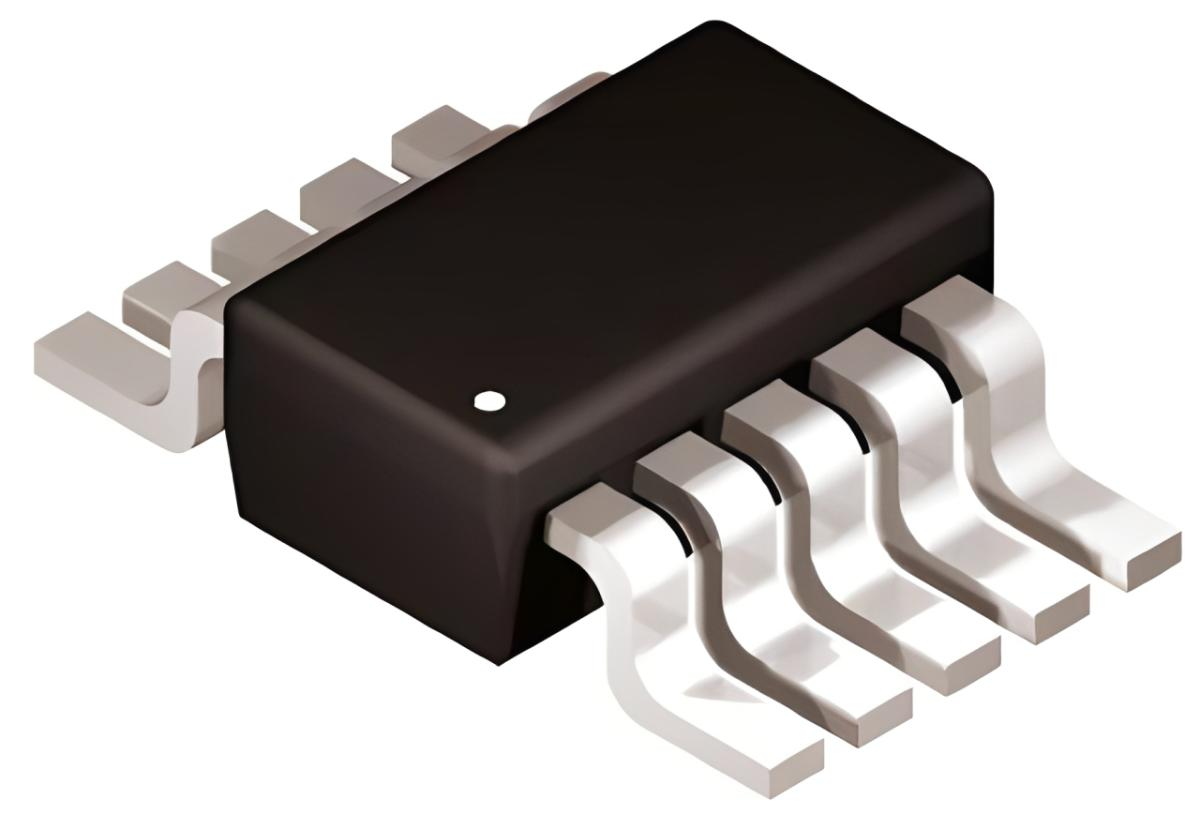
Current Sensing Amplifiers play a critical role in modern electronic systems where accurate current measurement, power regulation, and fault protection are essential. These specialised amplifiers are designed to detect very small voltage differences generated by current flowing through a sensing resistor. They then convert those tiny signals into a stronger output that can be used by controllers, processors, monitoring circuits, or protection systems.
As electronic devices become more efficient and intelligent, designers need better control over energy flow. Current Sensing Amplifiers help achieve this by giving electronic systems a clear picture of how much current is being consumed, whether a load is operating normally, and when an abnormal condition needs immediate attention.
How Do Current Sensing Amplifiers Enhance Measurement Accuracy?
The main purpose of a current sensing amplifier is to measure small differential voltages accurately.
When current passes through a low-value resistor, only a small amount of voltage is produced. This voltage can be difficult for conventional circuits to detect reliably, especially when electrical noise or higher system voltages are present.
Current Sensing Amplifiers are designed to isolate the useful signal from unwanted electrical influences.
They can help improve measurement accuracy through:
- Low input offset voltage
- High common-mode rejection
- Stable amplification
- Low signal distortion
- Precise gain characteristics
- Strong temperature performance
These features allow current measurements to remain dependable even when the sensed voltage is extremely small.
Why Is Precision Important in Power Electronics?
Power electronics rely heavily on accurate feedback.
If the current measurement is incorrect, a control system may deliver too much or too little power. This can reduce efficiency, increase heat, or damage sensitive components.
Precision current sensing helps maintain controlled power delivery in applications such as:
- Voltage regulators
- Switching converters
- Inverters
- Battery chargers
- Motor drives
- Power distribution systems
By receiving accurate current information, the controller can adjust the system immediately and maintain the desired operating conditions.
What Happens When Current Becomes Too High?
Excessive electrical current can create serious problems.
It can cause components to overheat, damage semiconductor devices, reduce battery life, or create permanent circuit failure.
Current Sensing Amplifiers can act as part of a protection system by continuously monitoring current levels.
When the measured value exceeds a defined limit, the system can respond by:
- Reducing output power
- Disconnecting a load
- Stopping a motor
- Limiting charging current
- Triggering a warning
- Shutting down the circuit
Fast detection can significantly reduce the risk of damage, particularly in high-power applications.
How Do Current Sensing Amplifiers Support Battery Charging?
Battery charging requires careful current regulation.
Applying excessive charging current can increase temperature, reduce battery lifespan, or create safety concerns. On the other hand, insufficient current can increase charging time.
Current Sensing Amplifiers help the charging system monitor how much current is flowing into the battery.
This enables the controller to manage:
- Constant-current charging stages
- Charge termination
- Current limiting
- Battery temperature protection
- Energy usage
- Charging efficiency
In advanced battery systems, bidirectional current sensing may also be used to measure both charging and discharging currents.
What Is the Importance of Common-Mode Rejection?
One of the most valuable capabilities of Current Sensing Amplifiers is their ability to measure a tiny voltage difference while ignoring a much larger voltage that appears on both inputs.
This larger voltage is known as the common-mode voltage.
For example, an amplifier may need to measure only a few millivolts across a resistor while both terminals are connected to a power rail operating at a much higher voltage.
Strong common-mode rejection helps ensure that the amplifier responds to the small measurement signal instead of being affected by the surrounding supply voltage.
This is especially important in:
- Automotive power systems
- Industrial drives
- High-voltage converters
- Battery packs
- Power management circuits
Current Sensing Amplifiers in Smart Energy Systems
Smart energy systems depend on accurate monitoring to improve performance and reduce waste.
Solar power installations, energy storage equipment, and intelligent power distribution systems all need to track the movement of electrical current.
Current Sensing Amplifiers can help monitor:
- Solar panel output
- Battery charging current
- Battery discharge current
- Inverter operation
- Energy storage performance
- Load consumption
This information can help energy management systems decide when to store power, when to supply loads, and when operating conditions need adjustment.
How Are Current Sensing Amplifiers Used in Robotics?
Robotic systems combine motors, actuators, processors, sensors, and power electronics.
The amount of current drawn by a motor can reveal important information about its mechanical condition.
For example, an unexpected increase in motor current may indicate excessive load, a blocked mechanism, or increased friction.
Current Sensing Amplifiers can support robotic systems by helping with:
- Motor torque estimation
- Overload detection
- Actuator protection
- Stall identification
- Power management
- Battery supervision
Reliable current feedback allows the control system to react quickly to changing mechanical conditions.
Why Is Low Power Consumption Important?
The sensing circuit itself also consumes electricity.
In battery-powered electronics, excessive amplifier power consumption can reduce operating time.
Low-power Current Sensing Amplifiers are designed to minimise their own energy requirements while still providing accurate measurements.
They are particularly useful in:
- Wearable devices
- Wireless sensors
- Portable instruments
- Battery-operated controllers
- Remote monitoring equipment
- Internet of Things devices
Some designs may also include shutdown or low-power modes to further reduce energy use when continuous measurement is not required.
What Is the Role of Gain in Current Measurement?
Gain determines how much the amplifier increases the small voltage measured across the sensing resistor.
For example, if the resistor produces a very small voltage, higher gain may be needed to create an output signal large enough for a microcontroller or analogue-to-digital converter.
However, excessive gain can reduce the available measurement range.
Designers must therefore balance:
- Maximum expected current
- Shunt resistor value
- ADC input range
- Measurement sensitivity
- Required resolution
- Amplifier output limits
Selecting the correct gain helps maximise measurement quality without causing output saturation.
Current Sensing Amplifiers in Consumer Electronics
Many everyday electronic products use current monitoring even when the function is invisible to the user.
Smartphones, chargers, laptops, appliances, and portable electronics use power management circuits to control energy consumption and protect internal components.
Current sensing can help these products:
- Improve battery runtime
- Detect faulty accessories
- Control charging
- Manage power rails
- Prevent excessive current
- Reduce unnecessary energy use
As consumer devices continue to become thinner and more power efficient, compact and low-power sensing solutions become increasingly valuable.
How Does PCB Design Affect Current Sensing Performance?
Component selection alone does not guarantee accurate current measurements.
The printed circuit board layout must also be carefully designed.
Because Current Sensing Amplifiers often measure millivolt-level signals, unwanted resistance and electrical noise can introduce errors.
Good PCB practices include:
- Placing the amplifier close to the sensing resistor
- Using separate sense traces
- Avoiding high-current switching paths
- Using Kelvin connections
- Minimising trace resistance
- Keeping noisy signals away from amplifier inputs
- Providing stable grounding
A well-designed layout helps preserve the accuracy of the entire sensing system.
What Should Engineers Prioritise When Selecting a Device?
Different applications require different amplifier characteristics.
Before selecting a Current Sensing Amplifier, designers should evaluate:
- Maximum bus voltage
- Current measurement range
- Gain requirement
- Offset voltage
- Bandwidth
- Power consumption
- Common-mode range
- Temperature rating
- Output configuration
- Package size
The best choice is the device that provides the right balance of accuracy, speed, efficiency, and operating capability for the intended application.
Why Will Current Sensing Amplifiers Remain Important?
Electronic systems are moving toward greater automation, electrification, and energy awareness.
Accurate current information allows these systems to operate more intelligently.
Current Sensing Amplifiers provide the connection between electrical power flow and digital control by transforming very small voltage differences into useful measurement signals.
They support safer operation, better efficiency, improved diagnostics, and more precise control across a wide variety of applications.
From battery chargers and robotic systems to renewable energy equipment and industrial electronics, Current Sensing Amplifiers continue to provide the reliable feedback needed for advanced power management. As electronic designs become more sophisticated, their role in measurement, protection, and optimisation will remain increasingly important.











Comments (0)