

Purchase Order vs Invoice- Key Differences
Understand the key differences, types, and creation processes of Purchase Orders and Invoices in a business transaction.
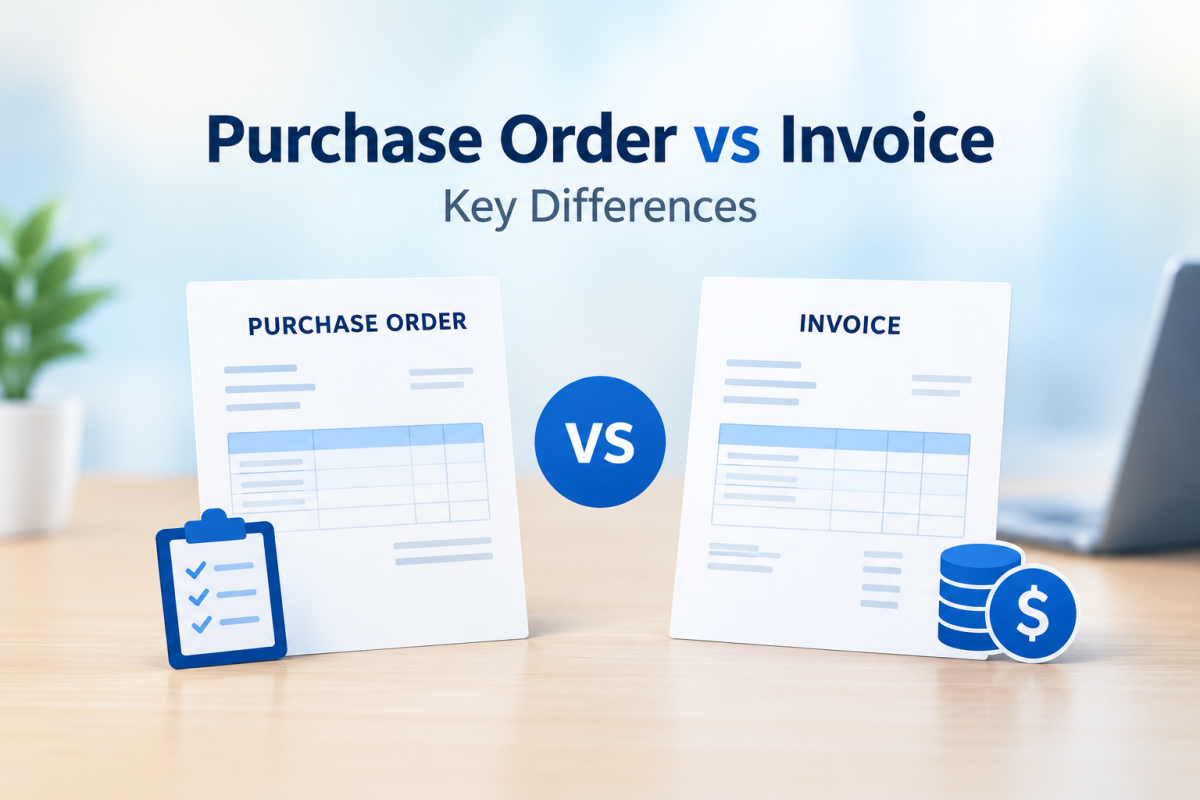
A Purchase Order (PO) is a formal document that a buyer sends to a supplier when they want to purchase goods or services. It clearly outlines what the buyer needs, including the items or services, quantities, agreed prices, delivery details, payment terms, and any other important conditions. Once the supplier accepts the PO, it acts as an official record of the order and helps both parties stay on the same page.
An Invoice, on the other hand, is issued by the seller after the goods or services have been delivered. It tells the buyer exactly how much they need to pay and usually includes details such as the products or services provided, prices, taxes, discounts, payment terms, and the payment due date.
Businesses use several documents to manage purchasing, sales, and payments. Two of the most important documents in this process are a purchase order (PO) and an invoice.
Differences Between a Purchase Order and an Invoice
Purchase orders and invoices are closely connected; they are not interchangeable. The following are the key differences between them:
| Basis | Purchase Order | Invoice |
| Purpose | Used to order goods or services. | Used to request payment. |
| Issued By | Buyer | Seller |
| Issued When | Before the goods or services are delivered. | Usually after goods or services are delivered or billed. |
| Main Information | Items required, quantities, prices, delivery details, and terms. | Items supplied, amount due, taxes, payment terms, and due date. |
| Payment | Does not request any payment. | Request payment from the buyer. |
| Reference Number | Has the purchase order number. | Has the invoice number. |
| Approval | Usually requires buyer approval before being sent to the supplier. |
May require internal verification before payment. |
Types of Purchase Orders
There are different types of purchase orders depending on the nature and frequency of the purchases. The main types include:
1. Standard Purchase Order
A standard PO is used for a specific purchase with clearly defined details. It normally states the products or services, quantities, prices, delivery date, and other terms.
2. Blanket Purchase Order
A blanket PO is used when a buyer expects to purchase the same or similar goods or services from a supplier repeatedly over a period of time. It can simplify recurring purchases and reduce the need to create a new PO for every transaction.
3. Contract Purchase Order
A contract PO is generally associated with an established agreement between a buyer and supplier. The agreement sets out terms and conditions, while individual orders may be placed under that arrangement.
4. Planned Purchase Order
A planned PO is used when a business knows that it will require certain goods or services but may not yet know the exact delivery dates or quantities for every delivery. It helps businesses plan future purchases.
5. Service Purchase Order
A service PO is used when a business purchases services rather than physical products.
Therefore, the appropriate type of PO depends on the organization's purchasing requirements, supplier relationships, and internal procurement policies.
How to Create a Purchase Order
Creating a purchase order involves the details of a proposed purchase clearly and accurately. The following steps can help:
Step 1: Identify the Purchase Requirement
Determine what goods or services are needed, including the required quantity, specifications, and expected delivery date.
Step 2: Select the Supplier
Choose a suitable supplier based on factors such as price, quality, availability, delivery terms, and previous business relationships.
Step 3: Add Buyer and Supplier Information
Include essential details such as:
- Buyer's business name and contact information
- Supplier's business name and contact information
- Billing and delivery addresses
- Relevant tax or registration details, where applicable
Step 4: Add Purchase Details
Clearly list:
- PO number
- Product or service description
- Quantity
- Unit price
- Applicable discounts
- Taxes
- Total purchase value
- Delivery date and location
Step 5: Specify Terms and Conditions
Include payment terms, delivery requirements, cancellation conditions, warranties, or other relevant contractual requirements.
Step 6: Review and Approve the PO
The purchase order should be checked for accuracy and approved according to the company's internal purchasing process.
Step 7: Send the PO to the Supplier
Once approved, the PO is sent to the supplier. The supplier can accept the order, request changes, or reject it.
How to Create an Invoice
An invoice should provide the buyer with all the information needed to understand the transaction and make the payment. The basic steps are:
Step 1: Add Seller Information
Include the seller's business name, address, contact details, and applicable tax or registration information.
Step 2: Add Buyer Information
Enter the customer's name or business name, billing address, and other relevant details.
Step 3: Assign an Invoice Number
Every invoice should have a unique invoice number. This makes it easier to track transactions and maintain accounting records.
Step 4: Include the Transaction Details
List the products or services provided, including:
- Description
- Quantity
- Unit price
- Discounts
- Taxes
- Subtotal
- Total amount due
Step 5: Mention the Purchase Order Number
If the transaction was initiated with a PO, include its number on the invoice. This allows the buyer to match the invoice with the original order.
Step 6: Add Payment Terms
Clearly state the payment due date and accepted payment methods. For example, an invoice may specify that payment is due within 30 days.
Step 7: Review and Send the Invoice
Check all calculations and transaction details before sending the invoice to the customer. A clear and accurate invoice can reduce payment delays and disputes.
Conclusion
Purchase orders and invoices are essential documents in the business purchasing and payment process, but they serve different purposes. A purchase order is created by the buyer to formally request goods or services, whereas an invoice is issued by the seller to request payment for goods or services supplied.

Sharing practical insights and expert perspectives on ERP, enterprise technology, digital transformation, and emerging tech trends, helping businesses navigate technology and drive smarter growth.








Comments (0)