

How to Choose Tarpaulin Roofing for Temporary Monsoon Sheds
While brick-and-mortar sheds can take weeks to build, tarpaulin roofing for monsoon sheds provides overhead cover within a few hours.

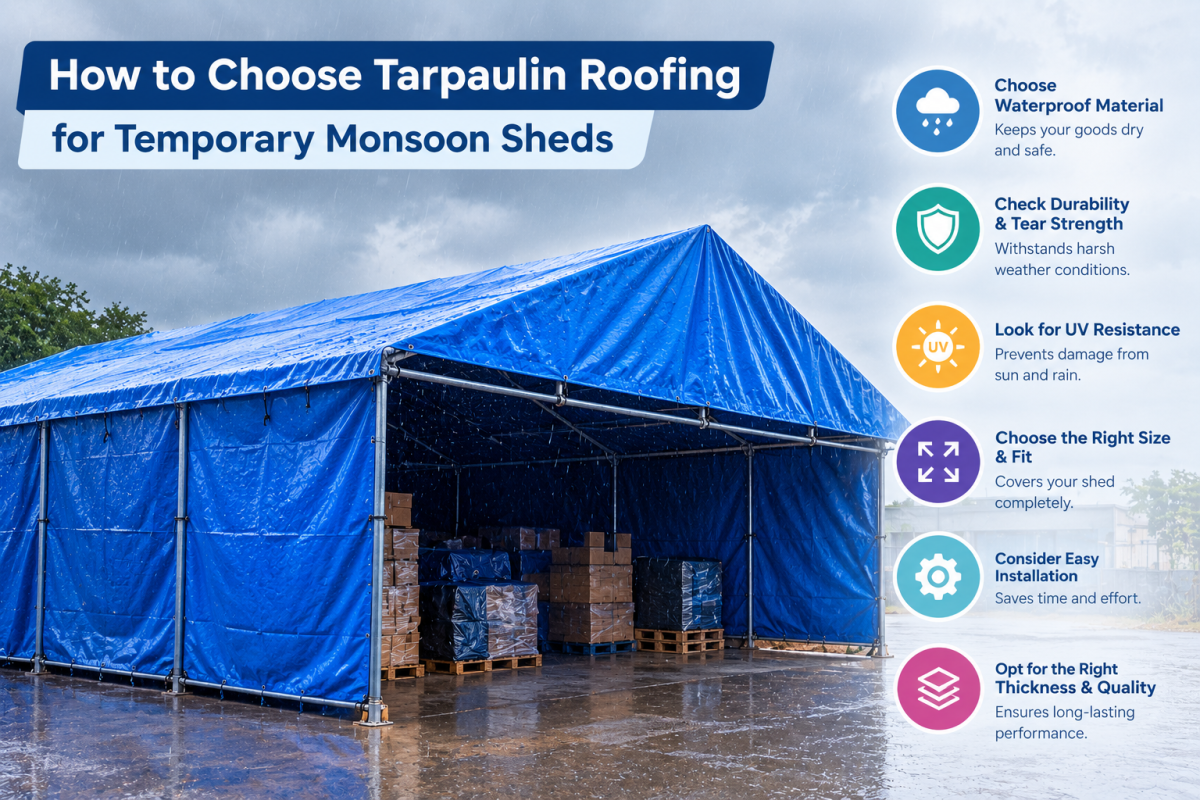
Monsoon rain rarely waits for permanent construction to be completed. Warehouses may quickly run out of covered storage, construction sites need overnight protection for cement and steel, and farmers must shield stored grain before the next heavy shower. While brick-and-mortar sheds can take weeks to build, tarpaulin roofing for monsoon sheds provides overhead cover within a few hours. However, several important choices determine whether the roof withstands the monsoon or gets damaged during the first severe storm.
Why Tarpaulin Roofing Is Suitable for Temporary Monsoon Sheds
A tarpaulin sheet stretched over a frame blocks rainfall from reaching whatever sits underneath. No fixed foundation. No masonry work. Just a frame, a sheet, and rope. This flexibility means you can build a shed and dismantle it when the monsoon is over and move it to the next place where you need it. Construction sites shift material stacks weekly, storage yards expand and contract with stock levels, and farms need shelter only during harvest and post-harvest months. Tarpaulin roofing adapts to all three without demanding permanent infrastructure.
Key Features to Consider When Choosing Tarpaulin Roofing
Not every tarpaulin sheet performs the same way once monsoon conditions set in. Check these seven features before you commit to a supplier.
-
Water Resistance
The sheet must repel rainwater completely, since even minor seepage soaks stored goods and damages equipment underneath.
-
Material Strength
The outdoor exposure and constant tension of the wind demand a fabric that will not stretch, sag or split over weeks of use.
-
Tear Resistance
Installation involves pulling and fastening under tension, and gusty monsoon winds add further strain on weak points.
-
Thickness
Thicker sheets suit heavy rainfall and longer deployment periods, while lighter sheets work for short-term, low-intensity weather use.
-
UV Resistance
If the shed is in direct sunlight between periods of rain then the material must be UV treated so that the fabric does not become brittle.
-
Reinforced Edges and Eyelets
Edges are strong and eyelets are evenly spaced, allowing the material to be fastened tightly to the frame without tearing at the anchor points.
-
Sheet Size
The sheet must cover the entire roof structure with enough overlap to prevent gaps where water can enter.
Choosing the Right Size and Thickness
Measure the shed before selecting anything. Roof length, width, and height determine the minimum sheet size, but the minimum is never the right number to order. Add extra coverage along every edge, since a sheet cut flush to the frame leaves no margin for wind lift or sagging over time. That margin becomes the difference between a shed that stays dry and one that drips at the seams. Thickness selection follows the same logic. Heavy, sustained rainfall over an entire monsoon season calls for a thicker gauge, while a shed needed for two or three weeks can manage with a lighter one. Duration and expected rainfall intensity should drive the decision. One more factor gets overlooked often: slope. A flat tarpaulin roof collects water in the centre, and pooled water stretches the fabric until it tears. Build enough slope into the frame so rainwater runs off the edges instead of gathering on top.
Where Can Tarpaulin Roofing Be Used During Monsoon?
Tarpaulin roofing fits a wide range of temporary applications during the rainy months.
-
Temporary storage sheds: Sheeted roofs keep stacked goods and raw materials dry without building a permanent warehouse.
-
Construction-site shelters: Cement bags, steel rods, and tools stay protected overnight when covered under a tensioned tarpaulin roof.
-
Agricultural storage areas: Harvested grain and produce avoid moisture damage when sheltered under a properly secured sheet.
-
Vehicle and equipment shelters: Tractors, generators, and machinery parked outdoors stay shielded from direct rainfall and pooling water.
-
Outdoor work areas: Workers continue tasks like sorting, packing, or assembly beneath a dry canopy during heavy showers.
Tips for Securing Tarpaulin Roofing
A well-chosen sheet still fails if the fastening is weak. Use ropes, ties, or tensioning straps rated for outdoor load, and secure every eyelet firmly to the supporting frame rather than skipping alternate points. Keep the sheet taut enough to shed water, but avoid pulling it so tight that fastening points bear excessive stress and tear loose. Maintain the slope you built into the frame so rainwater keeps running off instead of collecting in low spots. Once installed, inspect the roof regularly through the season. Loose ropes, small tears, and pooled water all start small and worsen quickly under continued rain.
Conclusion
Choosing the right tarpaulin roofing for monsoon sheds comes down to five factors: water resistance, material strength, correct size, appropriate thickness, and secure installation. Skip any one of these and the shed underperforms exactly when it matters most. Match the sheet to your shed's design, the expected rainfall, and how long you need it standing, and it will carry your site through the monsoon without a single leak.

An engineer who loves writing about facts, properties, and applications of metals and materials.










Comments (0)